

Unexpectance: Emotion, Identity, and a Ship That Never Sinks
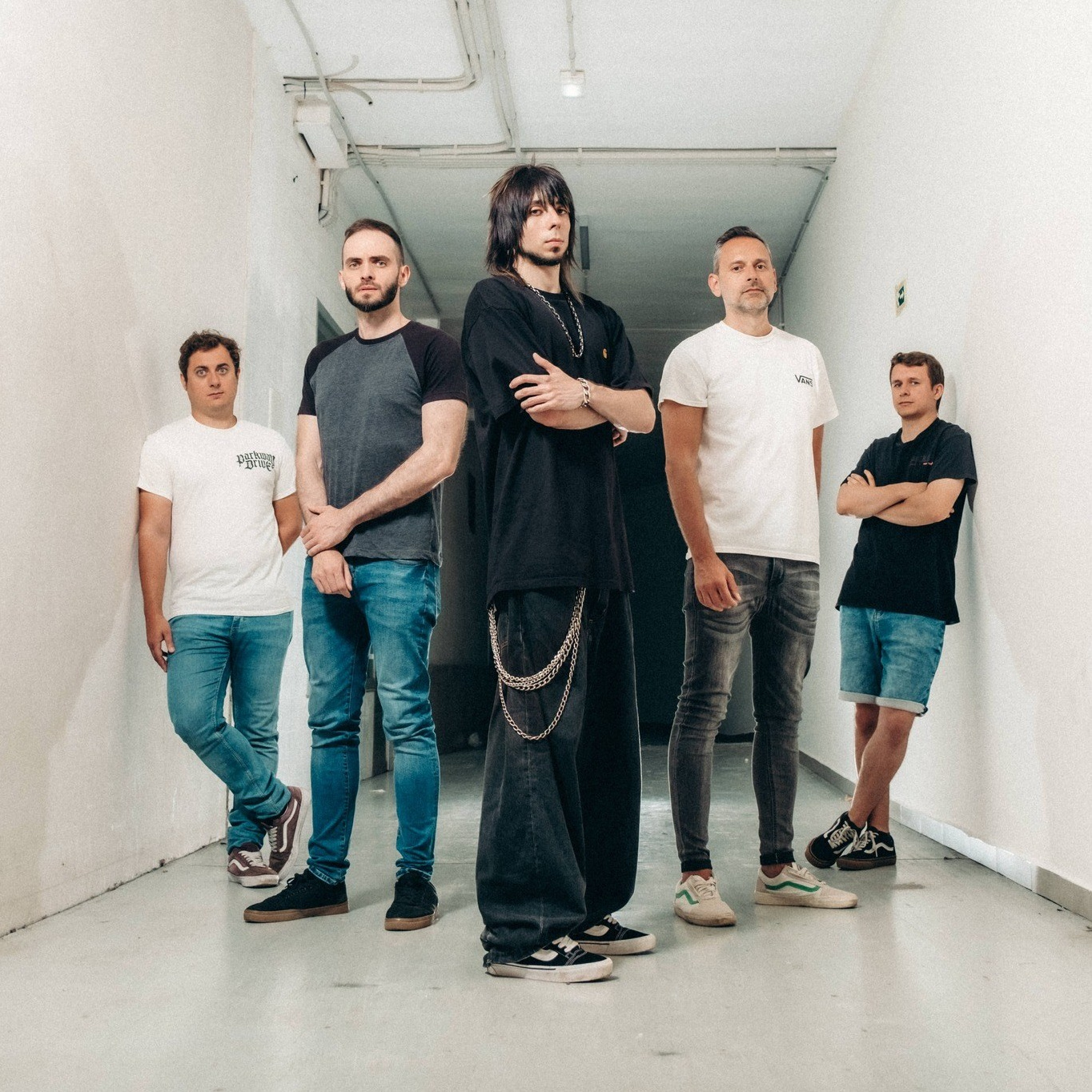
From Asturias, Unexpectance have built a proposal that challenges labels and rigid frameworks within contemporary metal. With Solus Ipse, the band consolidated a universe of their own, where concept, narrative, and musical architecture intertwine with an ambition that is far from common in the national scene.
Rather than trying to fit into prefabricated molds, the group has chosen to develop a recognizable identity — even if that means placing themselves “out of place.” In this conversation, we talk about creative processes, difficult studio decisions, the reality of playing live inside and outside Spain, and that human side that rarely appears on social media, yet holds everything together.
Let’s imagine this interview is not for a music outlet, but for people who don’t know Unexpectance at all. What detail about the band would you share first — not the most obvious one, but the most honest?
(Nacho): Our music requires a certain level of dedication and attentive listening, and it will reward you more fully than if it were something more direct.
When listening to Solus Ipse, it feels like an album built with time and tension. At what point in the process did you feel the record finally began to have its own identity?
(Nacho): The first step is building the “Lore” of what the album will be and selecting the titles that will compose it and give meaning to the story we want to tell. Afterwards, we create the music and start assembling it as the songs come together. When we have around 60% of the album, we assess what might be missing, and once everything is composed and arranged, that’s when the album truly makes sense.
During the recording process, were there songs, ideas, or sections you really liked but ultimately decided to leave out? What led you to that decision?
(Nacho): There were songs we left out because there wasn’t enough time for them to be ready to record — specifically, two more tracks. These will remain for a future album or perhaps an intermediate EP.
(Vaan): As Nacho said, some ideas were discarded due to time constraints, but also because of space. We’re constantly creating and sharing new ideas… The truth is, we never stop.
In practical terms, how does a song usually come to life in Unexpectance: from a riff, a drum pattern, a conceptual idea, an improvisation in the rehearsal room… or is it never the same?
(Nacho): Generally, the music comes from inspiration and from reviewing what we have previously composed and what the album needs. Each song can also have an approach based on areas that are not strictly musical, such as films. Hybris, for example, was conceived as a musical film with a very particular development. Some parts may arise from a drum pattern that enriches the track. In the end, various ideas converge, bringing variety to the workflow. We don’t compose anything in the rehearsal room. And it’s rare for something to come from improvisation.
If you compare the band from your early releases with the one that recorded Solus Ipse, in what ways are you now more demanding with yourselves, and where do you allow more freedom?
(Nacho): We are more demanding in the development of the final product. Structures and arrangements are carefully thought out. We allow ourselves more freedom in terms of influences compared to the first album, which is infinitely more homogeneous.
Every band goes through moments of doubt or fatigue. When that happens in Unexpectance, what prevents you from giving up and keeps you united?
(Nacho): The fact that the five of us are friends, we think in the same direction, and we enjoy good times together without depending on external factors. This is something exceptional in a band, and that’s why we value it so highly.
(Aitor): We have a very strong personal and musical understanding, and that takes precedence over everything else.
(Vaan): Laughter and moments together — we share musical ideals and even hobbies. In the end, the band is built upon very strong bonds of friendship and understanding, which also allows us to be much more honest and open with our ideas and to always take what we believe is the best path for the band. Ultimately, we are a ship that never sinks thanks to all of this.
What is the most unexpected or unusual comment you’ve received from a listener that, for some reason, stayed with you?
(Nacho): Perhaps the most surprising thing is the musical references that some media or listeners attribute to us, which actually aren’t references for us at all. It shows how music can be perceived very differently from how it was composed.
(Vaan): Without a doubt, a review where the main focus of the comments was my ’90s appearance… We had such a laugh about it. In the end, it actually gave us quite a bit of exposure.
Your music doesn’t fit the usual stereotype of a Spanish band. Have you ever felt out of place within the local scene, or has that given you a clearer identity instead?
(Nacho): We are completely out of place in this country, where styles are more rigid and constrained, and must meet certain requirements for the audience. That doesn’t mean there aren’t people who appreciate our music — of course there are. But with the broader audience, we often feel that they don’t fully understand our music 100%.
(Aitor): We are aware that we don’t fit into any exact pattern and that we probably exist between different musical territories, which can leave you somewhat in no man’s land. Even more so in a country like Spain, where it often seems that more generic styles prevail and where there appears to be little room for musical experimentation, even if it’s subtle. Despite all that, we will remain faithful to what we do, because it’s what fulfills us the most.
(Vaan): Totally and absolutely out of place within the scene — but also with a strong identity. We want people to listen to us and say, “That’s Unexpectance.” Even though we have influences, we don’t want to be a band that reminds you of “X.” This is deeply embedded in our way of composing and evolving as musicians. We seek our own sound and our own identity, which, in my opinion, is the most fulfilling way to create and, above all, to explore and discover your own limits as an artist and as a person.
When playing live, do you notice clear differences between how audiences react in Spain and abroad? How do those differences manifest?
(Nacho): Music, in general, is not especially appreciated in Spain. It is valued much more in other countries. Proof of this is the low number of national tours due to a lack of audience. While in other countries being a musician is a respected art form, here it is often seen as a waste of time or something trivial.
(Vaan): Of course! Just go to any other European country where even an audience of 20 people will go wild for a band no one knows. Although we currently have a very good wave of artists in the Spanish scene, especially in the modern one, people are much more musically closed off than in other parts of the world. At least lately Spain has been gaining momentum, and we’re starting to have a bit more presence on the international scene in terms of metal and its subgenres, so it seems like a better future is on the horizon.
If you had to point to one truly important concert in Unexpectance’s history — not necessarily the biggest one — which would it be and why did it mark a turning point?
(Nacho): Without a doubt, the Unirock festival. They treated us very well and the experience was wonderful. The audience, the media, the treatment, the organization… it marked us forever.
What part of life on stage and on tour almost never appears in photos, videos, or social media, but for you represents the most real side of the band?
(Nacho): What happens backstage — that’s the most human and least visible part of a band. It’s where bonds are established and strengthened among the members and with people from other bands, with nerves, laughter, and countless anecdotes that, in the end, are what we remember most beyond the act of playing itself.
(Vaan): As Nacho said, what happens backstage. Also, the trips and the conversations between us and with other bands are priceless. In the end, that’s what humanizes the experience the most — realizing that, deep down, we’re all in the same situation and that we truly enjoy being up there.
If someone could create a completely honest photo report about Unexpectance, without poses or artifice, what moment would you like them to capture?
(Nacho): Perhaps the most human moments off stage. They say a lot about who we are.
(Aitor): The laughter we usually share together. We try to face life with humor whenever possible, and those shared moments are the best part of this band.
(Vaan): Everything! Unexpectance behind the scenes is a mix of pure camaraderie, brainstorming, and a free environment where we share ideas and debate any topic — whether it’s what our function in this world is (maybe for new content) or how long we can hold our breath underwater, very much in our style.
To close, if you could leave our readers not with advice or a typical message, but with a feeling or inner state associated with your music, what would it be?
(Nacho): Emotion.
(Vaan): Emotion, feeling, and depth.
Interview: Andrei Lukovnikov


