Wicked Leather: burn everything down, start from zero and find your own voice
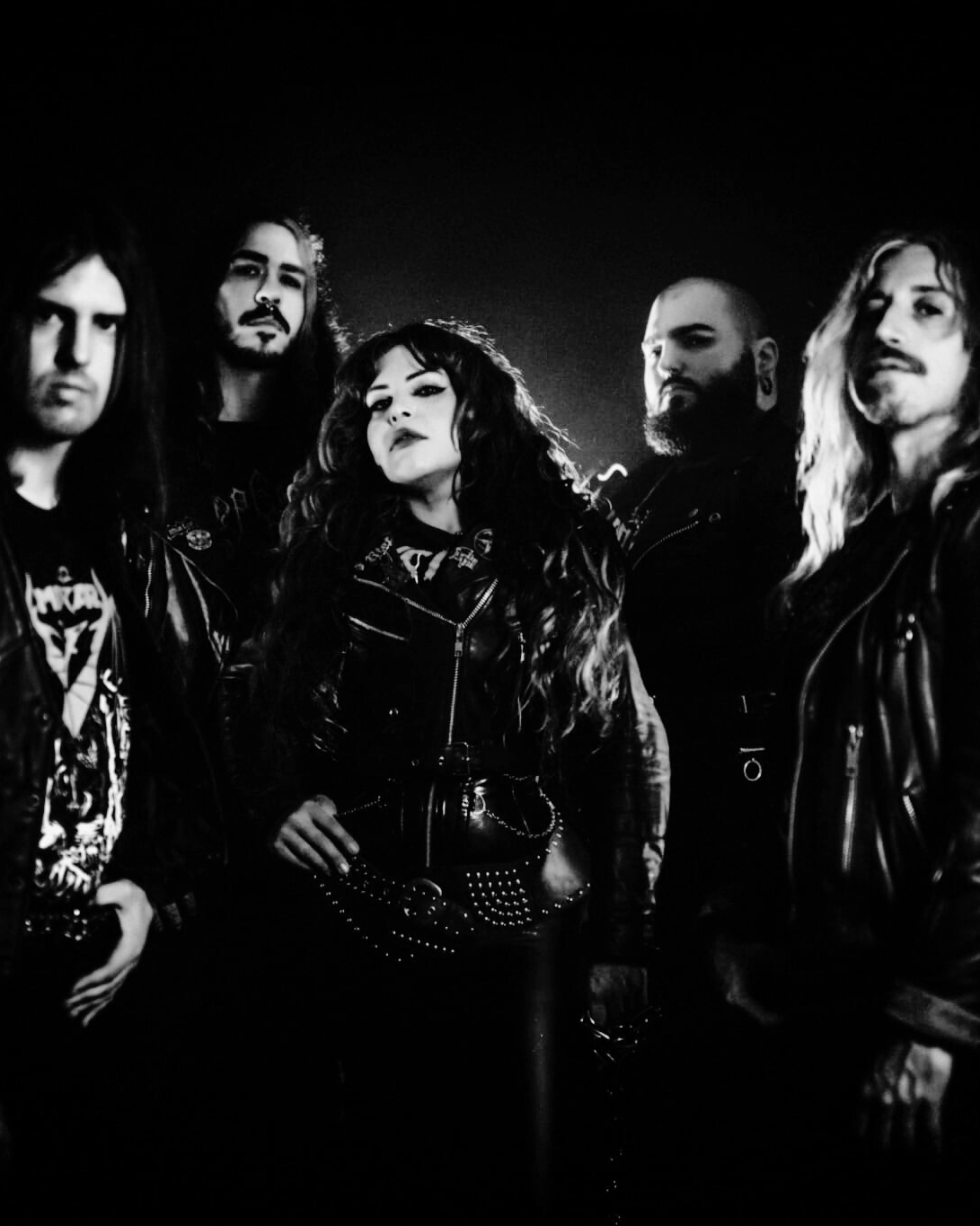
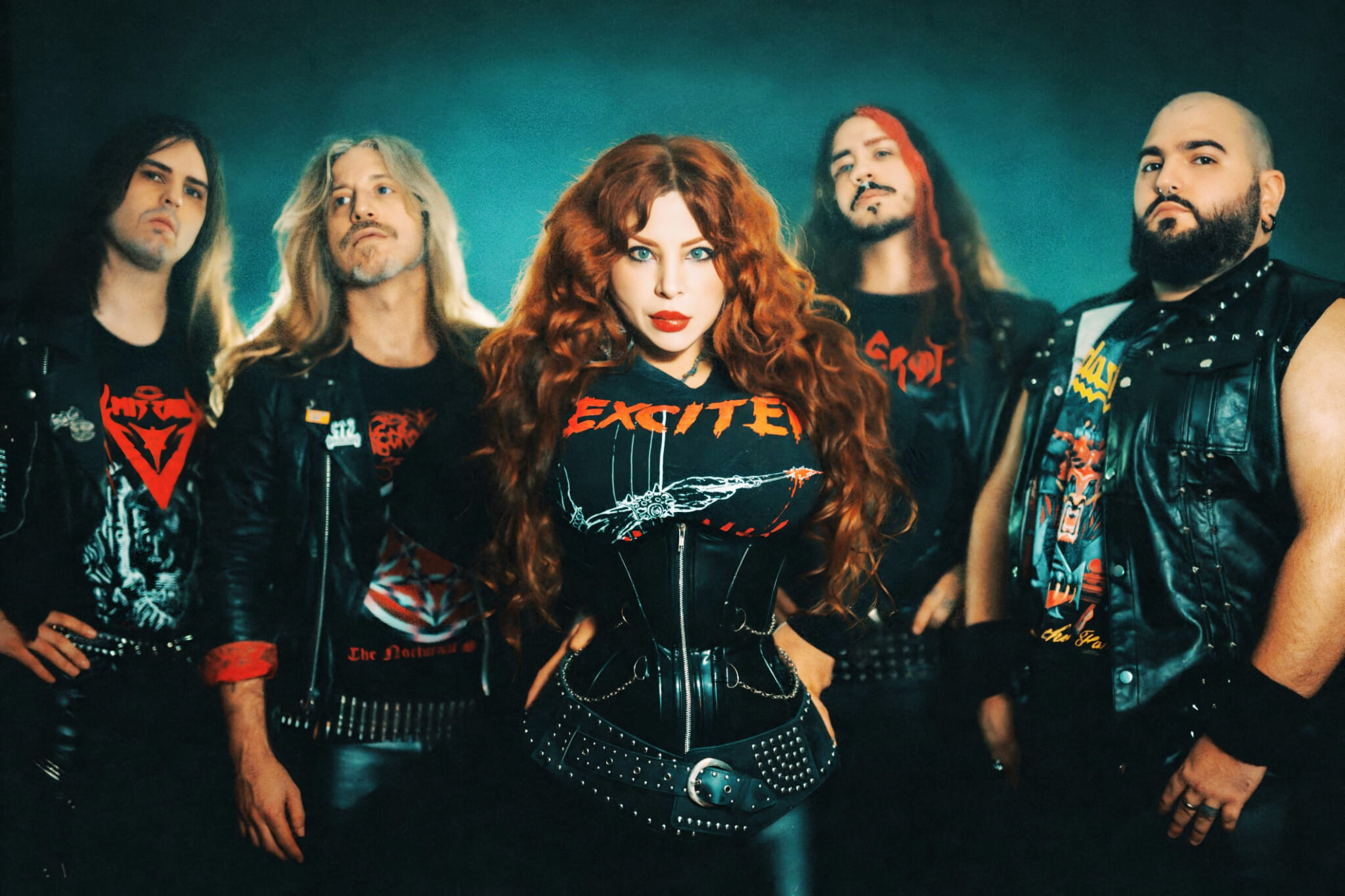
Some bands are born out of ambition, others out of coincidence. Wicked Leather emerged from a far more radical place: the conscious decision to destroy everything that existed before and rebuild without compromises. Rooted in Barcelona’s collision of cultures, personalities and scenes, the band doesn’t follow formulas — it channels atmosphere, tension and instinct.
With Season of the Witch, Wicked Leather stepped into a darker, more intuitive creative territory where songs are not written so much as summoned. Ritual, identity and raw honesty replace safety and predictability, while heavy metal becomes a space for freedom rather than nostalgia.
In this interview, Wicked Leather talk about possession instead of composition, creative risks, allergic reactions in the studio, the importance of not fitting in — and why sometimes the only way forward is to burn it all down and start again.
If Wicked Leather were not a musical project but an almost inexplicable phenomenon, how would you describe it to someone who has never listened to heavy metal, but knows how to perceive atmospheres? What would they feel even before understanding the sound?
They would feel tension in the air. Something dense, electric — like when you know a storm is about to break, but you haven’t heard the thunder yet. Wicked Leather is felt before it’s understood: danger, attraction and curiosity.
During the creation of Season of the Witch, were there moments when a song stopped being just a composition and started behaving like something autonomous, with its own character? Which track felt the most “alive, ” and why?
With Season of the Witch, I understood that I couldn’t impose anything. I had to fully step into the role of the witch, lower my guard and let the song possess me. The laughs, the screams, the chorus in a higher register… I tried everything and nothing worked. Until I stopped forcing it and simply listened. At that moment, the song took control and led me exactly where it wanted to go.
Black Goat was an even more ritualistic experience. The lyrics appeared in the studio almost like an invocation, when I stopped thinking and allowed myself to be that dark character without filters. It wasn’t a rational process — it was letting the atmosphere speak. That’s when I understood that some songs aren’t written or polished… they’re channeled. And when they arrive, it’s better not to argue with them.
You’ve spoken about the weight of dreams, visions and inner fears in your music. If you could extract a single sound, image or emotion directly from a nightmare and turn it into a riff, what would it be like?
Memorable, catchy and full of tension. Like a door that opens by itself in a dream and you know you shouldn’t cross it… but you do anyway.
Spain — and especially Barcelona — is a place of very strong contrasts. Do you think your music would sound different if Wicked Leather had been born in another country? Is there something in your sound that could only have emerged here?
I think Barcelona has something special: it’s a deeply cosmopolitan city, and that’s where part of the magic lies. Wicked Leather sounds the way it does because we are very different people, with different origins, cultures and ways of understanding heavy metal. Each of us brings influences from different places and scenes, and all of that mixes here. It’s not just the country — it’s the constant crossing of ideas, styles and personalities. That collision is what ultimately gives the band its character.
Looking back, what personal or creative trait do you feel has changed the most from the band’s early days until now, and where is that most clearly reflected in the music?
Today we no longer take false steps. We know who we are, what we want, we recognize it when it appears and we take it without fear. You can hear that in the music — in how we make decisions, in how we let the songs breathe, and in how we trust our identity.
Metal has always walked the line between loyalty to its roots and the need for transformation. In a time when the industry is changing so fast, what does authenticity mean to you today?
For us, being authentic means not disguising things. This isn’t pop dressed up as metal: this is metal.
We’re not afraid to break a formula, even though traditional heavy metal is often treated as a safe recipe. Thinking outside the box isn’t a pose — it’s a necessity.
A lot of people are afraid of not fitting in, of stepping outside the formula, of being cringe. We’re not. I’m not afraid of being cringe. This is who I am, this is who we are — period.
In the end, there’s no magic formula. There’s attitude, conviction… and balls.
Tell us a strange, uncomfortable or even absurd story related to Wicked Leather that has never made it into an interview — something that happened only once, but you remember vividly.
During the recording, I once again confirmed that I’m allergic to literally everything. I finished recording the vocals and told Michel, the guitarist: “Take me to the hospital.” He looked at me and said, “Nah, you’re fine.” I repeated, “No, seriously. Take me to the hospital.”
When we arrived, my throat was almost completely closed due to an allergic reaction. They gave me corticosteroids intravenously and I ended up hospitalized.
The best part? I had already finished recording the vocals. So yes — first you record the album… and then, if there’s time left, you go to the emergency room. Priorities.
During the creative process, what has been the most radical artistic or musical experiment you’ve tried with a Wicked Leather song? What did you learn from it, even if it never got released?
I think the song where we experimented the most was Masquerade of Shadows. There’s really no fixed structure or pattern there. We wanted to tell a story, and that story had to be reflected in the music. It’s Edgar Allan Poe’s The Masque of the Red Death, with a nod to Roger Corman’s film, because we love cinema and we like everything to have a visual and theatrical touch.
We learned that sometimes you have to let the music flow like a narrative, without strict genre rules, and trust that atmosphere and emotion will take the song where it needs to go. It doesn’t always come easily, but when it works, it’s completely unique.
Has there ever been a reaction from the audience — on stage or off — that made you rethink a song, its energy or its message?
Yes. There was a song, Midnight Creature, that seemed to bore or lull the audience. So we modified it and re-recorded it with changes, and now people love it. Basically, we changed the rhythms, tempos and made it more alive.
Before stepping on stage, many musicians develop small, almost unconscious rituals. If you had to define yours in three essential gestures, what would they be and what do they give you mentally?
First, there’s always a beer nearby: it helps us relax, loosen up and remember that we’re there to enjoy ourselves, not just to play.
Second, the closed-fist bump: our infallible ritual of friendship. No matter what happens, we know it’s all for one and one for all.
And third, a moment of silence before going on stage: we look at each other, take a deep breath and focus on the music we’re about to deliver. It’s like telling ourselves, “Okay, everything else disappears now — this is what matters.”
They’re simple gestures, but they remind us who we are, that we trust each other, and that we’re ready to unleash all the power of Wicked Leather at every show.
Your concert and backstage photos seem to tell a parallel story to the music. If one of those images could become a film scene, which moment would you choose and what story do you think it holds?
Well, there are so many photos, and each one has its own story. Some might look like horror — well, not exactly, haha. They’re more stories of extreme friendship, tour exhaustion and crazy moments that only happen between people who share a stage and the road.
For example, there’s a photo where we’re all lying on the backstage floor after a brutal show, surrounded by cables, pedals and beer cans. It could be a scene from a movie where the heroes survive an epic battle — exhausted, but victorious. Every photo has that spirit: tiredness, laughter, complicity… and a bit of controlled chaos.
Within the band, what creative conflict or disagreement turned out, in hindsight, to be one of the best decisions for defining Wicked Leather’s identity?
Before Wicked Leather there was another band that doesn’t deserve to be named, but the wisest decision was to burn everything down and start from zero.
Thank you for your time and your music. To close: if Season of the Witch were an open letter to the listener, what would you like each person to take with them after hearing it for the first time?
We want them to take away a feeling of strength and freedom. To feel that music doesn’t have to ask for permission or fit into formulas. To allow themselves to be who they are, with everything that implies: intensity, darkness, joy, aggression… all together.
Season of the Witch is an invitation to embrace darkness and our scars, because they’re part of who we are. To let the music take them, shake them, possess them, and remind them that heavy metal isn’t just noise: it’s energy, personality, attitude… and acceptance of what we carry inside.
If, at the end of the first listen, someone feels a little more alive, more awake, more complete with their own marks and shadows… then we did our job right.
Interview: Andrei Lukovnikov