arrecí0: laughing at disaster, playing from the wound, and turning “tonti-punk” into a space of their own
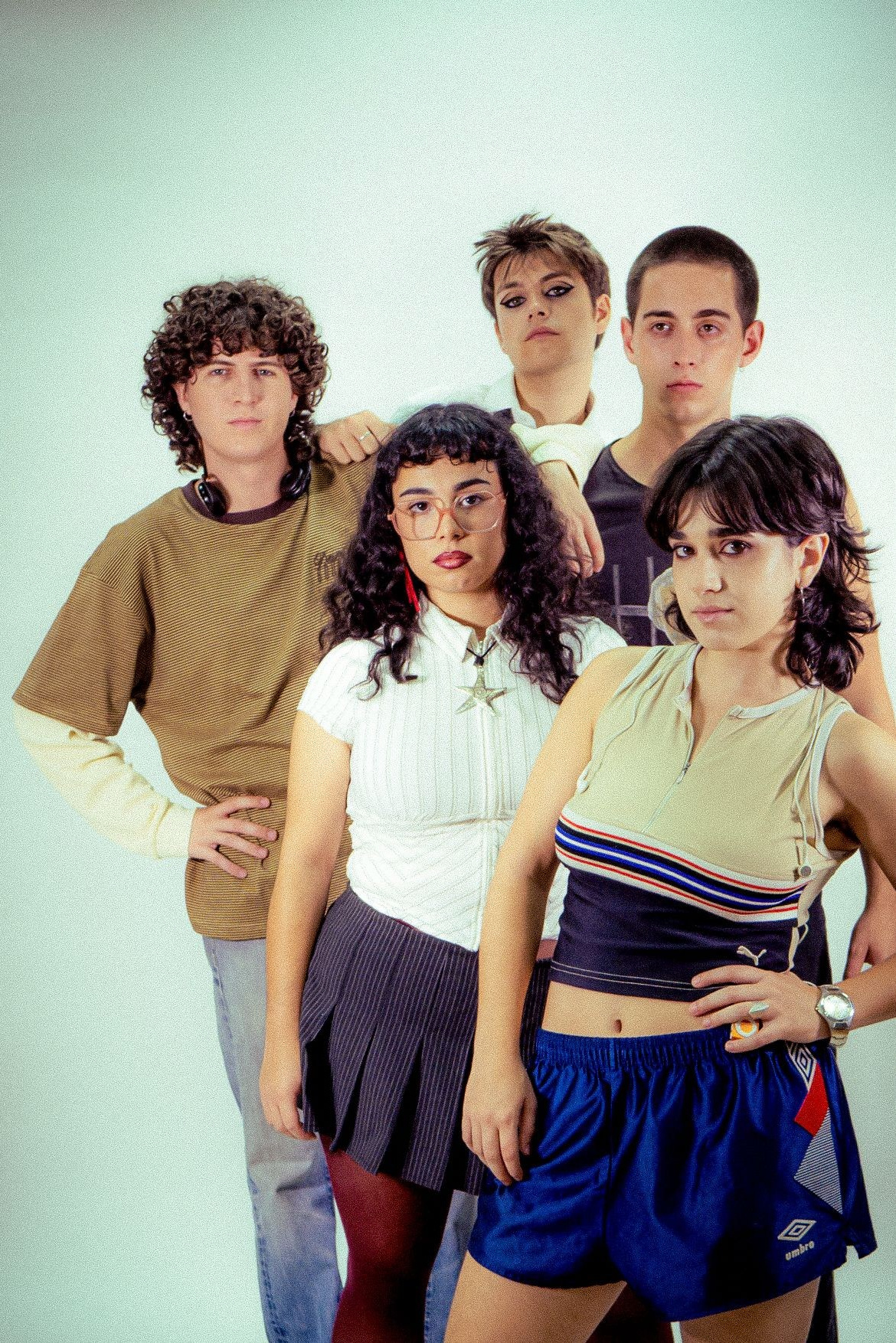
Somewhere between sharp irony, punk energy and an emotional sensitivity that appears when you least expect it, arrecí0 have been carving out a very recognizable place within Spain’s new alternative scene. Their way of blending humor, rawness and sonic experimentation — sometimes deliberately clumsy, sometimes unexpectedly intimate — turns each song into a small act of everyday resistance.
From their first fully independent releases to the current process of working on their debut album, the band have evolved both musically and internally. Without losing their rebellious drive or their playful relationship with language and early-2000s pop-punk codes, arrecí0 have learned to live with conflict, change and emotional exposure as essential parts of their creative identity.
We spoke with them about “tonti-punk”, masculinity, autotune, concerts that leave a mark, domestic sounds still missing from their music, and that fragile — but necessary — balance between laughing at everything and taking things very seriously.
Your style is often described as “tonti-punk” or “tontipop”. If you had to explain it to a makeup artist who doesn’t know your music, how would you define “tonti-punk” in just three words?
Rebellious, energetic and fun.
In your lyrics, irony often coexists with very personal experiences (for example, in “Onvres” or “invierno/verano (de mierda)”). How do you find the balance between sarcasm and honesty without losing emotional depth?
In the end, I think it’s just our nature. We like to laugh at the misfortunes that happen to us, because otherwise life would be one huge, continuous drama. Some of us tend more toward jokes, “shitposting”, or sarcasm; others toward depth and taking care with the message. Luckily, we complement each other well and manage to find the right balance.
Tell us about the strangest or most unexpected message a fan has sent you after a concert or a release. Was there ever one that made you rethink a song, or even its title?
Maybe it’s not the strangest, but I clearly remember that girl who came backstage after a concert and asked me if I had “hijes”… I asked her several times, surprised, to understand whether she was really asking about gender-neutral children, and after a while I realized she was asking for my IG (Instagram). We’re getting older too!
When you write a new track, what is your “threshold of honesty”? Do you stick with the first emotional impulse, or do you consciously monitor yourselves, revising every word?
We are always honest in what we say. All our songs are us. But it’s true that writing is also a craft, and we like everything to be well put together and well written. It’s a somewhat delicate balance, because sometimes naturalness is sacrificed in an attempt to make everything perfect, but that’s where the fun is — in trying to find that balance.
In “Onvres” there is a very clear critique of certain ideas about masculinity. What cultural or musical moment (outside your own scene) most influenced the decision to address this topic through a song?
All of us have come across this type of person, even if it hasn’t always been talked about so openly. In my case (Marta, singer), the first feminist demonstrations I attended in 2016/2017 had a big influence, when I began to become aware after a tough personal experience. We felt the need to denounce and share these experiences, not from a place of revenge, but as a way of healing and helping other people feel understood. Also, at concerts there’s always someone who shouts “onvres” with an expression that says it all.
Your first releases were completely independent, and now you’re working on your debut album. What things have you deliberately left behind from those early recordings — stylistically, emotionally, or technically?
We’ve changed a lot as a band, especially behind the scenes.
There have been moments of tension and change, as a result of adapting to one another. I think that on this record, the creative voice of each member of the band is more present than ever. That’s why, even though we’ve changed compared to our first songs, it feels more arrecí0 than ever.
In some tracks you use Auto-Tune and synthesizers in a deliberately “clumsy” or “childish” way. Is that a purely aesthetic decision, or a way of conveying a specific mood or idea?
The teeth and the autotune emerged at the beginning as a way of differentiating ourselves stylistically. In the end, we draw a lot from early-2000s pop punk and alternative rock, and with the idea of modernizing it, it felt natural to use autotune and synths. From that aesthetic decision, we realized it gave everything a playful edge, which fits very well with what we want to convey.
If you were given a week in a studio in Madrid or Barcelona on the condition that you create a track exclusively as a duo with a local artist, who would you choose and why?
Honestly, even though we love Madrid and Barcelona, we think it’s important to create in other places too. We’re from Andalusia, and our dream studio is the mine in Granada, so we would choose Los Planetas.
Describe the moment when you first realized that your music could move from being a party track to something deeper, more intimate and potentially dramatic. Was it a specific concert or a particular song?
The concert in Seville in June, when we played “me he quedado en casa” with Julia on piano and Ale on violin. Our backing vocals and the a cappella ending were very emotional for us, and undoubtedly for the audience as well. We had just been jumping around, and suddenly a beautiful, calm atmosphere was created.
What Spanish element — cultural, musical or linguistic — would you be willing to incorporate into a song, even if it radically changed its sound?
Breakbeat, a flabiol, or proverbs also seem great to me.
If you could play at a small festival in Spain that almost nobody knows right now, but that you think will become cult within five years, which one would it be? Why?
Observatorio is already mainstream… and CIPOP is fucking great, no pun intended, and it’s going to grow even more and isn’t that well known. I wish they would do an extended version with more days.
If tomorrow you lost the ability to use traditional musical instruments, but had access to any domestic sound in your house (the fridge, the kitchen, the washing machine…), which one would you use as the basis for your next track? Why that sound?
The sound of a metal dog bowl, because it’s perfect. We’re really missing it… Necessary.
Imagine that your music isn’t made up of songs, but of short stories. How would you describe the story (beginning, middle and end) of “Mala suerte”? And how would it change if the protagonist were, on the contrary, a hopeless optimist?
I always see songs in a somewhat narrative way. Not because there has to be a story per se, but in how they’re structured. They always build toward a point of tension, and then reveal something. In Mala suerte it’s especially literal. The story of Mala suerte follows a protagonist trapped in a streak of small everyday failures that reflect a deeper discomfort. Everything seems to go wrong: work, habits… In the middle, absence becomes obsessive and contaminates their perception of the world. The ending reveals that the bad luck comes from the loss of a sock. If it were the other way around, they would find a truth hidden from the eyes of fools.
To close: if you could leave our readers an “invisible object” — an idea, an emotion, or a small obsession — to stay with them after reading this interview, what would it be and why?
That people who know how to ride a bike should value it, because Marta doesn’t know how, and it’s really hard to manage so many precarious jobs using public transport, and she ends up being late to rehearsals.
Interview by Andrey Lukovnikov