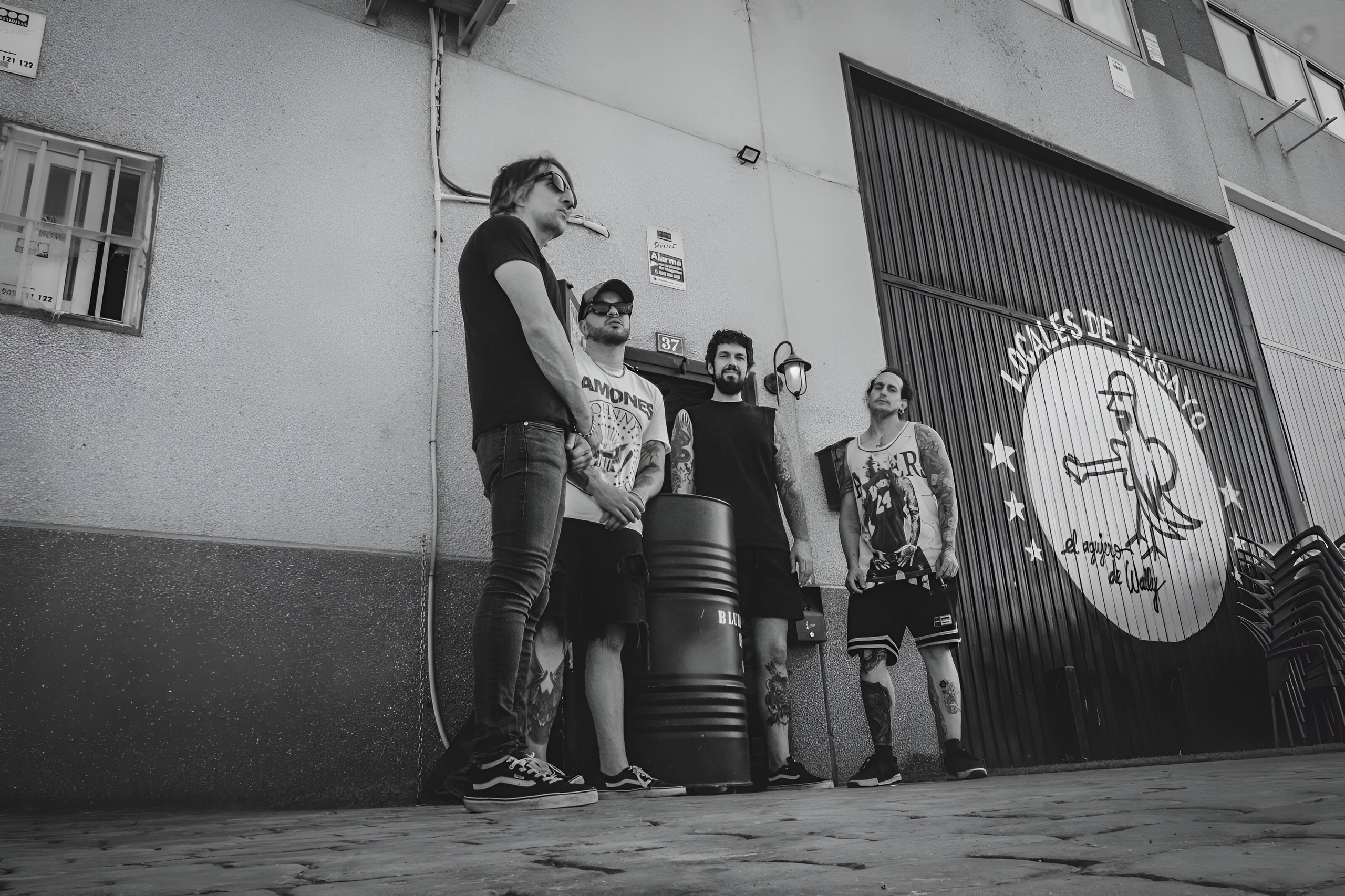
Lucky Strikewalker: “We don’t care if there are seven people or three thousand — we play as if it were Wembley”
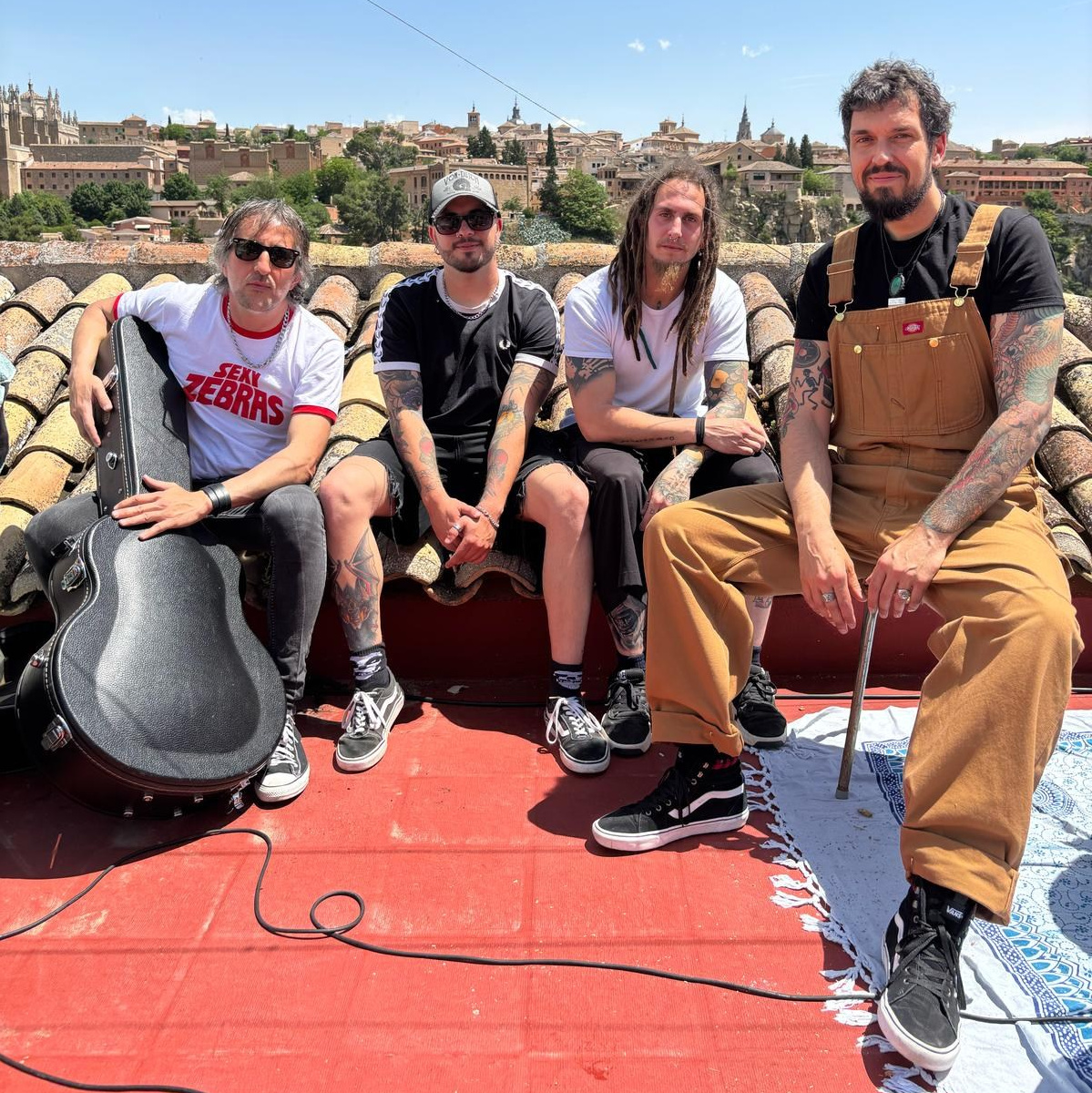
From an almost empty bar in Albacete to European stages, Lucky Strikewalker have built their path on attitude, honesty, and one clear idea: rock is not about numbers, it’s about commitment. Whether there are three people in front of them or three thousand, the band goes on stage as if it were the most important night of their lives.
With direct lyrics, a critical взгляд at the music industry, and a sound rooted in Spanish rock without trying to imitate anyone, Lucky Strikewalker have become one of those bands that connect on a visceral level. Their music speaks about exhaustion, desire, contradictions, falls, and survival — without makeup or prefabricated speeches.
If you had to introduce yourself to someone who has never heard you before, but only with one story, which one would you tell first?
I would tell the story of our first gig in a bar in Albacete. We arrived by a miracle because the steering of a wrecked van my father lent us broke down (the only time we’ve ever traveled in a van, by the way). There were only seven people in the bar, including the bartender. Many bands would have played with the handbrake on, but we jumped straight into the mud and played as if it were Wembley Stadium. When we finished, a guy asked me for the drumsticks, they bought some merch and a CD, and a drunk came up to us and said: “I don’t know who you are, but you blew my mind.” That’s the essence of Lucky: we don’t care if there are three people or three thousand; we give everything because we don’t know how to play any other way. While we were packing up, some guy was fighting with the bar owner, jumping over the counter… I think that’s the best possible introduction story.
Many of your songs feel like chapters of your life. Is there any song that showed you something about yourself you didn’t expect to discover?
Honestly, many of them. When I write, I try to be completely transparent, and that forces me into an almost therapeutic process of introspection. To compose, I first analyze what led me to that emotional state, and in that reflection process my critical sense comes out. I judge myself: how I act, how I think, what I could have done better… In the end, my songs are the mirror I look into when I don’t like what I see.
Your music clearly carries the spirit of Spanish rock, but with your own style. If your music were a city, which three streets in Spain would describe it best, and why?
I don’t think streets with these names actually exist, but I’d say Calle Juerga: our shows are exactly that — fun, chaos, sweat, and alcohol. Then Calle Corazón: whether it’s broken or in perfect shape, everything comes from pure feelings — love, heartbreak, joy, or anger. And finally, Calle Actitud. We’re very clear that we don’t want to be the typical band trying to become the next Marea or Extremoduro. With all due respect to those bands, we want to be Lucky. That’s our street and our flag.
In the video for “Me vas a joder la vida” there are details that almost nobody notices. For you, which gesture or scene is the most important but goes mostly unnoticed?
For me, it’s the looks of exhaustion mixed with the addiction generated by the person you like; I think we managed to capture that expression in several shots. It represents that moment when you know a relationship or a situation is destroying you, but instead of running away, you order another drink. It’s a gesture of accepted defeat that perfectly sums up the bitterness and honesty of the song.
When you played at Asema Fest in Finland, your Spanish-language rock reached a northern audience for the first time. Was there a small moment that made you feel music can break any barrier?
That was the key moment when we decided we would scrape together money “from under the stones” to record our first album. Seeing people who don’t understand a single word of Spanish enjoying themselves and trying to hum the choruses is something unique. It completely blows your mind; very few bands in Spain get the chance to connect like that with a foreign audience. That’s when you understand that rock is a universal language that doesn’t need subtitles, and we thought: “Hey, maybe our songs really are good.”
“La gran estafa del rock and roll” isn’t just an album, it feels like a manifesto. If it were a living being, which archetype would you give it, and why?
I’d give it the Survivor archetype. This album is our response to certain media and record labels that wanted to “bet” on us but really just wanted us to give them money. There are a lot of “wolves” in this business — that’s where the album theme comes from; it’s all nepotism and people with money. Don’t tell me the band sounds great and you’re interested if the next thing you want is for me to pay you over a thousand euros. The album is that guy who no longer falls for false promises.
Spain has very diverse musical traditions. Is there any folk rhythm or sound you’d like to incorporate into your songs someday, even if it’s not rock?
Puff! Let’s see… maybe some flamenco guitar, or I don’t know, bagpipes, haha. I think it would be weird with our style, but with all due respect to Galician bands, a muñeira would be cool. It’s already been proven that rock and bagpipes work well together.
Sometimes songs change while you’re recording them. Is there any that ended up telling a completely different story than you initially thought?
Oh man, so many! What you write on paper usually mutates when it goes through the band and the melody. A clear example is “No me quise enamorar”. It was born as a monologue of one person expressing discomfort, but in the end we decided to add a female voice. What was a subjective point of view turned into a clash of opinions within a couple. That duality gave the song a life I hadn’t anticipated.
Rock is a state of mind, but the industry never stops moving. What does “evolving” mean to you today: style, connection with people, or the way you create music?
I think the evolution of rock depends on each band. There are brutal current proposals; others don’t connect with me, but they’ve helped bring rock to Eurovision and to a younger audience, and that’s what matters. At Lucky, we don’t think “this is modern” or “this sounds old”; if we think a song is good, it leaves the rehearsal room, and if it works live, it gets recorded. As for connecting with people, it’s subjective: some people love the ballad, others will hate it. You can’t create thinking only about the audience; it has to fulfill you as an artist.
Your fans seem more like a community than just followers. What was the most unexpected or moving moment with them that changed how you see your music?
There are many. From going to a new place and hearing people sing your lyrics, to the most loyal fans who organize meet-ups to have drinks before a show like they’re going to see Maiden. But what hits me the most is when the show ends and a stranger asks why we didn’t play a certain song; that’s when you realize you thought that song didn’t connect, but for someone in the audience it was essential. It changes how you see your own catalog.
In the video for “Lobos” you play with ideas of power and predation in the industry. If you could gather all the “corporate wolves” of the music world in one room and ask them one question, what would it be?
I’d ask radio programmers if they don’t get bored of playing the same Scorpions song every day at the same time; that’s routine, not rock. Rock is risk and new bands filling venues without anyone playing them on the radio. I’d tell promoters to bring back the culture of the Opening Band. In Toledo there are many concerts now, but “support acts” are no longer common, even though they’ve always been the way to boost lesser-known bands. And I’d tell venues to bet on original music: fewer tribute bands and fewer abusive rental fees.
They say rock dies and is reborn all the time. What genre blends or experiments seem most interesting and different to you today?
As Neil Young said: “Rock and Roll will never die!” I don’t think there’s a written formula. Well-done experiments work, but the basics also work perfectly: drums, bass, guitar, and voice. What’s most interesting today isn’t genre blending, but the blend of authenticity between bands and with today’s media.
Thank you for your honesty. What strange or unexpected message would you like to leave our readers, not as an artist, but as someone who has lived every riff and every line of their life?
We live in a time where everyone tries to be a copy of a copy to fit into an algorithm, and that’s bullshit. Life is short, it’s loud, and sometimes it hurts, but it’s yours. My advice is to be yourselves, surround yourselves with people who tell you the truth to your face, don’t chase easy applause, and if you have something to say, say it screaming. You don’t need to be a virtuoso to change things — you just need the balls to be yourself when the world asks you to be someone else. Less filters, more distortion.
Interview: Andrey Lukovnikov