Hadadanza: creating musical universes where fantasy and reality meet
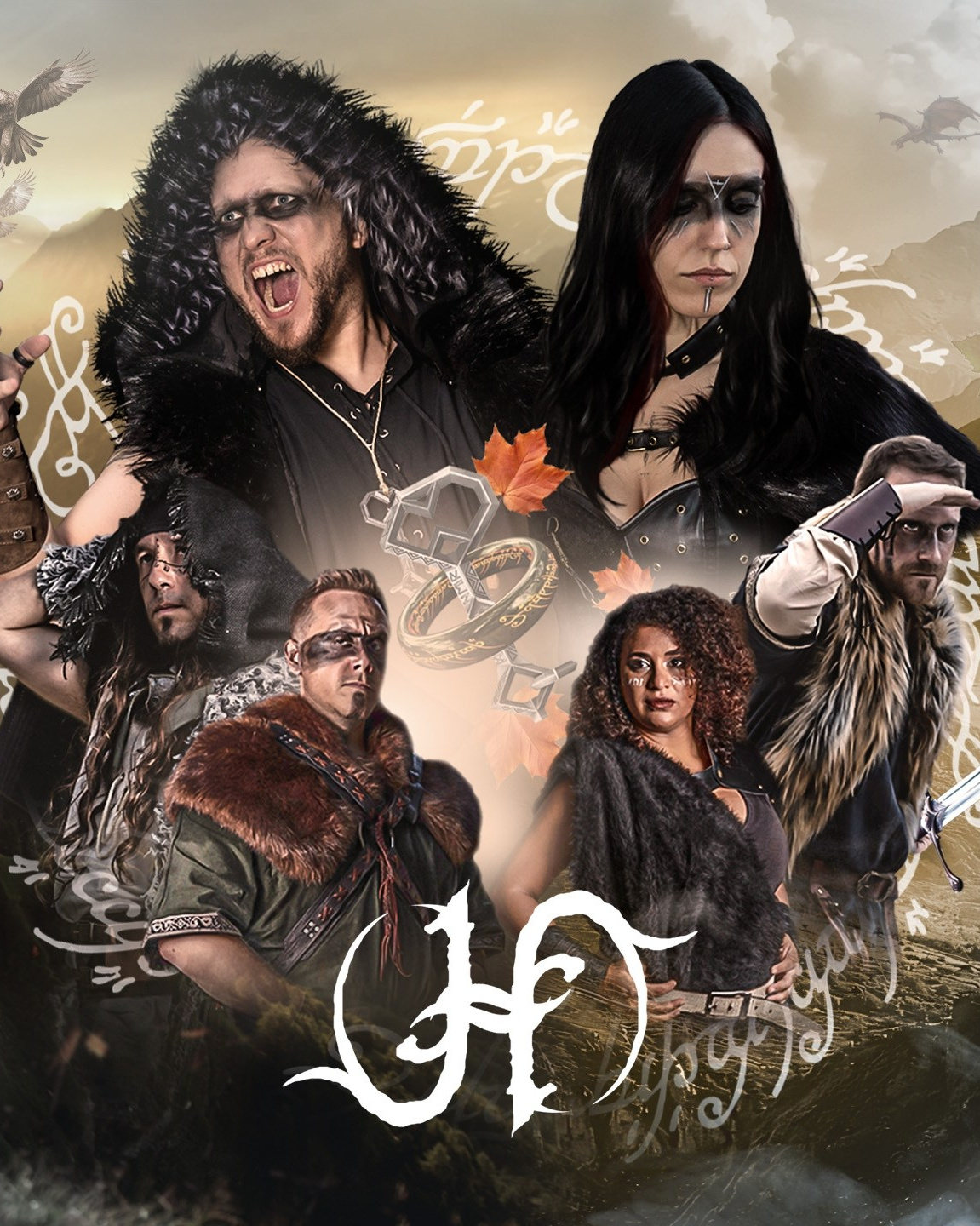
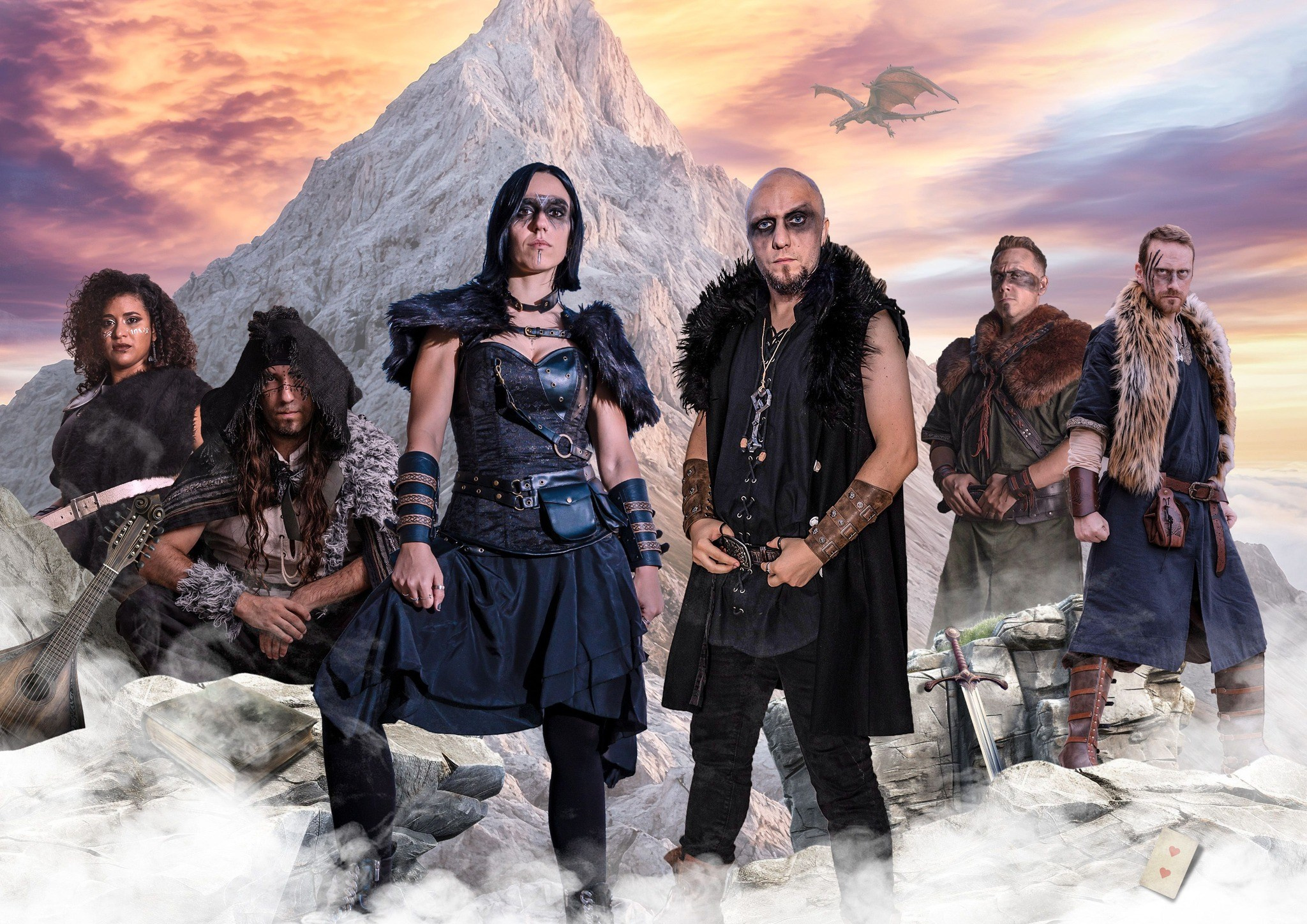
From Alicante and Murcia, Hadadanza has gone beyond traditional folk metal. Their music is not just songs; it is complete worlds, populated by characters, legends, and emotions that connect listeners with fantastical stories. Each album functions as a chapter within a universe of its own, where narrative, instrumentation, and performance intertwine to offer a unique experience. This approach turns every release into much more than an album: it is an invitation to live musical adventures.
In this interview, the members of Hadadanza open the doors to their creative process and show how they integrate literary, cultural, and personal influences into their music. From their roots in Spanish folklore to the challenges of today’s music industry, each answer helps us understand not only the technique and inspiration behind their compositions, but also the philosophy of a band that has turned music into an emotional and narrative journey for its audience.
Hadadanza, from the very beginning, has built its music as a world with its own mythology. At what point did you realize that it wasn’t just about writing songs, but about creating complete universes, and how did that decision change the way you make music?
From the very beginning we were very clear about how we wanted to bring our musical proposal into reality. We have always loved fantasy and stories from other worlds; we wanted to tell legends, fantastical stories dressed in joy, but we wanted to invent them ourselves, to make them ours. We found it very interesting to be able to build, around all those tales and stories, a fictional universe to which they could belong, and to present it as a world in which all our narrative could exist.
For us, simply making songs has always seemed insufficient. We believe that adding a fantastical component and a narrative thread connecting one song to another, one album to another, from a literary perspective that can continue both within and beyond music—and even potentially extend into the literary field someday—is a very powerful and complete concept.
I can assure you that when you write songs thinking of each one as a chapter through which you can introduce characters with a past, a present, and a future, you are not just telling events—you are creating an emotional bond with that character and a sense of belonging to that world. We can delve deeper into the emotional factor, allow stories and characters to evolve alongside the music, build bridges between works, and not just make music but create an entire narrative amalgam. For us, this has allowed us to compose with creative freedom, and we feel there is an endless range of expressive possibilities.
When working on the concept of Aventura y Leyenda, you translated a literary story into musical language. Which element of that story was the most difficult to turn into sound, and what did that process teach you as composers?
Bringing something as complex as a work by Tolkien—whom we consider the father of fantasy—into music, while respectfully and canonically taking into account the narrative aspects of the book, was a real compositional challenge. We had to carry out a process of analysis and understanding not only of The Hobbit, but also of many other literary details of the entire legendarium: other books, other eras, other stories by the author, and even the languages of his world. We felt that, in order to portray the novel we were going to talk about as faithfully as possible, we needed to take a broad view beyond the single work.
If we had to choose just one element that represented a true challenge for us as composers, it would be the search for ways to construct the sensations described in the book: the landscapes, the environments where different events take place, and the emotions of the characters in each part of the novel. It was a work of interpretation, of musical mimesis between what is narrated and how we could musically represent things such as the smell of wood, grass, rain, fire, or earth; how abandonment, anxiety, or a sense of distance might sound; what courage sounds like; or what music would be appropriate for each passage of the story.
There are certainly many elements in this album that are interconnected, and choosing just one is very difficult for us. But we could say that the overall concept itself is what we spent the most time thinking about while working on Aventura y Leyenda.
If we imagine Aventura y Leyenda not as a closed saga, but as the first chapter of something bigger, what would its continuation be like in terms of atmosphere, sound, and internal conflict?
In this case, the continuation would have to address the fact that half of the novel remains, and that the story increases in epic scale as it progresses. To give it cohesion and a proper conclusion, we would be talking about composing an album with a more epic component: more choral passages, the appearance of orchestral elements, heavier rhythms, a Celtic sound closer to a cinematic atmosphere, a wider variety of vocal expressive resources, and a strong emphasis on interpretation.
Without giving away too many details, we believe all of these elements would need to be taken into account in order to present those chapters in a proper adaptation. We feel we would be entering a more mature narrative, less childlike and closer to what we find in the next literary chapter, The Lord of the Rings. It presents us with a new challenge: creating a very interesting, very powerful album that will force us to take our sound a step further—but Hadadanza can do it.
In your music there is an uncommon balance between technical craft and the “magic of the moment.” Do you have internal rules that help you not lose that vitality when the work becomes especially complex?
Not losing patience is essential, and we admit that sometimes we force inspiration, even though many people may not agree with that approach to creativity. The truth is that when facing an album as complex as this one, the muses do not always come as easily as one might expect, and you often have to invoke them by reading, analyzing, turning things over and over in your head, doing a lot of experimentation, and spending many moments in introspection.
There is no single unwritten rule for creating. There are many ways to do it, and as the saying goes, “every master has their own method.” We find inspiration by reading, playing video games, watching films, or simply having a coffee while staring into space and thinking again and again about how to assemble the puzzle. Above all, we support each other to determine whether we are on the right path, following a very personal criterion that we sometimes believe only Hadadanza truly understands.
Spain is a country with enormous cultural depth, from medieval legends to contemporary folklore. What Spanish elements, even subtle ones, are present—consciously or unconsciously—in your music?
I would say that a very recurring sound influence comes from our Arab ancestors, especially in the region we come from. Alicante and Murcia have been strongholds of centuries of history and powerful civilizations—from the Phoenicians to the Carthaginians, from the Romans to the Arabs. The latter left us a cultural legacy that remains alive to this day and persists in many more things than one might imagine, including the way we understand music. A sense of belonging and heritage can be heard in flamenco, for example, whether one likes it or not.
It can also be felt in medieval forms, in the way scales are used, in chord relationships, in melodies, and in the melodic turns of certain instruments. And it is in the vocals where these reminiscences become even clearer, often appearing unconsciously and coloring the way many pieces are interpreted. We encourage listeners to tune their ears carefully when listening to Spanish folk music—you will find many textures from other times that will transport you to a musical world found only here.
Many of your performances generate a feeling of collective celebration, almost ritualistic. Do you remember any concert or moment on stage when the audience unexpectedly changed the course of the performance and you decided to let it happen?
So many things have happened to us live, both on and off stage—from doing a soundcheck in a venue already packed with people singing the chorus of the song we were testing, to seeing people cry with emotion; from going on stage with a fever or completely exhausted. But one of the strangest sensations we’ve experienced was playing in Germany as the opening act for Feuerschwanz, at a beautiful event called Tolkien Tage in the north of the country, in Geldern-Pont.
People were dressed as all kinds of characters inspired by Tolkien’s novels—it was a celebration of fantasy. Stepping onto the stage, singing in Spanish in front of a German audience, knowing that no one understood our language, and yet seeing between 2,000 and 2,500 people dancing, enjoying themselves, and trying to sing along with our lyrics—it made us feel a musical community that we can only describe as the magic of folk music. It was a unique moment we will never forget.
Of course, many more moments followed—some good, some not so good—all of them leaving us with every kind of experience.
In your discography, epic pieces coexist with more intimate and tragic compositions. When you work on a ballad or more personal material, does the dynamic within the band change, and if so, how?
In reality, we follow the same formula for all the songs we make. Someone composes a piece, presents it to the rest of the band, we work on it together, and once we’ve established a foundation, each person works on it at home. We then create a demo by sharing ideas, analyzing each part, and improving it little by little.
In the case of ballads, this approach does not change much, although we do tend to be especially descriptive about the conceptual goal of this type of song. We explain the theme to one another and try to take extra care with the feeling we want to convey. If it’s a ballad, it needs to be as intimate and delicate as possible—something that truly reaches the heart.
Looking back from your first releases to your most recent work, what changes do you consider most important in yourselves, not musically, but on a human level?
You could say that we’ve become more serious and more direct in the way we work and express our viewpoints. Although we are still those joyful guys who started this project almost ten years ago, Hadadanza has presented us with challenges and situations that have toughened our character, refined the way we are, and made us much more professional in how we run the band.
As individuals, each of us has undergone a personal transformation. We’ve lived through many life chapters that we’ve had to face while balancing our work in music: having children, losing and gaining friendships, truly getting to know the people around us, getting to know ourselves, becoming more critical, going through periods of intense stress for many reasons, and dealing with depression—alongside experiencing the genuine euphoria of moments when everything goes right and you feel that your band is a true, invincible family capable of achieving anything it sets its mind to.
We believe everything adds up, even the bad and difficult moments. They make you mature as a musician and as a person, help you become better, teach you how to face obstacles, clarify your ideas, understand the kind of patience required, and pursue your dream in a much more focused and committed way.
If we thought of Hadadanza as a living organism, what stage do you believe it is in now: growth, rethinking, experimentation, or a return to its roots?
Right now, we are in a stage of growth and experimentation. Our formula is evolving, the way we compose has changed, and therefore so has the way we understand music. That doesn’t mean we are going to stop making folk metal, abandon our particular sense of joy—which we consider an essential hallmark of the band—or that Hadadanza will stop being Hadadanza. Not at all.
But we do enjoy trying new things, introducing new textures into our music that can serve as narrative tools to continue building bridges with the fantasy that inspires us so much. At the same time, the classic Hadadanza is still there—the joyful group of guys who wanted to motivate people with lively melodies and rhythms. That is part of who we are and always will be. No matter how much we explore other musical worlds, we like to show that we can do whatever we want and still sound like ourselves. Our hearts know where the band is heading; our origins run through our veins, and we will return to them from time to time.
The current music industry increasingly demands immediacy and constant presence. How do you find a balance between that pressure and the desire to create thoughtful, conceptual works?
The level of commitment required to work in Hadadanza has always been there. From the very beginning, we set ourselves a path, and to this day we have not strayed from it. We have met every goal we set—sometimes even more—without following trends or fashions, but instead doing what we like, what we believe is right, and what we think people would like to hear from us.
These goals have always been related to releasing albums and songs within relatively short time frames, because from the start we believed that one of the keys was to continuously deliver music to people without letting too much time pass between releases. It has to be constant, and so far, inspiration has responded.
The present moment we live in, as you said, demands more immediacy. We are in the era of TikTok, scrolling, fast content consumption, the quick glance before moving on. This clearly affects music in a negative way, as it puts musicians in a position where we have to create twice as fast as before, producing attractive, professional, high-quality material with good presentation and a strong music video—meeting followers’ expectations in a short period of time and with the financial constraints that come from not being able to dedicate ourselves fully to this.
None of the members of Hadadanza make a living from music; we all have jobs that we must balance with the band’s creative activity and commitments. And once we release something, we immediately start thinking about what comes next, because novelty lasts barely a moment. Either you keep presenting new material frequently, or you risk gradually fading into oblivion or stagnation.
Can it be exhausting? Yes, sometimes it can. We’ve had moments of creative and mental block that we’ve faced with enthusiasm and, above all, large doses of imagination. As we always say, there is a blank canvas in front of us that we can fill however we want. If we didn’t believe there were millions of ways to represent Hadadanza, we wouldn’t be able to continue making music. We always try to look beyond, to surprise others and ourselves. That’s how we adapt to the times we live in without ceasing to be creative, doing things with as much care as possible, loving what we do, demanding more from ourselves every time, putting in countless hours on this journey, and defending the idea that conceptual work still has a place in the musical currents of the “now.”
Your songs are often perceived as a way of escaping reality. From your perspective, what do people today feel a particular need to escape from?
Each person would probably answer that differently, since everyone’s problems are unique. But we believe there are general issues that affect us all. We see how everything seems to be in decline, how we live surrounded by worries, how enjoying everyday life becomes increasingly difficult. We hear about social justice, yet we experience global injustice. We are constantly concerned about money, about making it to the end of the month, obsessed with social media and what we see there, comparing our lives with the seemingly successful lives of others.
We feel constantly confused and overwhelmed by what we’re told on television, unsure of what is true and what isn’t. We try to raise our children in a world that feels increasingly unsafe, trapped in a constant routine that, combined with all of this, leads to depression and mental distress that we often don’t know how to cope with.
Taking all of this into account, who can blame us for talking about fantasy, for wanting to escape reality for a while and find refuge in literature and narrative? No one really knows the correct way to face life. There are millions of ways, and each person will find the one that works for them. This one works for us: making music, creating legends and stories, and sharing them. And when someone comes up to us and thanks us for what we do, we realize that we’re not the only ones who feel more alive when immersed in Narnia or Middle-earth than at a football match or endlessly scrolling through Facebook.
Was there any moment in the studio when you consciously decided to break your own aesthetic principles and the result worked in an unexpected way?
With Aventura y Leyenda, we broke them. We became darker and more intense aesthetically, less colorful, and moved away from the joyful stage presentation we had previously with El Circo de los Muertos. Despite that, Hadadanza still works, because we are supported by our songs, our music, and our attitude—by who we naturally are, both on stage and off it, when we are with the people who have come to see us.
In this regard, there is something we believe is very powerful about Hadadanza—something that cannot be changed by simply switching outfits, and that no one can ever copy or take away. There is nothing like Hadadanza because there is no one else like us, with the same ideas, the same way of being, or the same perception of the fantasy concept. Only us. That is the most powerful thing: no one is like you. Only Hadadanza can be Hadadanza.
If you were asked to create music not for a stage or an album, but for a specific place in Spain—a city, a mountain, a castle, or a path—which would you choose and why?
Our home: Alicante or Murcia. There are many legends and stories that have colored centuries of history in these lands—so much that could be told and that would surely surprise everyone. Spain is a country forged by sword and blood, and echoes and remnants of ancient deeds still exist, deeds that shaped our homeland into what it is today.
Alicante, in particular, has the Castle of Santa Bárbara, which holds a beautiful legend that Hadadanza will surely tell someday.
Thank you for this interview and for the worlds you create. If you could leave our readers not with advice or a direct message, but with a musical impulse, what inner state would you like to awaken in someone who listens to Hadadanza for the first time?
For those who listen to us, joy. We would love to take them on a journey, to make them dream through our music and our stories, but without ever losing their smile with each tale. Everything is made from the heart—even the saddest song is composed with the greatest sense of hope.
For those who see us as inspiration to begin their own journey or project, without a doubt, perseverance. Convincing yourself to start something is easy; enthusiasm moves mountains. The desire to share your musical and creative concerns with others is highly motivating, and doing so fills us with adrenaline and happiness. But staying the course—song after song, goal after goal, without lifting your foot off the accelerator—is a battle.
Doubts will arise, uncertainty will visit you, the muses will abandon you, fear of failure will weigh on you, and the idea of fleeting success may intimidate you. You may think that your way of making music, or how you want to tell or communicate a story, has no value or quality, that no one will care about what you do, or that it won’t be good enough to be worth the effort. But you must be persistent in what you believe in. Don’t let doubts and negativity take over. Work, move forward, sow and you will reap. Leave a legacy—but above all, enjoy the journey. That is what truly matters.
Interview: Andrei Lukovnikov