

Emilia, Pardo y Bazán: “Music Is a Game. It Was Born to Illuminate the Heart”
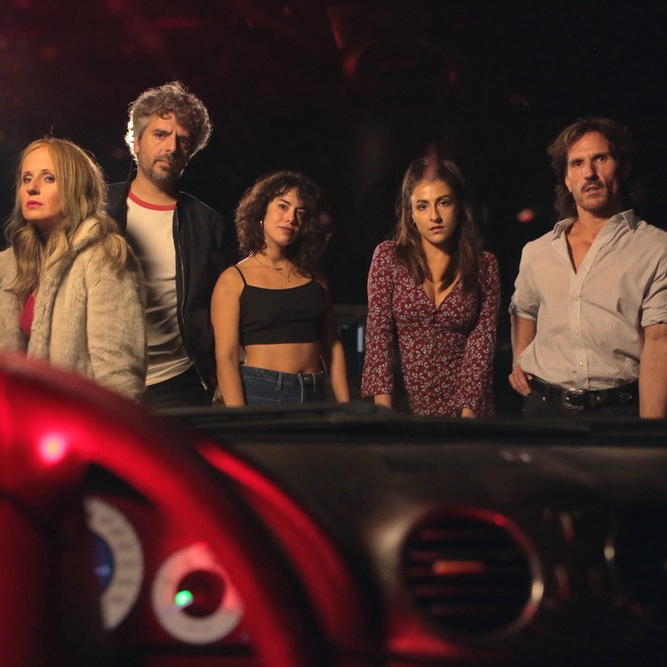
In a musical landscape increasingly shaped by algorithms, labels, and metrics, Emilia, Pardo y Bazán continue to move along their own path, avoiding easy definitions and embracing risk, humor, and creative freedom. Drawing from a unique blend of pop, rock, cumbia, protest song, and festive spirit, the band has built a universe where melancholy coexists with irony, and the political slips in without solemnity.
Bearing a name that directly engages with Spain’s literary tradition and critical thought, the group has turned that legacy into a platform for questioning aesthetic norms, cultural narratives, and external expectations. Far from superstition or forced rituals, their creative engine seems to rely on something far more simple and powerful: fraternity, mutual listening, and play.
In this conversation, Emilia, Pardo y Bazán speak about their rejection of labels, about a Spain that sounds like a zambra played with cornets and drums, about internal conflicts as “serious” as choosing between beer or wine, and about why true success today might simply mean being at peace.
When you enter the studio or get ready to compose, what small everyday ritual helps you step into your creative space?
We don’t really have specific rituals; we actually shy away from superstition. Before carrying out creative tasks, we try to be very receptive to one another: listening to each other, caring for each other. We rely a lot on fraternity and a sense of humor to face every rehearsal, every recording session, every concert.
Your band takes its name from a classic Spanish writer with a strong critical and feminist voice. If you could invite her into a conversation while writing new songs, what topics would you bring up about music, society, and freedom?
About music, I would ask her whether she agrees that cumbia is the new punk. About society, I’d ask her to talk about the rules of protocol at the parties held at the Pazo de Meirás. As for freedom—as Miguel Hernández said—“I bleed, I fight, I endure, ” and from there I’d let her mind take flight.
You recently mentioned wanting to move away from the “indie” sound and explore new musical horizons. Was there a specific moment when a song told you “I want to be different, ” and you finally listened to it?
It’s hard to pin down. It’s not really about being different; it’s about playing, about having fun, about not affiliating ourselves with any aesthetic approach or specific genre. It feels more appealing to us not to carry the heavy burden of a label.
If you had to translate Spain’s emotional, cultural, and political landscape into an instrument or a musical arrangement, what would it sound like and why?
Like a zambra played with cornets and drums, similar to those that accompany the emaciated Christs that fill the streets during Holy Week. It’s a painful sound, but at the same time it tends toward revelry, hyperbole, demagoguery, toward the most telluric and tragic side that forms part of the collective imagination of a country whose memory hurts and whose future is painfully uncertain.
Your songs often capture everyday life and melancholy. Is there a lyric you’ve written that you later realized spoke more to yourselves than to the audience? How did you feel it?
We handle autofiction and the confessional quite well; we like to think that what we sing about is real. We couldn’t make music that didn’t identify us.
What has been the most unexpected internal conflict during the recording of your latest material—one that usually doesn’t come up in interviews but deeply changed the essence of a song?
Our conflicts have to do with choosing from a restaurant menu—whether we order beer or wine with our meal—and similar issues that we consider absolutely crucial.
You’ve mentioned that “trying to please everyone” is a recipe for failure. If you had to formulate your own antonym of success as a philosophical concept, how would you define it?
Success is being at peace. How to achieve that without benzodiazepines in the times we’re living in is impossible to determine.
What has been the strangest or most unpredictable turn in your career—an event that initially seemed like a failure but ended up becoming a source of creative freedom?
When we hesitated about becoming an ABBA tribute band. We abandoned the idea, along with the dream that our parents would finally be proud of us.
Your collaboration with Guille Mostaza on the new album involved a shift in sound. If you had to describe it as a film scene, which scene did he help you “shoot”?
The three-way dance in Band à Part or Mark Wahlberg drifting a Nissan Skyline in Fast and Furious 1.
Facing the challenges of today’s music industry—algorithms, streaming platforms, and pressure from metrics—if you could write a personal manifesto about what music means to you today, what would it include?
Music is play. Music was born to illuminate the hearts of men and women.
Your concerts and visuals are often full of emotion, surprises, and improvisation. What has been the most unexpected shot backstage or live that, in your opinion, “says more than any lyric”?
Once, while filming a video in the countryside, we wandered into a hunting ground and almost got injured because of hunting activity. The cartridges whistled just centimeters away from our innocent souls.
If each of you were a musical genre instead of an instrument, who would be which genre, and what personality trait would be connected to it?
We are all a bit of pop, rock, bachata, merengue, folk, metal, protest song, cumbia, cha-cha-cha… We are everything at once, everywhere, all the time.
To close, imagine your work is not music but a message to the world. What small challenge or piece of advice would you like to leave our readers who have never heard your songs?
“Love, and do what you will, ” as Saint Augustine said.
Interview: Andrei Lukovnikov


