Floridablanca: “A band feels alive when it releases music and goes out to play”
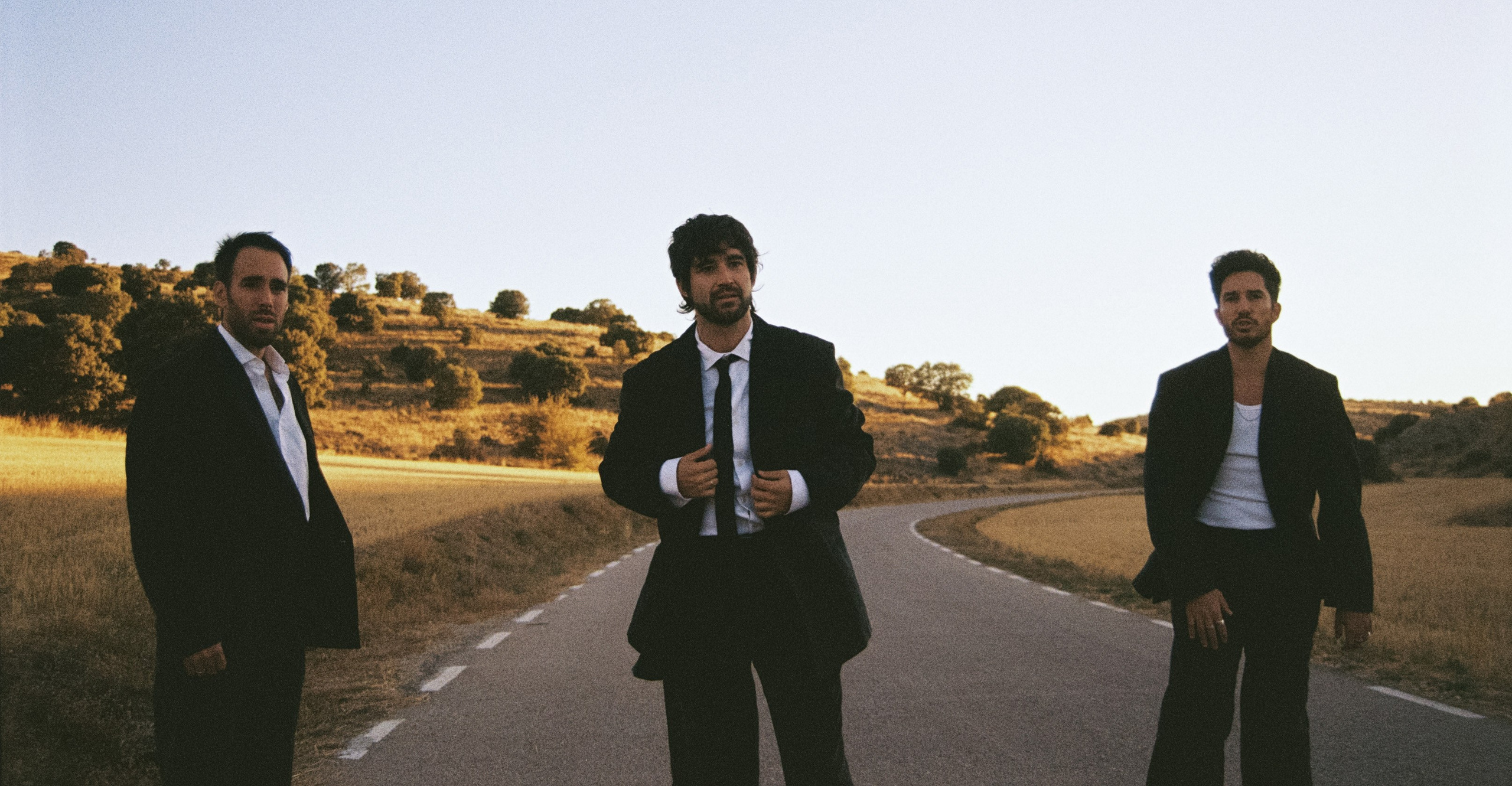
Floridablanca’s music sounds like a night in Madrid: it begins with a quiet promise and ends when you can no longer remember the exact moment everything overflowed. Moving between synth-pop, disco and funk, the band has built its own universe — one where dancefloor energy coexists with melancholy, and where the lyrics hide more shadows than they might suggest at first listen.
After a period of silence and change, Floridablanca reconnects with its audience from a more conscious and honest place. Their new single Nostalgia is not just a song, but a reflection on the time we live in, on memory, and on that strange feeling of missing something that perhaps never existed the way we remember it.
In this conversation, we talk with the band about Madrid nightlife, the precise moment when a song stops belonging to its creators, the current state of the music industry, the value of fans, and those seemingly invisible decisions that shape a career. An intimate portrait of a band that still understands music as a way of staying alive.
If your music could materialize as a physical space — not a stage, but a place — where would it be, and what would someone feel when walking through its door for the first time?
Somewhere in a bar in Madrid, around the Malasaña neighborhood. When you walk in, you’d feel that “tonight has potential, ” and by the end of the night you’d have such a good memory that you’d want to repeat it. We have songs that can take you through all the emotional states of a great night out in Madrid.
Your songs invite people to dance, but they also work as an emotional mirror. At what point in the creative process do you feel that a song stops belonging to you and starts belonging to the people who listen to it?
The moment the song is released and you start seeing people’s first reactions. What they feel with the lyrics or what the music conveys to them. Those first minutes after a release are special. You feel that all those months of work finally materialize, and it’s no longer your song — it belongs to the world.
The single Nostalgia plays with memory and with a very specific emotion. What kind of nostalgia were you interested in exploring: the sweet one, the uncomfortable one, or the kind that we’re not even sure truly belongs to us? Did any real memory slip into the song without you planning it?
Nostalgia is missing something that, in reality, never happened exactly the way you remember it. We live in a time where nostalgia is everywhere: in music, cinema, social media, politics. With this song, we wanted to portray an unpleasant side of the time we’re living in, and the word nostalgia defines it very well.
Between your first release and Hay frases que sólo escuchamos de noche there was time, silence, and change. Looking back, what did you learn about yourselves during those periods when you weren’t releasing music?
During the time we were inactive, we weren’t entirely happy. Even if we were composing, recording, or preparing new material, a band feels alive when it releases music, connects with people, and goes out to play shows. That pause reaffirmed something we already knew: we really enjoy making music together, and we need to release music to feel alive.
Synth-pop, disco, and funk coexist in your sound, but never as a stylistic exercise. If these genres were characters in the same story, who would be in control and who would introduce the chaos?
Our more pop-oriented side would definitely be the one in control, and then disco and funk would come in to introduce the chaos. We’ve always said that we move along that thin line between good and evil. It’s like a Saturday plan with friends where you meet for a relaxed dinner and end up burning the night away in Madrid.
Spain has a very particular relationship with the night, the body, and music. What sounds, rhythms, or atmospheres from the Spanish environment filter into your songs even when you’re not consciously aware of it?
Because of our family history, we’ve been very influenced by Spanish pop from the 1980s in all its genres. That music already had a very direct relationship with the night. Also, since we were teenagers, we’ve always loved going out and having fun, and making music was also part of that — almost an identity.
Many of your songs work just as well in a packed club as they do in the intimacy of headphones. Do you think about that dual context when you compose, or does it appear later, almost as a surprise?
We’re really glad you see our music that way, because there is indeed something like that, more or less consciously, when we compose. On one hand, we’ve always pursued dance, action, and energy, thinking a lot about live shows; but on the other hand, in most songs we try to express emotions that aren’t easy — perhaps a less bright and cheerful side. Our music is very optimistic, but if you look closely, our lyrics aren’t so much.
Do you remember any creative decision that you rejected even though it “worked”, simply because it didn’t represent the life moment you were in?
No. If we believe something “works”, we go all in. I mean, if it works for us, it’s because we like it, it motivates us, excites us — and if that’s the case, then it fits the life moment in which it emerges.
Is there any song of yours whose meaning you only truly understood after releasing it, by seeing how other people interpreted it?
Actually, that happens with all of them, and it’s something we love and are always excited to discover. Except for a few cases, when that happens it creates a very interesting relationship between the band and the listener, because it helps us learn about ourselves and about what we do. That’s probably one of the coolest things about making music.
We’re living in a time of constant change in the music industry. If you could redesign the rules of the game from scratch, what aspect of the current system would you eliminate without hesitation, and what would you add to protect creativity?
We would probably eliminate the dependence that artists themselves, the audience, and of course people within the industry have on data, statistics, and metrics — and how that often creates hierarchies and status that are quite absurd.
In the studio, things sometimes happen that border on the absurd or the magical. Could you share a strange, almost surreal scene that ended up influencing a song, even if no one was aware of it at the time?
Most of the latest songs we’ve recorded were made in Víctor’s home studio. Because of that, vocal tracks were recorded in closets and improvised spaces, which gave a special freshness to the takes captured during those sessions.
Throughout your career, what gesture, message, or encounter with a fan made you rethink the real impact a song can have on someone’s life?
One of the things that has impacted us the most in our career is people traveling hundreds of kilometers to come to one of our shows. The feeling that produces is very hard to explain. We have infinite gratitude for those people who value music in that way.
Thinking about photos from concerts, dressing rooms, and roads: if you had to choose a single image that sums up who you are as a band offstage, what would it be, and why would it never need a caption?
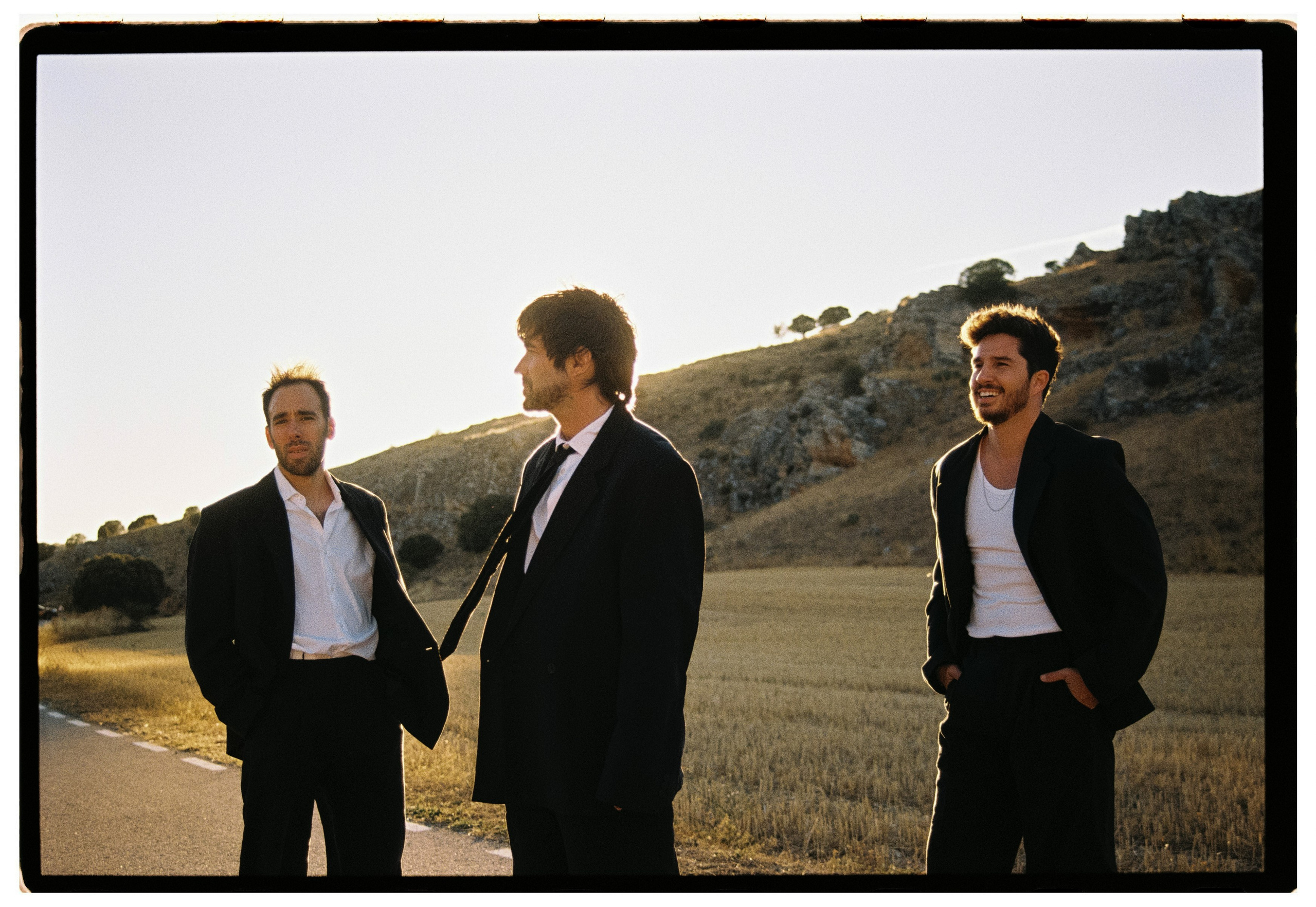
A photo that speaks for itself is the one we have in our WhatsApp group chat. We took it while recording Floridablanca’s first album. It’s a photo of the three of us hugging and smiling, and it shows exactly who we are: three lifelong friends who enjoy being together and making music. Without that friendship, none of this would make any sense to us.
And one last question for our readers: if each person could take just one sound from your music into the future, what would it be, and what emotion would you like it to awaken, even if it can’t be explained in words?
The atmosphere of the song Nostalgia — that sound cushion that creates exactly the feeling suggested by its title. A happy nostalgia where sometimes things can be, or seem, a little gray, but music always helps you move forward with strength.
Interview: Andrei Lukovnikov
Photo: Elena Salas