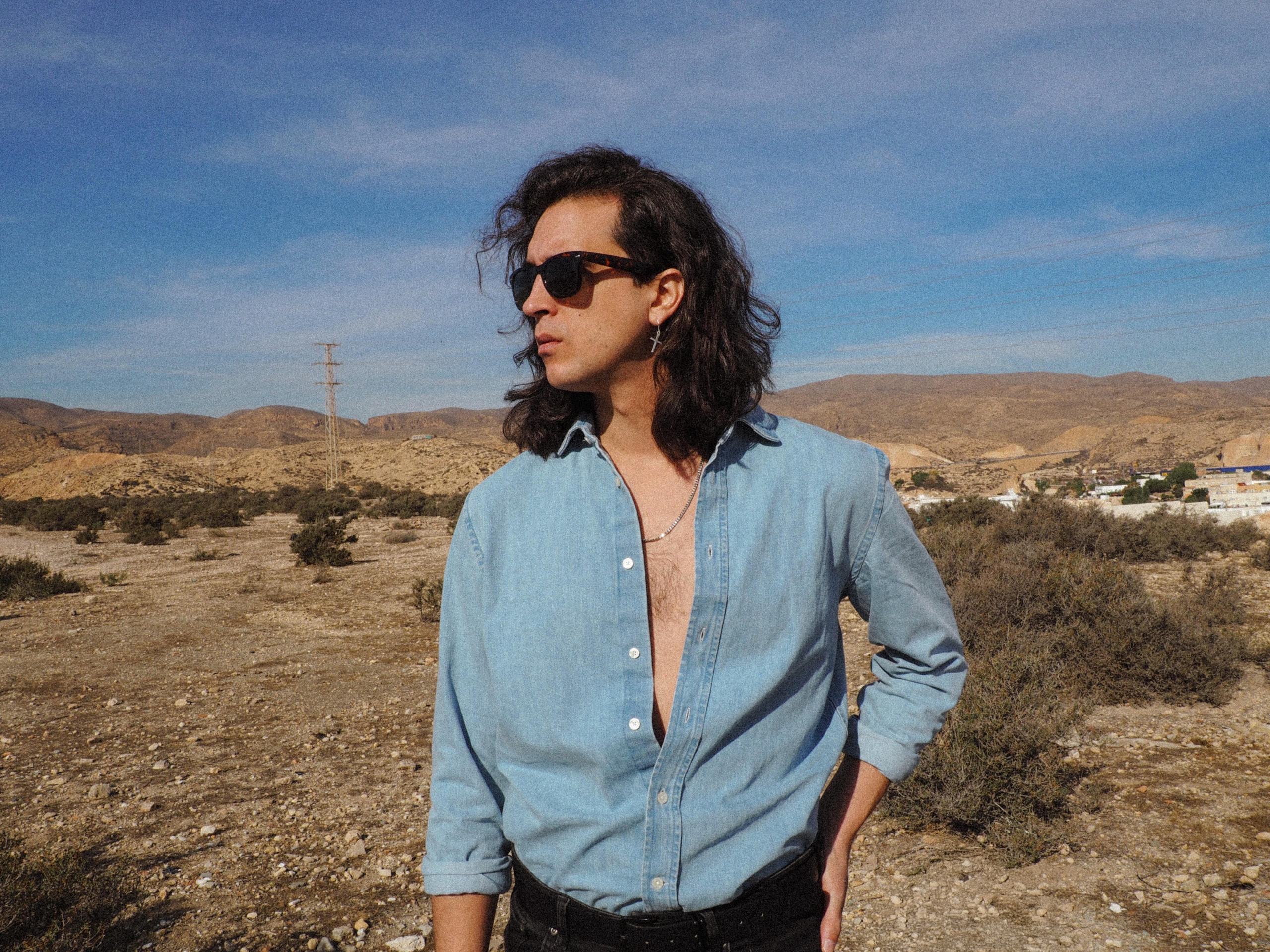
Marshall Flash: creating without asking permission, changing without fear, and making music from the cave
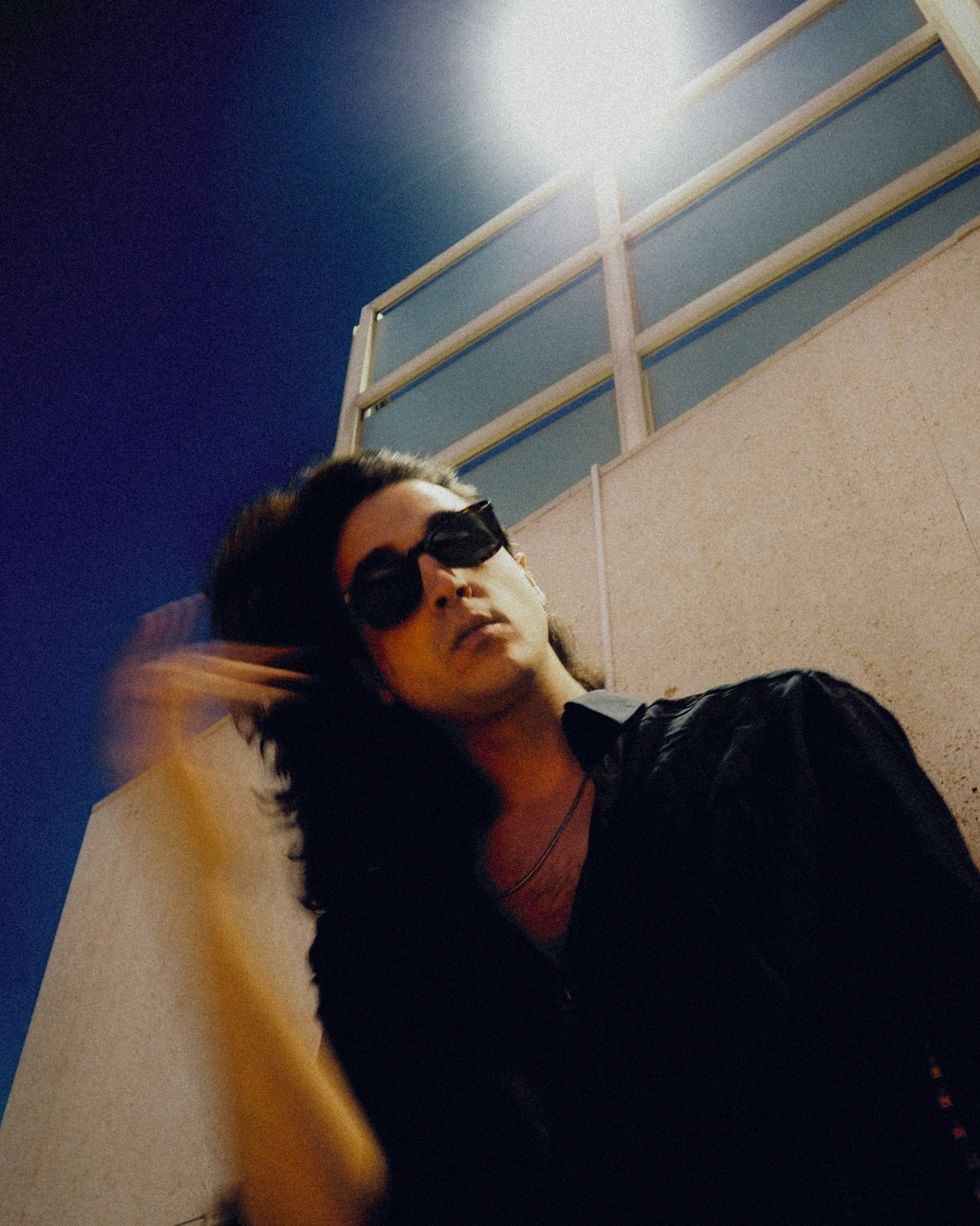
At a time when music seems increasingly conditioned by metrics, algorithms, and external expectations, Marshall Flash moves in the opposite direction: inward. His new creative phase is not only a sonic evolution, but also a statement of principles about artistic honesty, risk, and the need to break one’s own self-imposed limitations.
From his studio — which he himself defines as a cave, a laboratory, and a refuge — Miguel Ángel Marshall builds songs born from primal impulses, first takes, and emotional states that seek no approval. Under this premise, tracks such as “Luna Nueva, ” “Para Ti, ” and “El Extraño” make sense: pieces where nostalgia, reinvention, and a deeply personal view of the present coexist.
Before talking about music: if this interview were not a conversation but a space — a physical or mental place — how would you like it to be, and what should be felt upon entering it?
Hello! First of all, thank you very much for giving me this interview! … If we were to re-contextualize this virtual conversation, I would love it to take place in my studio, my cave, my laboratory! The place where I create everything that drives me crazy, and where, as soon as you walk in and see yourself surrounded by lights and instruments, you are immersed in a creative and receptive atmosphere that makes everything flow naturally!
In “El Extraño” you work with the feeling of presence and absence almost as if they were two forces that coexist. If that absence had a sound of its own, how would you describe it, and where does it really live within the song?
Sometimes absence can easily be represented by silence or austerity. For me, absence is a scream, it is the noise that doesn’t let you hear or see what lies beyond. In our case, the explosive riffs at the intro and after the chorus emphasize that desperation for what is not there while still being there.
“Para Ti” was born in barely twenty minutes. What kind of mental or emotional state allows a song to appear with such clarity and speed, and how do you know when you shouldn’t interfere too much with that first impulse?
I’m a fan of first ideas, first takes, things done without overthinking them… Sometimes we simply have to open our receivers and place no filters at all on how and why we feel the way we feel… because there is nothing purer, more innocent, or more selfless than a first sensation respected by oneself. After all, a song is the way we musicians X-ray ourselves. One moment, one song. It’s complicated and even disrespectful to interfere with the SELF of the past, because we are no longer the same.
During the creation of “Luna Nueva, ” was there any specific moment — not technical or sonic — when you felt that your relationship with music changed irreversibly? What happened internally at that point?
I simply decided to do what I felt like doing musically. To grab the bass and, over a synthetic and simple bed, twist a rhythmic melody without completely distorting it. I’m a guitarist, but for this new record I wanted to break the self-limitations we impose on ourselves and compose with whichever instrument I felt like using. Of course, when you release a song at 108 BPM and without 40 guitar solos (as I was used to), you feel a click, a kind of Digivolution when crossing styles and simply doing what you genuinely feel like doing.
Is there any recent creative decision — a harmony, a silence, a structure — that still generates doubts for you today, but that you chose to keep precisely because of that discomfort?
The new record is constantly based on that idea: daring to do what I haven’t done throughout my entire career, even at the risk of regretting it (…laughs). But in the end, what I don’t regret is daring, and that is undoubtedly the win-win. There are many songs whose form is quite risky compared to what I’m usually associated with, but that was exactly what I wanted — to do something different and enjoy the process.
In your music, nostalgia coexists with a certain forward-looking gaze. On a personal level, which part of you resists letting go of the past, and which part constantly pushes toward what does not yet exist?
I am all my mistakes and my few successes. I have left almost everything behind, rebuilt my team, my workflow, and in general my way of seeing music. My past is the stage and my future is too, but in the meantime, I’m a guy who finds it hard to detach himself from what he has, yet lives with an urgency for reinvention. In the end, wanting to do what I want is my greatest driving force. It’s normal to feel fear when changing, and perhaps in that fear lies the balance between caution and daring.
Tell us about a musical idea that emerged at a moment seemingly unrelated to music: a conversation, a trip, a daily gesture. How did you recognize that there was a song there?
Driving (an expensive hobby these days) is my greatest source of inspiration (along with getting down to work). Sometimes diverting your mind into a mechanical task makes your creative parts work at full capacity because IT IS NOT THE MOMENT. I’m fond of looking the other way, of dissociating, of the “now is not the time to think about this, but let’s think about it anyway.” Abstraction and having hundreds of mental tabs open is my way of finding peace; sometimes noise makes you filter what you want. A bird at six in the morning, the rattling of heavy machinery, or the sound of rocks dragged by the waves are often the perfect ostinato to which you can add a melody. When those abstract ideas manage to be printed onto the working sonic canvas, they become contextualized and I like them — that’s when the process can be considered successful.
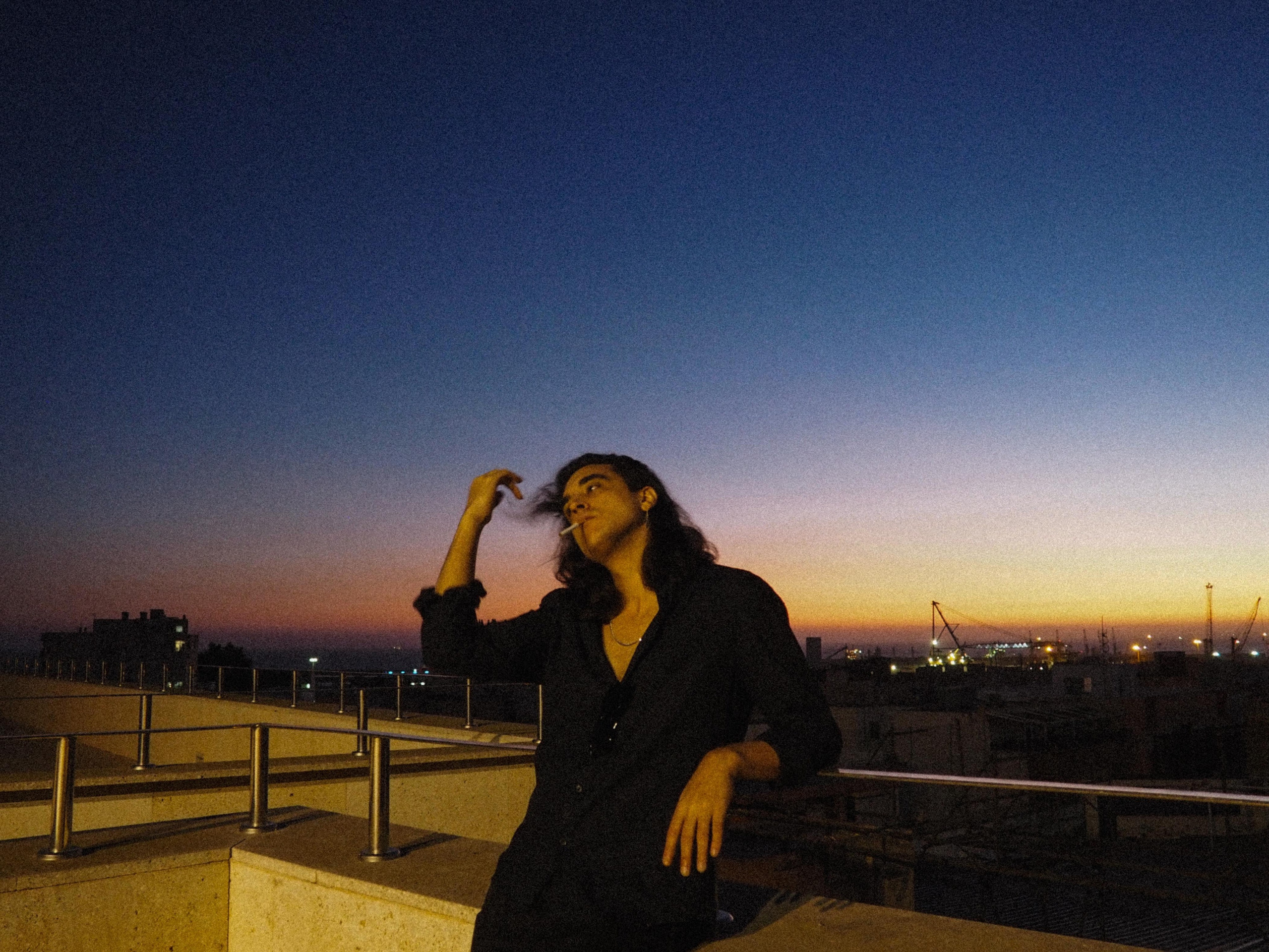
If your current work could speak directly to Miguel Ángel from twenty years ago, what warning or piece of advice do you think would be the most honest, even if not the most comfortable?
I think I have been an honest artist who has never been carried away by trends; I have been impermeable, and everything I have pursued has always been sincere with myself. I would tell him to respect his work without thinking about whether it will turn out well or not, and not to take half-measures.
Beyond the songs, you maintain direct contact with your community through Twitch. What side of you appears there that you deliberately do not transfer into your music?
It’s difficult to separate art from artist in a format or activity like mine, since humor, closeness, and trial and error are constant in my streams. Marshall Flash outside of Twitch is a project, a band, a community of artists who form a dream team on stage, and in my online one-man-band format I try to make it clear that what you hear on Spotify is not what happens on Twitch, since it is a carefully thought-out and polished “product, ” rather than a song created from scratch in a speedrun format.
In today’s music industry, there is a lot of talk about algorithms, metrics, and visibility. What human or invisible aspect do you think is being unfairly left out of that conversation?
I think the aspect that is completely overlooked is talent — real talent beyond trends (which are increasingly fleeting) and appearances. Bots, bought reactions, artists whose follower lists are private, and number-by-number comparisons cloud the figure behind it all, the work as a whole. We have gained in products, but we have lost value.
Spain has a deeply diverse musical tradition. If you could sit down to talk with a Spanish musician from any era — not to collaborate, but simply to listen — whom would you choose, and what would you want to ask them?
I would love to have a conversation with Nino Bravo and with Tino Casal. I think their simplicity, their melody, their accessibility to everyone across decades… without a doubt, skills that have not aged and have become eternal. Great personalities with songs for everyone. Perhaps that magic of cutting through all prejudice and reaching the heart of absolutely everyone, making you sing at the top of your lungs — whether you are the bird flying free or the guest star, a victim of heartbreak — is something I would simply love to understand.
What element of the Spanish cultural landscape — architecture, light, silences, everyday rituals — do you feel has not yet entered your music, but that you would like to explore in the future?
Perhaps my work sins by being little or not at all social or politically engaged, considering what art is like today… and honestly, I prefer to talk about emotions beyond other things, since I believe those topics don’t fit my aesthetic… but who knows if maybe in the future they might find a place in my verses and choruses. I also don’t represent any kind of folklore, since I’m originally from the outskirts of Madrid, which implies a significant melting pot of lore from many provinces.
What HAS inspired me about Spain, my dear Spain — the one that hurts us more and more — is its contrast, its vastness, and its corners. Its big cities, its kilometers of countryside, its provinces with sea and mountains, with sky and land.
The bucolic, the urban, what has always been, and what is yet to come. The Spain that no longer exists, and the one we are yet to create. That hive mind in which we all think differently but to which we all belong. Its roads, our culture, the sandwich at the service area, the cooler on the beach, the fireplace in your village house, Osborne, Tío Pepe, camaraderie, the “all for one, ” envy, the “what will people say”… We are such a RICH culture that sometimes we don’t know where to start consuming it. I am a guy born in Alcalá de Henares, who feels from here and from Madrid, its capital. We are history that we must preserve. Starched Spain has always been incredibly inspiring to me, as have the lights of a city going to sleep or waking up.
Do you remember a moment, in a live show or a stream, when the audience’s reaction completely transformed a song, taking it to a place you had not anticipated?
In my view, a song is something that is always the same but never happens the same way, like a board game or like daily life itself. The energy transmitted by the audience when receiving the information coming from the stage or the screen always becomes evident, transforming not the work, but the performer — building self-confidence and achieving that 200% state of commitment that is inevitably transmitted when mechanically executing an idea. Moments like the presence of TheGrefg or Ibai Llanos on my stream, as historical moments for the channel, show how the importance generated by a third party watching makes everything more valuable, and the acceptance of influential figures always makes everything shine more.
To close: if you could deliver your music to a person not as sound, but as a different sensory experience — a smell, a texture, a temperature — which would you choose, and what would you like that person to understand about themselves when receiving it?
Bringing pleasures and senses together is one of my favorite activities. With good food, everything sounds better, and with good music, everything tastes better. I think there is nothing like it in this world, and, to paraphrase, a good steak with potatoes is unbeatable. I would undoubtedly choose steak cooked on a hot stone as a symbol of what I do: something organic, that tells you everything in the first bite but leaves you wanting to take another, to uncover the juices that bind it all together, with a perfect and unquestionable accompaniment.
Interview by Andrey Lukovnikov