

SickotickS: thrash metal, grallas, lucid dreams and Wagnerian opera for very fucked-up times
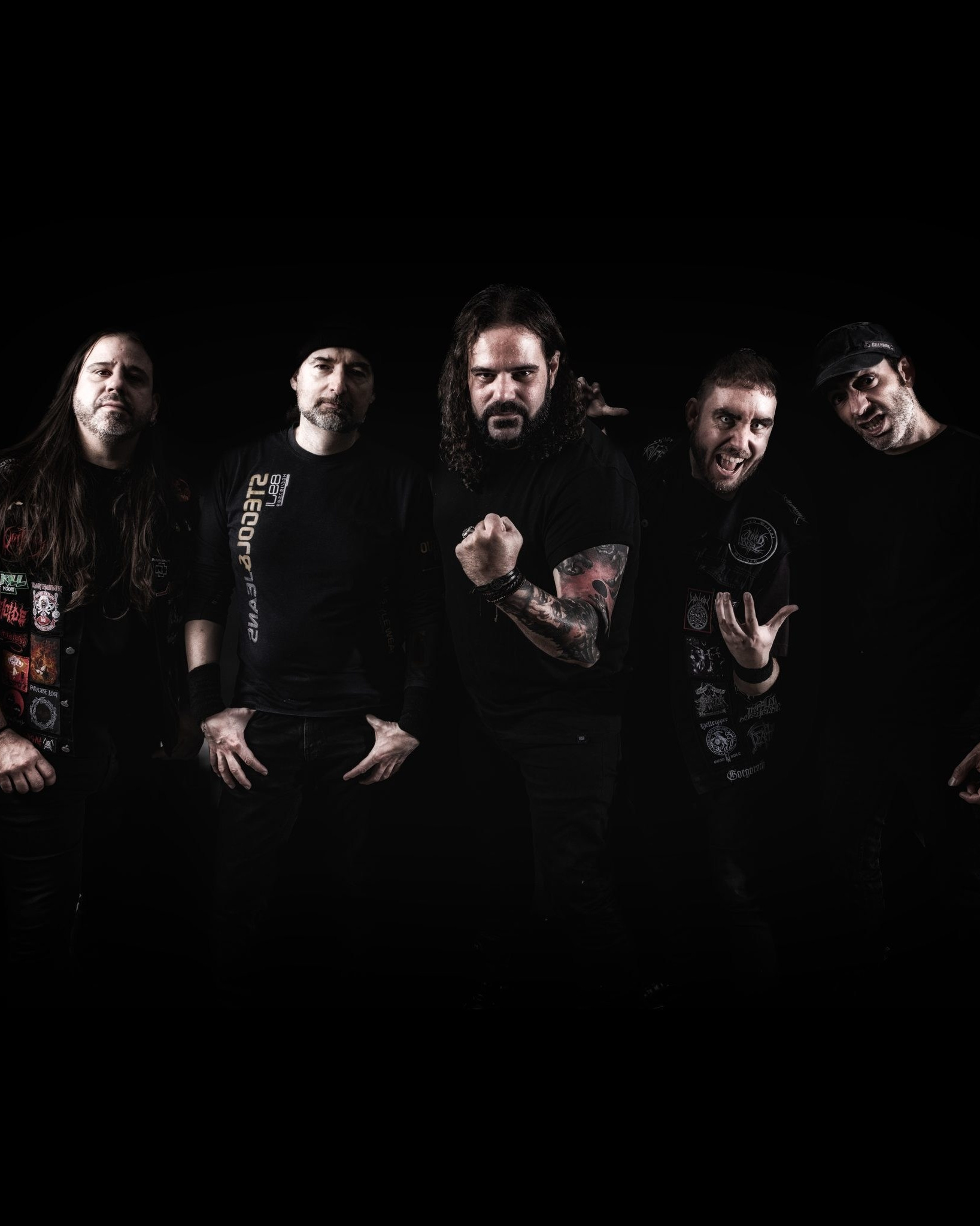
From Catalonia, SickotickS have spent years building their own universe within thrash metal, where distortion coexists with acidic humor, unexpected cultural references, and a sharp — and unapologetic — взгляд on music, the industry, and life itself. Their trajectory, marked by lineup changes, constant searching, and a clear sonic evolution, crystallizes in Order is Dead, an album that not only reinforces their identity but expands it.
Far from grandiloquent speeches or pre-fabricated answers, SickotickS speak with equal naturalness about Stephen King, post-apocalyptic video games, Wagner, cryptography, Catalan grallas, or the limbic system. Their understanding of musical creation passes through silence, error, intuition, and direct experience, both in the studio and — above all — on stage.
In this interview, the band moves between the visceral and the absurd, the philosophical and the earthly, leaving behind phrases that make you laugh, think, or raise an eyebrow… sometimes all at once.
You started out as Metralla and later were reborn as SickotickS: if your music could “travel back in time” and give some advice to Metralla before its first time on stage, what would it say?
Pay attention to 2009, start mining a new thing that will be called bitcoin, learn cryptography and look for a new book called “The Bitcoin Standard” to understand it. In a few months the window to mine with a laptop or a home PC tower will be gone, so don’t fall asleep. Then keep the bitcoins for about 15 years and don’t lose the keys.
In thrash metal people often talk about rage and aggression, but your compositions also have a lot of character and very defined atmospheres. Do you have emotional soundtracks for less usual states, like joy, doubt, or calm, that you would be willing to reveal?
Honestly, we had never thought about something so deep, but surely yes. We have all of that and much more. Emotional soundtracks that…
To create something, first you have to stop, disconnect, observe yourself until there is no atmosphere at all, only silence (whether that’s meditating, smoking something, or mechanically repeating the 7 times table). Then the universe will gift you an atmosphere you hadn’t imagined before.
During the work on Order is Dead, which echoes of the past did you consciously decide to keep, and which ones did you let go of? Why did this particular moment become a turning point for the sound of SickotickS?
The turning point has been the incorporation of new members who bring their own initiative and personality. Obviously, the departure of the previous members meant a very arid period of searching, in which we were really fucked and unable to move forward at full capacity. But once the lineup was complete, we were able to focus on this new album.
If each track on Order is Dead were a short story based on an episode of your life, what would be the story behind “Behind the Mask, ” and how does it differ from its more literal layer of meaning?
In fact, every track on Order is Dead is already a story based on a book, film, video game, series, or comic/manga. So “This Is Fallout” is inspired by the video game and also the series “Fallout, ” while “Behind the Mask” is based on a Stephen… King?… no! that’s Chrome Terror, I sometimes mix them up. Actually, “Behind the Mask” is inspired by slasher films, mainly Scream and Behind the Mask: The Rise of Leslie Vernon.
“Chrome Terror” is based on Stephen King’s novel Christine.
Your music connects with listeners in different countries. Do you think thrash metal can have a “healing” function? If so, through which emotions or internal processes do you think this happens?
If you’re initiated into music with a certain level of intensity and you don’t run away screaming from distortion, our music can provoke some positive reactions. It can improve your mood and drive away negative emotions that secrete harmful hormones. It can inspire you and provide positive ideas by giving your brain a shot of endorphins, dopamine, serotonin, and even oxytocin. Or simply through resonance: the vibration activates your immune system and enhances healing. But remember, it’s the organism that heals itself, often with help.
What has been the strangest or most unexpected piece of advice, comment, or reflection a fan — or someone from the scene — has given you, which over time you’ve felt contains a deep truth about your music or about life?
Don’t pierce it, the lighter gas.
You come from Catalonia, within a very musically diverse Spain. If you had to create a track that mixed thrash metal with some traditional Spanish element (flamenco, zarzuela, handclaps, castanets…), what kind of atmosphere would it have and why?
I say rumba. A cajón for Jordi, two Spanish guitars and a double bass. Thrash metal rumba — wouldn’t that be awesome?
You could do a historical track about 1640 with grallas, about that war in which France took the territories of Languedoc north of the Pyrenees, or about the timbaler del Bruc later on during the Napoleonic era, with grallas and obviously timpani. The gralla looks like a shawm, but it’s a weapon of mass destruction. It can counteract the devastation of a bagpipe. In both cases you need to protect yourself with earmuffs like the ones used at airports, or keep a safe distance of, say, 2 km.
Do you remember a specific moment in your career when you first felt that what you were doing stopped being just music and became something bigger — a personal transformation, a philosophy, or a way of being in the world?
There’s a moment when you’re learning to play an instrument and you manage to play something by a band you admire, and then you decide to make that your life and take on the world. The first part is fine, but the “taking on the world” part has the drawback that you often start eating it from the shitty side, and if not, you still have to break a lot of stones.
In an era in which digital music constantly changes the way sound is created and consumed, what is, for you, the biggest challenge for a band that wants to evolve without betraying itself or following passing trends?
In a style where most of the people who listen to it also play in a band, where the few who don’t play in a band go to see tribute bands when they’re part of the audience, and with 40 years of this style’s history making it hard to create without copying — when you try to differentiate yourself there are thousands of other bands saying they’re the great ones — and on top of that, what you do requires several listens in a world with more scattered attention than ever. As if that weren’t enough, there’s music made with AI… fakes, basically reheated reheated stuff. So what’s really going to matter is the live experience.
During the recording of Sickosession or All That You Fear, or even at a concert, was there something that initially seemed like a mistake or a flaw and that today you consider an essential part of your identity?
Of course — it’s your unconscious correcting your left brain, giving it clues so it won’t be so boring.
If a legendary musician from any era — not necessarily metal — suddenly appeared in your studio to collaborate on a single track, whom would you choose and what kind of song would you create together? Why?
Wagner. In Bavaria there was a mad king who blew the entire treasury (until they suicided him) on Disney-like castles (Neuschwanstein), and in Linderhof he built a little Versailles-style palace with a cave containing an underground lake navigated by a boat crewed by Valkyries (I’ve seen it and ohhh), while Wagner’s opera plays. So we could really blow things up with a Valkyrie/Nibelung thrash metal opera driven by double kick drums, growls, razor-sharp guitars, and sections of grallas and bagpipes to finish it off.
What places, situations, or life experiences not directly related to music have most deeply influenced your sound, and how have they filtered into your compositions almost without you realizing it?
Dreams, manifestations of the limbic system, nocturnal emissions, and waking up with the smell of your car’s airbags and a voice coming from the car’s eCall system asking if you’re okay and sending reinforcements.
To finish, thank you for this interview. As a wish-question: what would you like to “plant” inside those who read us so that it’s not just a message, but an intimate point of reference? Try to express it as a metaphor or an artistic image, not as a conventional phrase.
At the end of a day when you’re very, very fucked, all you’ll want to listen to is music like ours, straight to the guts (the third brain).
Interview: Andrei Lukovnikov


