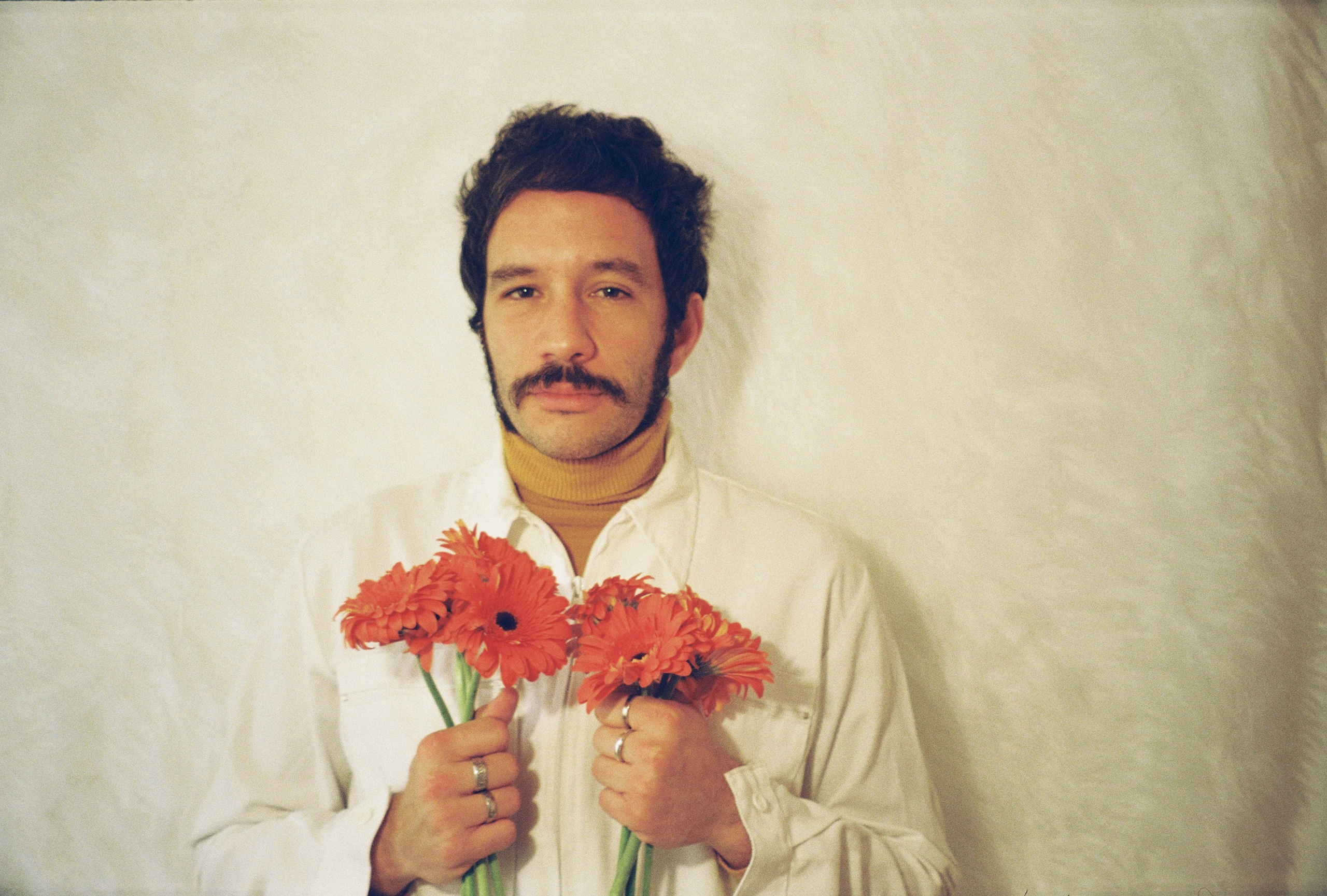
BANANI: noise, irony, and everyday optimism from Barcelona
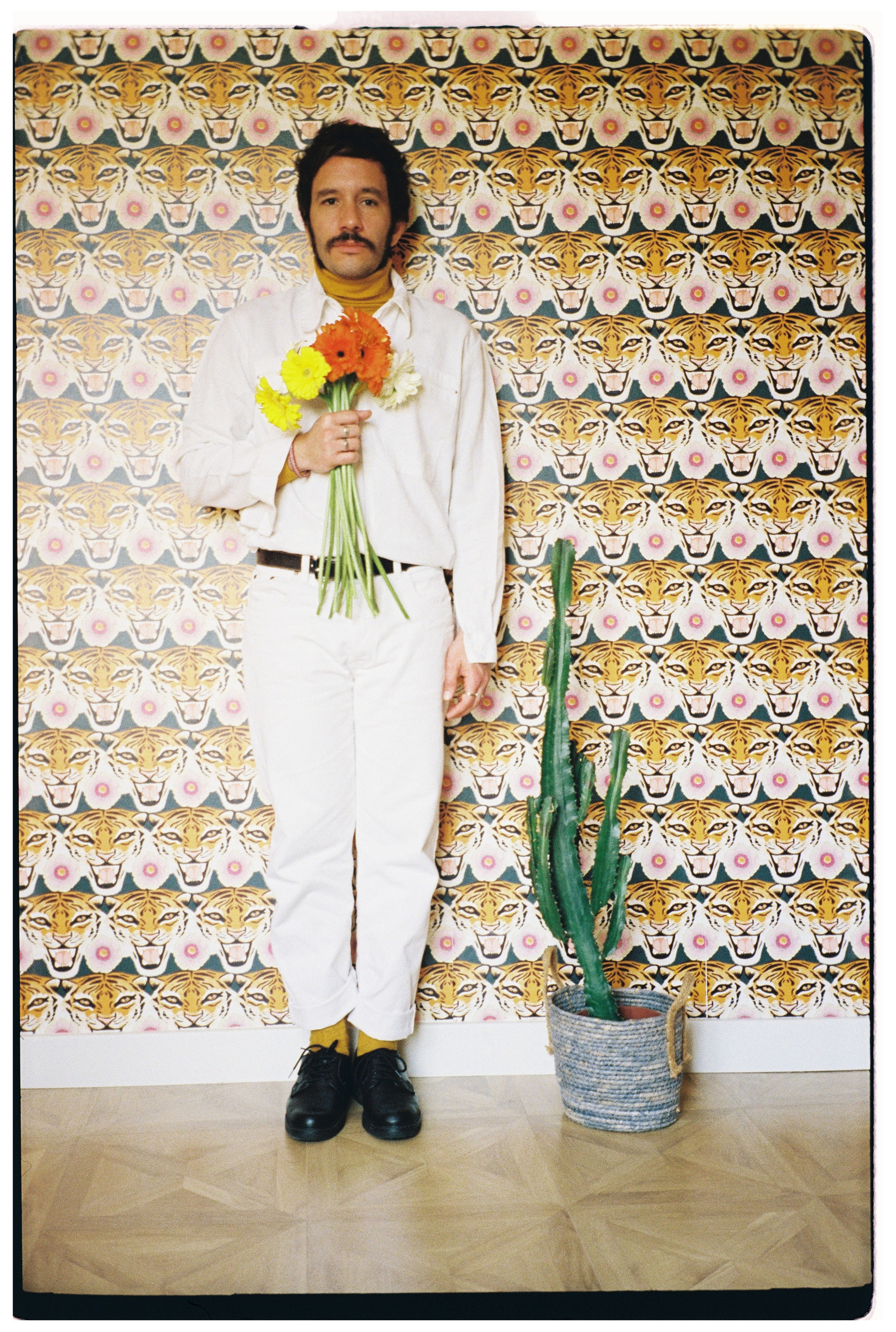
Moving between DIY ethics, noise understood as a poetic texture, and an ironic yet deeply honest взгляд on everyday life, BANANI has been steadily building a world of his own within the independent scene. His music speaks to a generation that grew up amid uncertainty, disillusionment, and small flashes of optimism, always from a very personal and uncompromising place.
Musically raised in Barcelona and shaped as much by Catalan modernism as by the “do it yourself” ethos, BANANI understands songs as spaces where sound leads the way, where the voice can exist even without instruments, and where mistakes, sarcasm, and fragility coexist without hierarchy. His new single “Gato” reinforces this idea: a direct song, without artifice, aimed more at identification than at calculated risk.
We spoke with BANANI about architecture and music, real neighborhoods in Barcelona, a failed crowd-surfing moment, noise as poetry, the weight of the DIY scene, and small absurd but revealing rituals.
Your lyrics are full of sarcasm and everyday observation, yet they are emotionally honest at the same time. If you could turn one of the characters from your songs into a physical art installation, what would it look like and where in a city (for example, Barcelona) would you place it?
Gaudí’s works have left a strong mark on me. Besides being a musician, I studied technical architecture, and during my studies I developed a great admiration for Catalan modernist buildings. Barcelona is the city where I grew up as a musician, so any corner of Barcelona would be a good place to put it.
Within your music — rhythm, melody, lyrics, structure — which element would you be willing to sacrifice most radically in order to reach a pure artistic expression, even if that meant breaking the rules of the genre?
To make a project with no instruments. Only the voice. Although in reality there is very little noise, and noise relaxes me.
Many of your songs dialogue with the emotional state of an entire generation. If today you could musically respond to who you were in your twenties, what would you say and how would that response sound?
I think analyzing it now from a place of maturity is not the same as doing it at twenty. The response would be, “they are the happy twenties, you get distracted and they lie to you. They are the happy twenties, whoever smiles regrets it.”
If you had to compose a piece inspired by a very specific street or neighborhood in Barcelona (not a tourist spot, but a real, everyday place), which would you choose and what kind of musical atmosphere would come out of it?
The neighborhoods of Horta and Vallcarca would give me a lot of room to write everyday stories. In fact, some of the lyrics are inspired by these neighborhoods, where the neighbors are real people.
Music is not only sound, it is also bodily memory. What specific moment from one of your concerts — a gesture, a mistake, a reaction from the audience — still comes back to you even when you’re not on stage?
Once they grabbed me by the knees to crowd-surf me while I was playing, and by mistake they dropped me on the floor. When they lifted me back up, the first thing I said was, “this is amazing.” The audience was really into it.
Being part of such a strong DIY scene leaves invisible marks. What comment, piece of advice, or seemingly small gesture from another musician ended up truly influencing the way you create?
DIY is the scene I grew up in. But it’s a complicated scene. Among musician friends, we support each other so that “do it yourself” isn’t difficult. At concerts there are always conversations between fellow musicians, and those are the pieces of advice I value the most.
If your songs could talk to each other across time, which older song would argue or clash with a newer one, and what would that disagreement be about?
Estas Acabado was a song I wrote in the middle of the pandemic, and it was the first song I wrote in Spanish. Gato is a song born out of optimism. Right now, they are completely opposite.
In the studio, what usually comes first: the need to be emotionally honest or the desire to surprise yourselves with the sound? Do you remember a song where that order was reversed?
Sound comes first, especially chord progressions, where vocal melodies can feel comfortable. Sometimes you get stuck with phrases you want to put into a song, and they just don’t come out.
Imagine an EP inspired by Spanish poetry, but without using the Spanish language. Which poet or movement would you choose as a starting point, and how would that translate into structures, silences, or sound textures?
The best sound texture is noise. There should be a poetic branch that is Noise.
What has been the most unexpected reaction or question from a fan — at a concert, in a message, or on social media — that made you see your own music from a new angle?
Once someone told me I sang like Evaristo from La Polla Records. Since then, I listen to La Polla Records every Sunday at 12 before going to mass.
If your next song had to be narrated by a voice that wasn’t yours — not even a musician’s — what kind of voice would it be, and what would it add to the story of the song?
With a deep voice, the story could be told with a lot of sarcasm, because a low voice generates seriousness.
In a context where DIY ethics coexist with digital algorithms, how would you describe the future of your music if it weren’t a song, but a sound phenomenon or a sensation?
I haven’t really stopped to think about the future of my music. Considering how changeable everything is, anything would surprise me. I only think about making good records where I feel comfortable with my own sound phenomenon.
In your new single “Gato, ” there’s a special interplay between attitude, irony, and fragility. At what point in the process did you realize that this song had its own identity, distinct from the rest, and what creative risk did you take with it?
There is no creative risk in Gato. I’ve tried to capture what I truly think and how I live. It’s the song a whole generation could identify with. We worked very well on the melodies, guitar arrangements, bass lines, and rhythms.
To close: if you had to leave our readers with a small creative or life challenge — something simple but meaningful that anyone could try after reading this interview — what would you propose, and why is it worth trying?
They should listen to El Arte Del Terciopelo and prepare two glasses of water. In one, put tap water, and in the other, bottled water. Close your eyes and try to know which glass contains tap water. Important: don’t stop listening to the record.
Interview: Andrei Lukovnikov