

The Crab Apples: consistency, vertigo, and a mountain of laundry waiting to be folded
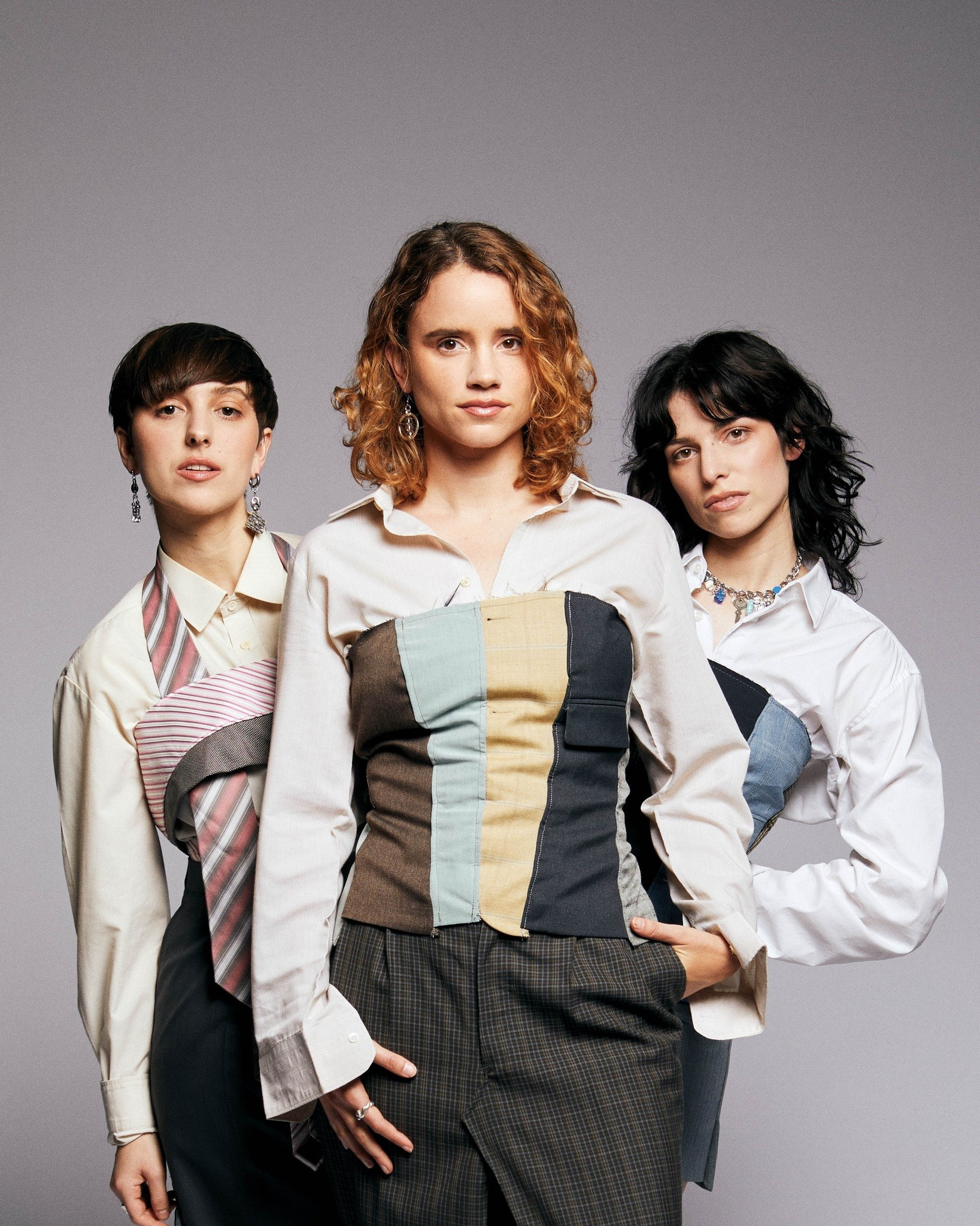
There are bands that speak about dreams; others speak about strategy. The Crab Apples speak about endurance. From their beginnings in 2012 to the release of works such as Tot dona voltes, Me da igual, and the EP Un volantazo, the trio has navigated languages, scenes, and life stages without losing something essential: the feeling of constantly building, even when exhaustion sets in.
Far from a complacent narrative about the industry and success, their story is honest and, at times, uncomfortably real. They speak about precariousness, about decisions that gain weight over time, about intuition as a linguistic compass, and about an almost obsessive consistency that has evolved, but never disappeared. In this conversation, The Crab Apples allow themselves to be ironic, to question, and to look ahead without filters.
If your musical project were not a band but an art installation in a museum, what would the first room look like and what would visitors see there? Why that way?
Right now it would be something very costumbrista, like La diosa de los trapos by Pistoletto: a woman with a mountain of laundry piled on top of her waiting to be folded. The three of us are juggling jobs alongside this artistic project, and for a while now we’ve been living with the feeling that we can’t keep up with everything and that there’s always a mountain of things left to do.
In your early days you made music just for fun, and later you began developing the band professionally. What seemingly insignificant habits from that initial stage still serve as a creative reference for you today?
Consistency. In the first years we rehearsed a lot, and those almost compulsive rehearsals have gradually transformed into always keeping the project in mind, even when we’re not physically getting together to rehearse.
Your early work had a more “classic” pop sound in English, while your latest EPs and albums include lyrics in Catalan and Spanish, electronic elements, and even remixes, such as Tot dona voltes and Me da igual. When changing languages, what matters most to you: aesthetics, the emotional weight of the text, or the intention to reach a wider audience?
The issue of languages is something we haven’t overthought; we’ve simply flowed with it. We started in English because most of the music we listened to was in that language, and little by little we’ve added Spanish and Catalan, which are the languages we speak in our daily lives.
During the creation of Un volantazo you focused on a direct and authentic instrumental sound. Can you describe a moment in the studio when you felt, “This is the sound we were looking for”? What exactly happened at that instant?
It wasn’t so much in the studio as during the demo-building phase of Sin ti. The song started out much more ethereal than it ended up being, and that whole process of bringing it down to a more direct sound is what later set the path for the EP.
In the song Me da igual there is a sense of struggle with the rules of the music industry. If the industry were a person, what would they be like and what would you say to them while looking them straight in the eye?
It would be a middle-aged man trying to look younger and dressing according to whatever trend is current. Right now we’d tell him to relax a bit, turn off his phone for a while, and try to build his own criteria without the help of the algorithm haha.
What does it mean for you to experience music in Spain—not just to play there, but to listen to it and live it? Is there any song you have understood differently during a trip or a concert in Spain?
Sometimes Spain gives the impression of being a small country, as if there’s little room to grow because there isn’t a music culture sustained by the public like in other places such as Latin America, the United States, or the UK. It feels like projects burn out very quickly because, for most people, being a musician is unsustainable.
If you compare yourselves in 2012, when you were just starting out with The Crab Apples, to who you are today, what belief about music would you change and which one would you preserve at all costs?
It would have been great to know back then that having a band, releasing music, and touring is so demanding—we probably wouldn’t have gone on Erasmus because we would have prioritized the band, and the same goes for many other life decisions. We would preserve at all costs the innocence and the excitement of making music without expecting anything in return.
You have experimented with very different genres, mixing styles and languages. Is there any musical element or genre you are still afraid to explore, and why?
I think we’re not afraid to experiment with anything, but maybe it wouldn’t make much sense to suddenly start making boleros, salsa, or reggaeton… or maybe it would… you never know.
What has been the strangest or most surprising way your listeners have “lived” your music outside the stage or concerts?
Recently a girl got “The Crab Apples” tattooed at a festival where we had just performed. We stayed with her while she was getting the tattoo, and it was a pretty incredible—and crazy! —experience for all of us.
If you could completely rewrite one of your own songs in a totally different genre—for example, jazz, reggaeton, or free improvisation—which one would you choose and why?
Well, maybe it would be cool to try the reggaeton thing with Sin ti, which is about empowerment and realizing your own worth. It would be a kind of “Yo perreo sola” hehe.
Tell us about your favorite photo or moment from tour reports that fans have never seen. Why is it so important to you?
For us, the most important thing about touring is spending time together and knowing that we’re capable of handling all the challenges that touring involves.
If you were to create a musical horoscope for the band, what zodiac sign would each of you be and how would it reflect each member’s musical temperament?
We don’t really know much about horoscopes, to be honest… sorry!
Thank you for sharing your time and your story. Imagine that our next conversation in five years begins with a prophetic phrase from you about the future of music. What would that phrase be today, in 2026, and what would it want to say to a reader searching for their creative path?
That your only source of income shouldn’t be your art.
Interview: Andrei Lukovnikov


