
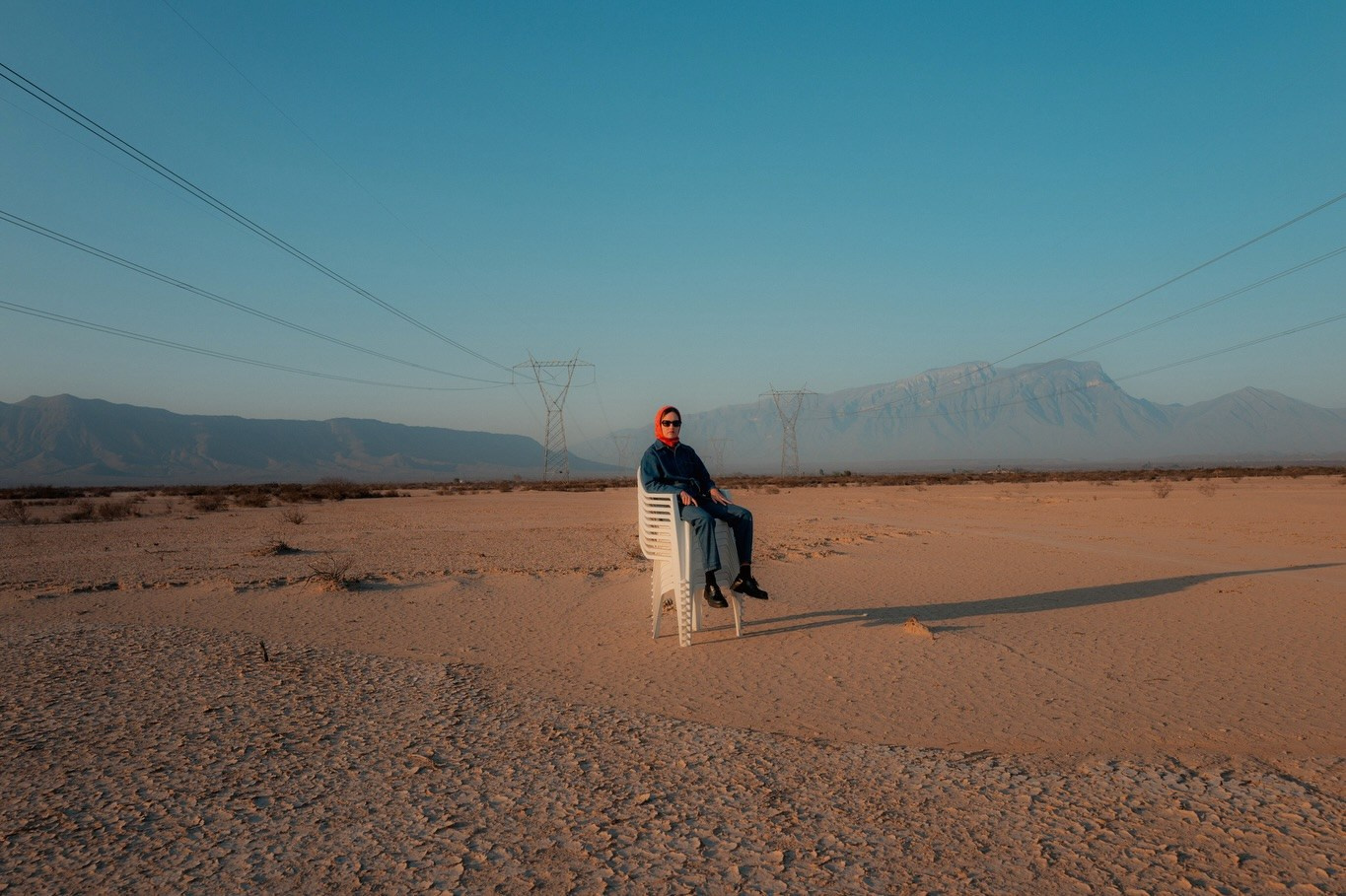
Kirnbauer: Finding Peace in Uncertainty
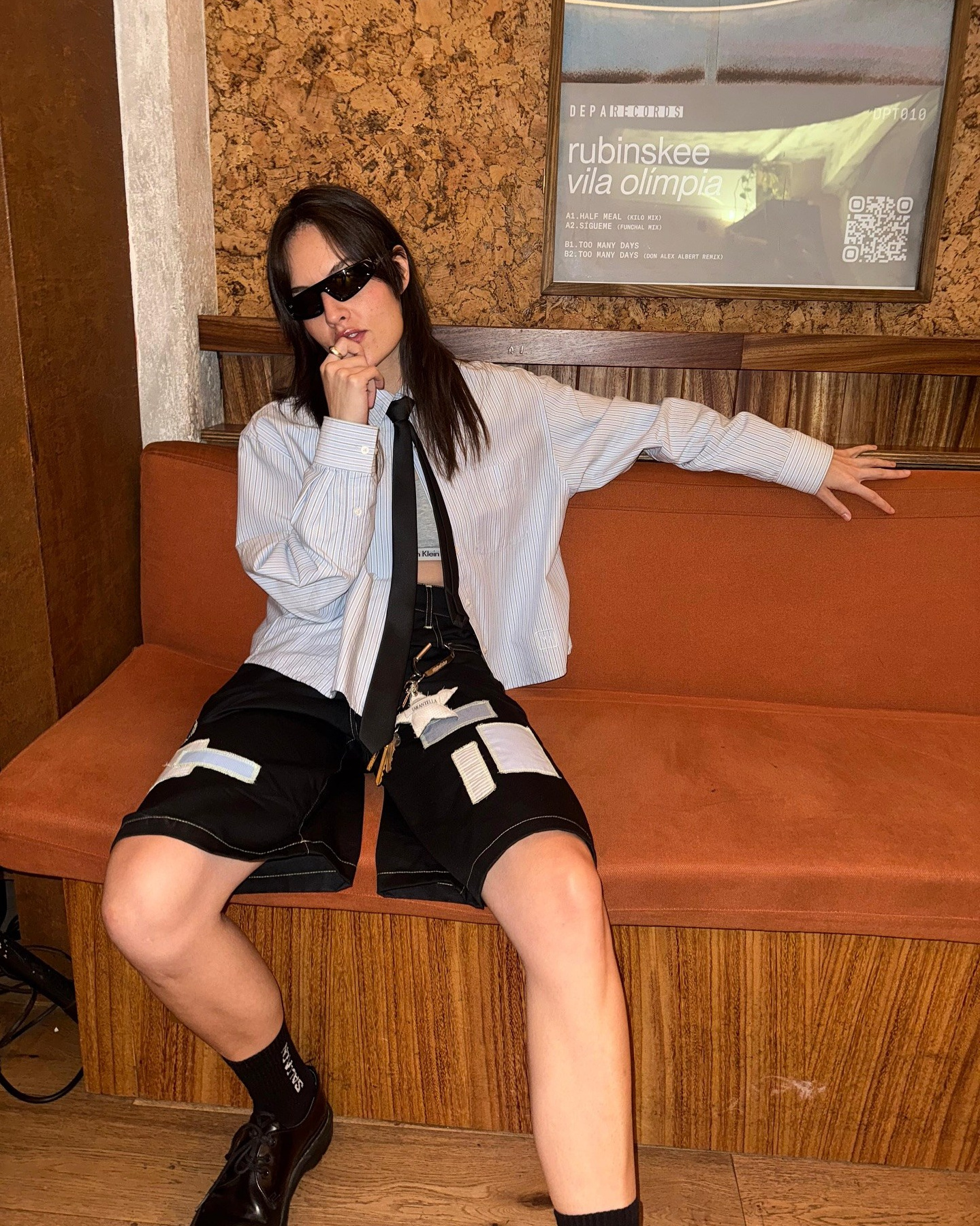
There are artists who build an aesthetic. And there are artists who, almost without intending to, create a refuge. Kirnbauer belongs to that second category: her music doesn’t impose answers, it opens spaces where doubt, vulnerability, and constant movement can coexist.
From her first live shows to her latest single “No sé, ” her evolution hasn’t been a straight line, but a storm that learned to stay. In this conversation, she talks about rebuilding herself from scratch, learning to listen to herself above the external noise, and accepting that sometimes not knowing is also a form of peace.
If your musical journey were a secret map, what symbol would mark the exact moment you realized that music was no longer an option, but an inevitable destiny?
A point of no return. My first live show and feeling for the first time the energy of people singing back to me my own songs. I get goosebumps every time I remember it.
When you start a song, at what point do you realize that it no longer belongs to the original idea and has become something autonomous, almost independent of you? Do you remember a specific case?
I realize it when the song starts asking me for things I hadn’t planned. When the lyrics change on their own or the mood darkens without me having decided it rationally. It happened with “Siento Lento”: it started more innocent and ended up being much more vulnerable than I wanted to admit.
If your sonic evolution —from your earliest releases to the most recent— were a natural phenomenon, what would it be, and what internal change does it represent for you?
It would be like a storm that learned to stay. Watching it from the outside, without trying to stop it.
Your new single “No sé” has a very particular energy, almost like an internal conversation set to music. Which part of the song is completely autobiographical, and which part is a conscious fiction you decided to construct?
In “No sé” almost everything starts from something real: that internal conversation that keeps you awake. It’s a lullaby, for when you feel lost but want to tell yourself it’s okay. Finding peace in uncertainty.
You write from personal experiences, but you also protect your intimacy. How do you decide which emotions become songs and which should stay only with you?
It happens that unconsciously I don’t write about things I still don’t understand, that I am still processing, that are stuck. And naturally, I don’t share those (for the moment).
Was there a tool, technique, or technological discovery that radically changed the way you produce or compose? Something that made you think, “I’ll never work the same way again”?
Learning to use Logic and Live. Also exploring sound libraries and samples. Realizing that not all songs have to come from a guitar. Of course, the processes are very different, and I still use both methods depending on the mood.
Imagine you are composing a soundtrack for the nocturnal roads of Spain —not for a tourist postcard, but for secret paths between cities, beaches, and deserted roads. What three sounds (not necessarily musical) would you include and why?
The sound of trees moving in the wind, the engine of an old car, and footsteps on gravel. I like what sounds like movement, what is between arriving and leaving.
Looking at the person you were in 2019 and the person you are now, what internal change surprises you the most, even to yourself, beyond sound or aesthetics?
Listening to myself more than to “the experts” hahaha.
The industry changes fast: algorithms, formats, social networks. Which part of this transformation has liberated you as an artist, and which part do you feel limits the depth of music?
Knowing that we are all in the same situation is comforting. But the massive, exponential, fast part overwhelms me. I think there is more supply than demand in every sense. Everyone wants to sell, be heard, connect, but no one is open to receiving, exploring, letting go of what they already know. We are saturated.
Tell us something almost nobody knows about Kirnbauer: a moment, a crisis, or a silent decision that changed the direction of the project.
There were a couple of years when I didn’t know where to go as a person. I had to stop and rebuild almost from scratch. I’m still rebuilding.
If you had unlimited budget and total creative freedom, what would you do on an experimental album that you would never allow yourself on a conventional release?
I would make a cinematic album, with long interludes and pieces that don’t think about playlists. Something that is listened to from beginning to end, without hurry. Or an audiovisual magazine.
Do you remember a reaction from a fan who reinterpreted your music in a completely different way than you had imagined, to the point of making you rethink the meaning of a song?
Once someone told me that a song of mine helped them close a grieving process, when I had written it from the perspective of falling in love. It made me understand that music is about the person who listens, not the one who writes. It impacted me forever, in a good way.
When you look at photos from backstage, tours, or concerts, which image would you put in slow motion with your own music in the background to explain who you are as an artist without saying a single word?
Me walking in and out of the backstage as if I forgot something, while outside you can already hear the audience arriving hahaha.
To close: if you could send a message in a bottle to your version of yourself ten years from now, what would you tell her and what would you ask her never to forget?
I would tell her to always listen to herself first at the beginning and end of each song. To write without shame and know that there is always space to connect, even if it doesn’t feel natural at first or seems obvious. To share more without judging myself.
Interview: Andrei Lukovnikov


