
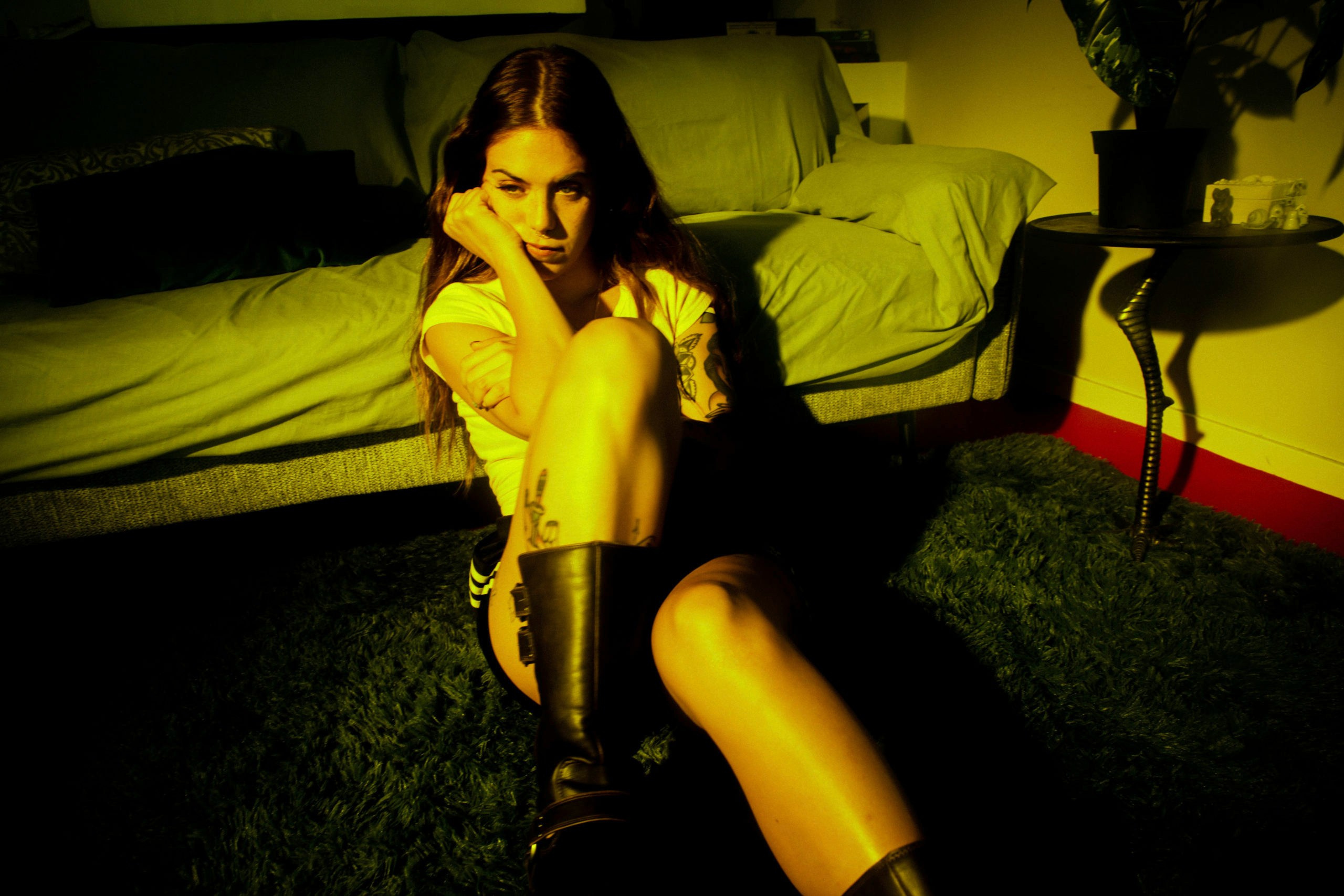
LISASINSON: learning to pause without stopping saying everything
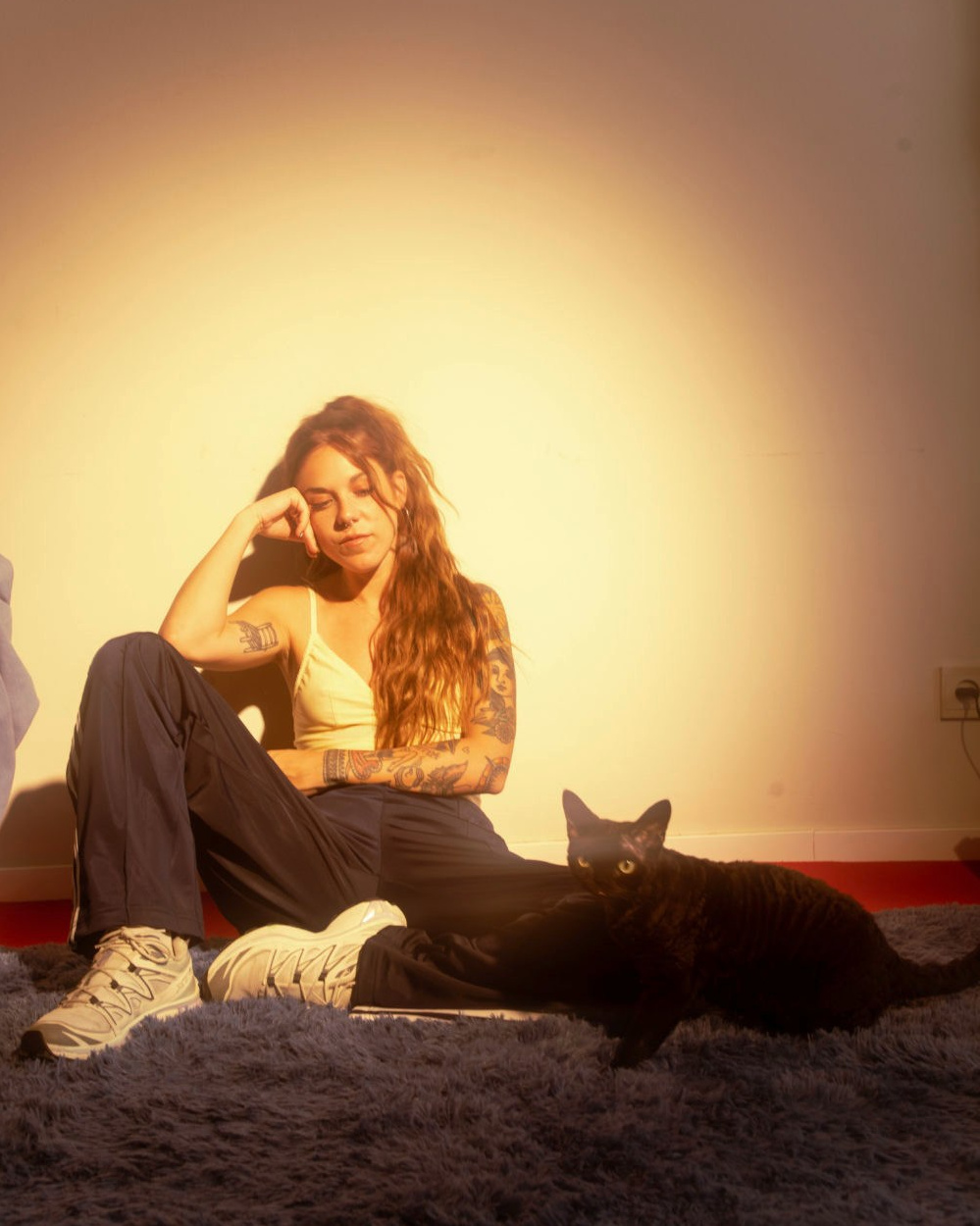
There are albums that are built as a statement. And there are others that function as an open, uncomfortable question — one that cannot be fully resolved. With Desde Cuándo Todo, Lisasinson does not try to offer definitive answers or hide behind the easy label of punk-pop. Instead, she pauses, looks inward, and accepts that not everything needs to be solved with a forceful closing line.
From her early days marked by urgency and raw energy to this more reflective and vulnerable stage, the project has gone through both internal and external changes: Paula’s departure, the vertigo of standing alone at the front, the exhaustion acknowledged without disguising it as speed. In this conversation, the artist speaks candidly about anxiety and calm, about unmet expectations, about growing up without losing intensity, and about the question that runs through the new album — a question that may also belong to us.
If we imagined your music as an art gallery, which painting would you place first, and why should it open the exhibition of your inner world?
Probably I would place Millais’ Ophelia at the beginning. Not because of the drama, but because of that feeling of beauty and exhaustion at the same time. It represents me quite well: giving yourself to something you love, even when it overwhelms you a little. I think it would open the exhibition well because it sums up that mix of vulnerability and careful aesthetics that runs through the album.
“Desde Cuándo Todo” sounds like a question without an answer. At what point during the making of the album did you understand that the question was more important than any statement and stop looking for a final full stop?
Honestly, I had never thought about it that way. I didn’t feel that the question was “more important” than an answer, or that I was avoiding conclusions. In fact, I think the album contains quite a few answers, even if they are not closed or definitive.
The title is a question because it sums up a very specific feeling: realizing that something has changed. But that doesn’t mean there isn’t a position within the songs. There are opinions, there are clear emotions, there are decisions. It’s just that not everything in life is resolved with a forceful sentence.
More than stopping the search for a final point, I think I simply accepted that some things are still in process. And that doesn’t make them any less valid.
In many tracks, it feels as if calm and anxiety coexist at the same time. Was that state the starting point of the album, or did it emerge during the recording process?
I don’t know if it was the starting point or if it became more evident during the recording. I suppose that when you start listening to all the songs together, you realize there is that mix: slower, more introspective tracks, and others that are more restless. But it wasn’t designed — it was quite natural.
In the end, the album reflects how I was at that moment. And I wasn’t in just one state. I was calm and overwhelmed at the same time, excited and tired. It wasn’t a planned concept; it was more of a consequence.
If we imagine that this album is not a final result but a symptom: what did it reveal about you that you had previously avoided or did not dare to verbalize in your music?
Well… more than a “symptom, ” I see it as a pretty clear snapshot of how I was.
If there’s something it reveals — something that maybe was harder for me to say before — it’s exhaustion. I used to rely a lot on energy, on impulse, on that more urgent side. Here I allowed myself to say that I was tired, that I had doubts, that I didn’t have everything figured out. And that wasn’t so easy for me.
There’s also more fear about the passing of time, more reflection about expectations that haven’t been fulfilled exactly as you imagined. It’s not something I consciously avoided, but maybe before I didn’t dare to stay there, in that vulnerability, without disguising it as anger or speed.
So yes, if it’s a symptom, it reveals that I no longer feel the need to pretend that I’m always strong or always accelerated. I can also be tired and say it.
You often play with dynamics: from straightforward punk-pop to more intimate, almost whispered moments, like in “Lanzarote.” What changes inside you depending on whether the song is expressed loudly or quietly?
My body just asks for it. Some songs are born faster and more direct, others come out softer. It’s not that I decide, “now I’m going to shout” or “now I’m going to whisper” — it’s more instinctive.
It depends a lot on the moment I’m in when I’m writing and on how the melody comes out. If the song asks for intensity, I give it intensity. If it asks for restraint, I give it that too. There isn’t some deeply analyzed internal change; it’s quite natural.
When you write lyrics, do you explore more of your inner world, do you enter into dialogue with the outside world, or do both spaces end up merging? Tell us about a song where that clash was especially intense.
I think I almost always start from something internal, from something that is happening to me or that I’m feeling. But that’s never isolated. What I experience has a lot to do with the context, with how things are outside, with pressure, with expectations, with the stage of life I’m in. So in the end everything mixes. It begins as something very personal, and ends up having a more generational or social dimension without me really trying to.
For example, in “No Quiero Envejecer” there’s something very intimate, very personal, which is the fear of time passing. But that fear isn’t only individual — it has to do with how you’re supposed to be at a certain age, with constant comparison, with how it seems that everyone else is achieving things except you. That clash between the inner and the outer world is quite evident there.
I don’t write thinking about making social criticism, but I don’t write from a bubble either. Everything ends up blending together.
Your early work sounded like an immediate expression of energy and emotion, while your more recent material feels like the reflection of a more mature voice. How do you understand the balance between the freedom of anxious nonconformity and mature vulnerability in the studio?
I don’t experience it as a balance that I have to calculate in the studio. I don’t sit there thinking, “now it’s time to be more adult” or “now I have to be more nonconformist.” Both things coexist because they are still inside me.
The anxiety and the nonconformity haven’t disappeared. I still have that urgency, that need to say things without asking for permission. What happens now is that I also allow myself to stop and recognize when I’m tired or when something hurts, without covering it up with speed.
Maybe before I solved everything through energy. Now I haven’t lost that side, but I’ve added another, more vulnerable layer. For me it’s not a substitution; it’s an addition. And in the studio I try not to force either one, but to let each song find its own shape.
If you had to explain to the industry what punk-pop is today — not as a musical genre but as a philosophy of life — what would you say?
Honestly, I don’t know if I’m still making punk-pop. I think maybe not anymore. Maybe at some point I fit more into that, but right now I’m not so sure. My music still has energy and a certain urgency, but it also has more pause and reflection than before.
If I had to talk about punk-pop as a philosophy, I’d say that for me it has more to do with attitude than with sound. With doing things without waiting for everything to be perfect, with not asking for permission to say what you want to say. But right now I’m not so obsessed with fitting into that label.
I prefer to think that I’m making songs from the place I’m in, without worrying too much about what that is called.
In Spain, and especially in Valencia, there is a strong cultural legacy. How do the traditions of your city or region influence your music and your visual language?
Honestly, I don’t think the traditions of Valencia influence my music in a direct way. I don’t feel that I’m working from something strongly tied to identity or that I’m thinking about cultural heritage when I compose.
What does influence me is the context. Having grown up here, having experienced a specific scene, having seen how certain musical movements had more space than others… that places you somewhere, even if you’re not consciously looking for it.
But I don’t make conscious references to traditions, nor do I try to represent anything culturally. My music is much more personal than territorial. If there is something of Valencia in it, it’s there because I’m from here, not because I’m underlining it.
Are there hidden references to Spanish culture in your music that only listeners from Valencia might notice? If so, which ones?
Honestly, there aren’t many hidden references designed as secret winks.
If there are details that someone from here might identify more easily, they have more to do with context than with explicit cultural references: certain ways of speaking, some mention of places or very specific situations that, if you’ve lived here, feel more familiar.
Tell us about a moment in your career that looked like a failure from the outside but actually became a turning point. What changed inside you after that episode?
I suppose Paula leaving the band and me staying alone at the front of the project. It was a moment of many doubts, of wondering whether it made sense to continue or not. I felt quite dizzy taking on everything by myself. But at the same time, that situation forced me to truly decide whether I wanted to keep going.
What has been the most unexpected or strange way fans have shown you their affection? And is there a story you still haven’t shared publicly because of how unusual it is?
Naming their car or their bike after us. hahaha
If you could live one day in the skin of each of your past musical selves (from Barakaldo to Desde Cuándo Todo), which one would you choose and why?
What an intense question hahaha. I think I would choose to go back for one day to the more naïve version from the beginning, to that stage where everything was more impulse and less thought, at Barbeira Season Fest. With María, Mar and Paula. But I wouldn’t stay there. I like who I am now more, even if I’m more tired or have more doubts. Now I understand better what I do and why I do it. Before there was more pure excitement; now there is more awareness.
So I would go back for a day out of curiosity, to remember that feeling… but I would choose to stay in the present.
And finally: what question would you like your listeners to ask themselves when they listen to your new album for the first time? And why that question in particular?
I’d like them to ask themselves something similar to what runs through the album: “since when did everything…?” And for each person to complete it in their own way.
Since when did everything change? Since when did I accept this? Since when have I been feeling like this?
Not because there has to be a clear answer, but because sometimes stopping and asking yourself the question already moves something.
The album doesn’t aim to give lessons or solutions. If it manages to make someone pause for a moment and listen to themselves a little more, that’s enough for me.
Interview: Andrei Lukovnikov


