

Siempre Tigre: “We feel like we’re in a golden cage, but we keep roaring”
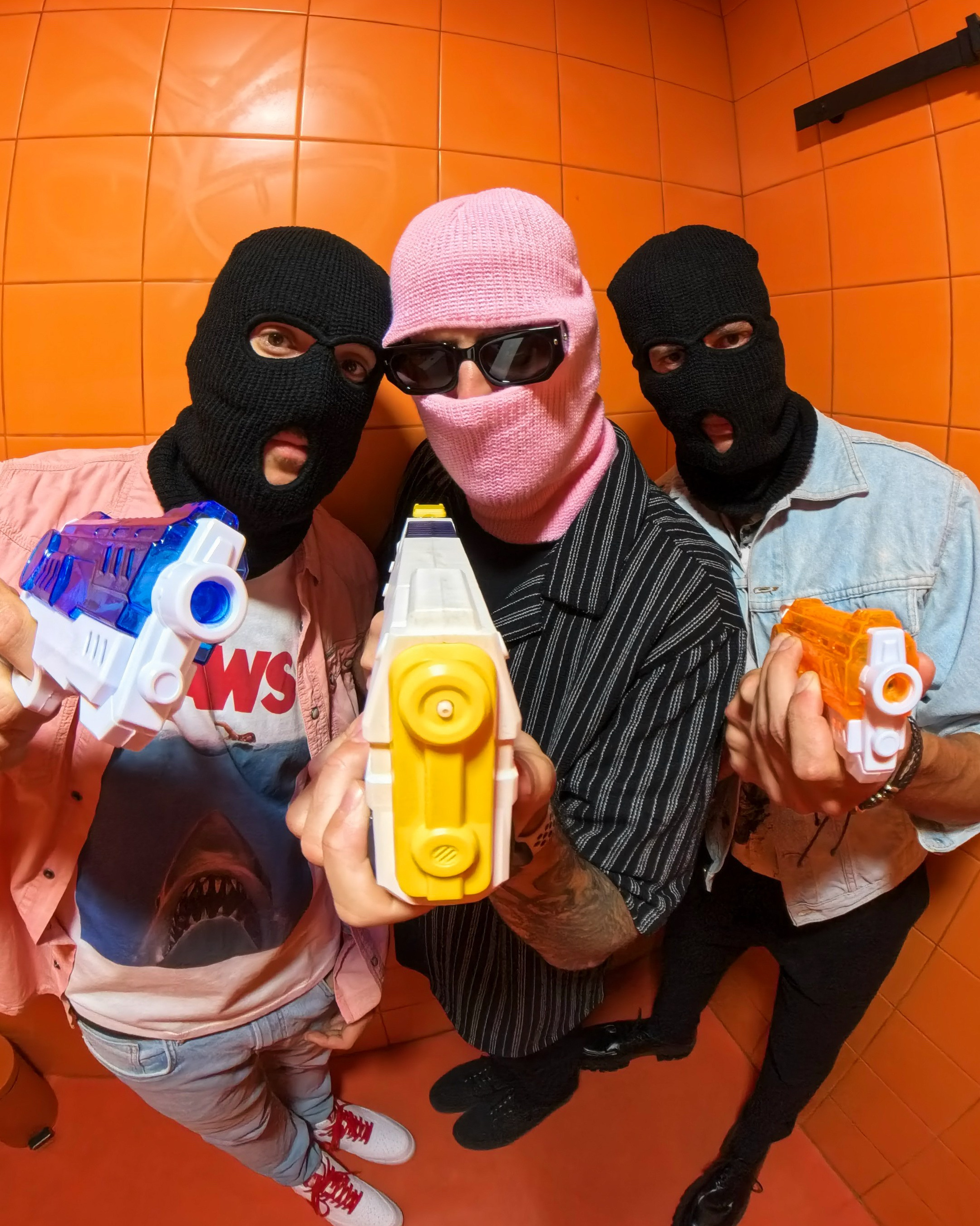
Siempre Tigre began as a name — almost an intuition — and today it is already a poster with dates in Madrid and Alicante, a tiger shooting lightning bolts, and an EP that serves as a statement of identity in the making. In a short time, the project has moved from rehearsal-room demos to a visual and sonic universe that combines frenetic energy, vulnerability, and a clear commitment to taking risks.
Their first release is not just a collection of songs, but an emotional map shaped by archetypes, contradictions, and deliberate choices: leaving out what felt “too normal, ” playing with the unexpected, stretching the limits between studio work and the live experience. In this conversation, the band reflects on the industry, the mask and the moment they decided to remove it, the real-life story that influenced a ballad, and the not-so-distant possibility of having artificial intelligence as their lighting technician.
The result is an honest portrait of a group moving between action and introspection, between the color and velocity of the “Spider-Verse” aesthetic and the restlessness of a country turned into a character. This is how Siempre Tigre sound — and how they think.
If you could hand your younger selves — the ones who first imagined the name Siempre Tigre — an object brought from the future, what would it be and why could that object become the starting point of a conversation about the spark that set you in motion?
At this point, it would be the EP launch poster, with the Madrid and Alicante dates and the drawing of the tiger roaring lightning bolts. It would be a good moment to say: “See how good the name looks on a poster?”
Your first EP brings together very different emotional states. If you divided it into five human archetypes — not musical but existential — which would they be, and what part of you lives in each one?
They would be… the explorer, the magician, the rebel, the lover and the jester. I think there’s a bit of each of them in us and, therefore, in the EP’s songs. Through both the music and the lyrics, we’ve tried to reflect that whirlwind of emotions and sensations — sometimes contradictory — that can run through your body in an instant.
Is there any song or artistic decision you deliberately left out because it felt “too much” — too honest, too chaotic, too different from what you expected of yourselves? What did that material reveal that you weren’t ready to show yet?
Maybe, from the demos we had for the EP, the songs that were too ordinary or that took too few risks were left out. We wanted to explore and compose in different ways, both in the rehearsal space and in the studio while producing the tracks. We believe it was an interesting way to combine the best of each environment.
If Spain were not a country but a character in your next record, what temperament would it have, how would it move, and how would its voice sound within your songs?
Right now, I think it would be a restless, disturbed, uneasy character. Something inside would be bothering it without really knowing what it is. It would walk desperately through labyrinth-like streets, trying unsuccessfully to find a way out.
Do you remember the last time you intentionally broke a song’s structure — rhythm, harmony, or lyrics — just to see what would happen between you as a band? What did you learn from that small act of creative disobedience?
There was a very funny moment when, while producing “Para no volver a hablarte, ” we decided to try hardcore metal rhythms in the choruses, which didn’t fit at all in a ballad. Honestly, it wasn’t an idea we were seriously considering, but just seeing Josemi’s (the singer’s) face when we showed him the demo made it worthwhile.
If Siempre Tigre became an animated short film, which genre would you choose, and what story would it tell about you that hasn’t yet been shared in interviews or songs?
I think we’d choose action, with animation similar to Sony’s “Spider-Verse” films. The frenzy, the color, the feeling of “if you blink, you’ll miss it” really suits us. As for the story… it would be the making of the “Otro Big Bang” music video.
If you could sit down with an element of today’s music industry — algorithms, endless scrolling culture, the obsession with immediacy — for an honest conversation, what would you ask it, and what limits would you set to protect your artistic identity?
We’d tell it that the visibility it offers is great, but that for some time now we’ve felt like we’re in a kind of golden cage. It suffocates us more than it helps us, but at the same time we can’t leave it because it seems to be the place where artists are supposed to grow — boosting their numbers, constantly searching for new ways to stand out, and getting lost in the process.
What has been the most unexpected non-musical influence that transformed the direction of one of your songs — a place, a conversation, a memory, a scent — and how did it filter into the final sound?
“Para no volver a hablarte” has a real story behind it — a broken heart on the road to recovery. Knowing that story made us approach the song with greater sensitivity.
If you were to create an AI-assisted version of Siempre Tigre — not as a replacement but as an additional member of the band — what role would it have, and what red line would you forbid it from crossing?
It would be our sound and lighting technician!
What was the most unexpected reaction — positive or uncomfortable — that you received from a listener, and that made you rethink how you communicate with your audience?
While presenting our EP in Madrid, there was a group of people in the audience who wanted to come on stage and take off our balaclavas. When we saw the tension, we launched a poll among the audience, and the option to take them off won — so we ended the concert with our faces uncovered.
Think of a moment backstage, before or after a concert, that never appeared in photos or on social media but that, for you, explains better than any image who Siempre Tigre are. What happened in that instant?
There was a concert where the sound engineer came into the dressing room after the show to tell us she had loved it. That motivated us tremendously!
If your music could become the personality of someone who grew up listening to you, how do you imagine that person at forty, and what character traits would they carry as an invisible inheritance from your songs?
They would be a good person! Someone who enjoys their friends, living in the moment, and who gives themselves to love without hesitation.
Finally: if your listeners could put on your music like a spacesuit and travel into their own future, what would you like them to discover there about themselves after having shared this beginning with you?
That everything is going to be okay and that nothing is as important as we sometimes think.
Interview: Andrei Lukovnikov


