
La Regadera: “There’s no need to rush for things to make sense”
From Miranda de Ebro and far from the spotlight of major capitals, La Regadera has built a trajectory that doesn’t rely on haste or fireworks. More than a decade on the road, changes in the industry, painful losses, and quiet lessons have shaped an identity that today feels more conscious, more serene, and, paradoxically, more intense.
With Somos pocos, pero suficientes, the band reaffirms a way of being in the world: community without stridency, resistance without grand gestures, and songs that do not seek to impose themselves, but to stay. In this conversation, the group talks about process, doubts, a robbery that almost changed everything, artificial intelligence, and that persistent rain which, without making noise, eventually soaks everything through.
Imagine for a moment that La Regadera is not a band, but a natural phenomenon. What would it be: a brief storm, a persistent rain, a drought broken at the last minute? And what does that image say about your current state as a band?
We would be a persistent rain, the kind that doesn’t make noise as it falls but ends up soaking everything. That image says a lot about where we are right now: we’re not trying to dazzle anyone or rush ahead; we’re here, falling little by little, holding on to who we are and what we want to say.
Looking at your entire trajectory, what part of your musical identity do you feel the public often overlooks, but which for you is absolutely essential?
The care behind the songs is often overlooked. Not only musically, but on a human level. For us, it’s essential how things are said, from where they are said, and for whom.
In Somos pocos, pero suficientes there’s a very clear sense of community and quiet resistance. When did you realize that the title was not just a beautiful phrase, but a vital and artistic statement?
We’ve never stopped realizing it, and the idea of community has always been very present within the band. “Somos pocos, pero suficientes” is not just a motto; it’s a way of being in the world and in music.
If this new album had to be explained to someone who has never listened to La Regadera through a single scene—not a song—what would be happening in that scene and why?
A simple scene: a square at the end of the day, very different people sharing the same space without needing to fully know each other. Nothing extraordinary happens, but you can feel a sense of calm and belonging. This record is about that—about finding a place to stay without having to raise your voice.
Your albums don’t only change in sound, but also in perspective. If today you could step into an old song—not to correct it, but to have a dialogue with it—which one would you choose and what would you say to it from the present?
We would choose something from that first demo which nowadays can only be found on YouTube. Not to correct it, but to say: thank you for pushing us. We would tell it that we still believe in the same things and that it will always be part of this journey.
In the studio, what usually wins the battle: the almost irrational impulse of the first moment or the patient reflection that comes afterward? Do you remember a song where that tension was especially evident?
A strange mix of both wins. The impulse usually opens the door, but if reflection doesn’t come afterward, the song doesn’t hold up. There have been tracks where the first burst was brutal, but until we ran them through everyone’s filter, they didn’t find their place. That push and pull is part of the process.
You come from Miranda de Ebro, a place that isn’t always on Spain’s mainstream music map. What has growing and creating from there given you that you might not have found in a big city?
Growing up here has allowed us to do things our own way, to make mistakes without spotlights on us, and to build something solid, not something fast.
Over the years you’ve moved through styles that, in theory, don’t always coexist easily. Which musical language has been the hardest for you to truly make your own, and what did that effort teach you?
Perhaps the hardest language has been learning to lower the intensity without losing energy. Learning that a song can work without always going at full speed. That effort taught us that intensity isn’t always tied to volume.
Tell us about a tour story that at the time was an absolute disaster, but eventually became a foundational anecdote for the band.
With more than ten years on the road, the stories are endless. But in terms of disaster, it’s impossible not to mention the robbery we suffered in Seville of all the equipment we bring to our shows. More than 30,000 euros worth of instruments, merchandise, and gear. It left us deeply shaken both financially and emotionally, but it also brought us closer together as a band and made us stronger.
If each member of the group had a “secret skill” that doesn’t appear in the album credits but sustains the project, what would it be in each case?
I’m not going to give names, because then everything gets out, hahaha… Obviously, as in any group of people, there’s a bit of everything, and everyone contributes their grain of sand so that the machinery works.
At what moment did you most clearly feel that the music industry had changed the rules of the game, and what unwritten rule did you learn to unlearn?
When we understood that it was no longer enough to release an album and wait. Everything was moving faster, more superficially, and more day-to-day.
There are surely songs that almost didn’t make it onto a record or into the setlist. Is there any track that was close to disappearing and that today holds special meaning for you or your audience?
Yes, there are songs that almost get left out and then become a refuge for many people. Sometimes what you hesitate to show is exactly what connects the most. In this world, it’s hard to find the right key.
If tomorrow you decided to compose a song without traditional instruments—only everyday sounds, voices, or mistakes—what kind of atmosphere would you like to build?
We’d like an intimate atmosphere, almost nocturnal. Background sounds, breathing, mistakes that remain. Something imperfect but honest, that doesn’t try to polish itself too much.
Artificial intelligence is already starting to compose, produce, and even imitate styles. If an AI analyzed your entire discography, what do you think it would misunderstand about La Regadera? And what would you like it to understand correctly?
We think an AI would misunderstand why we do things. It might capture styles or structures, but not the context, the conversations, the silences, or the reflections that have ended up in each piece of work.
Among thousands of concert and backstage photos, imagine an image that was never published but sums up who you are as a band. What appears in that photo and why is it so representative?
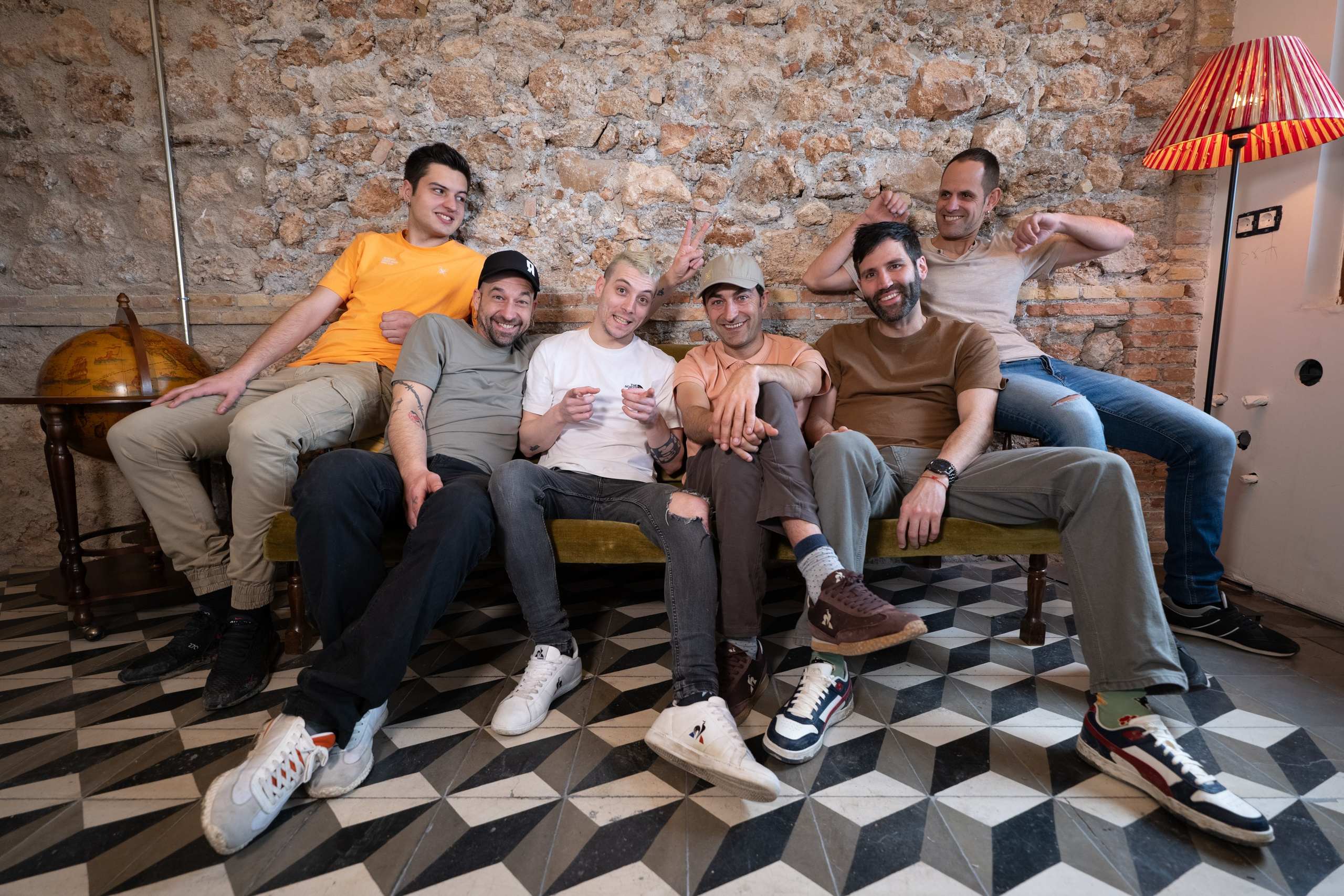
A photo without a stage: us sitting anywhere, laughing, with instruments leaning against a wall. Nothing epic. But everything we are is there.
Thank you for this conversation. To close: if your listeners are, as the album title says, “few but enough, ” what uncommon wish—far from the usual messages—would you like them to carry with them after listening to you and living with your music for a while?
Something simple but deep: that there’s no need to rush, nor to be more than you are, for things to make sense. That with what you have, if it’s real, very often it’s enough.
Interview: Andrei Lukovnikov


