

Sara Zozaya: “Being in the clouds, each in our own way”
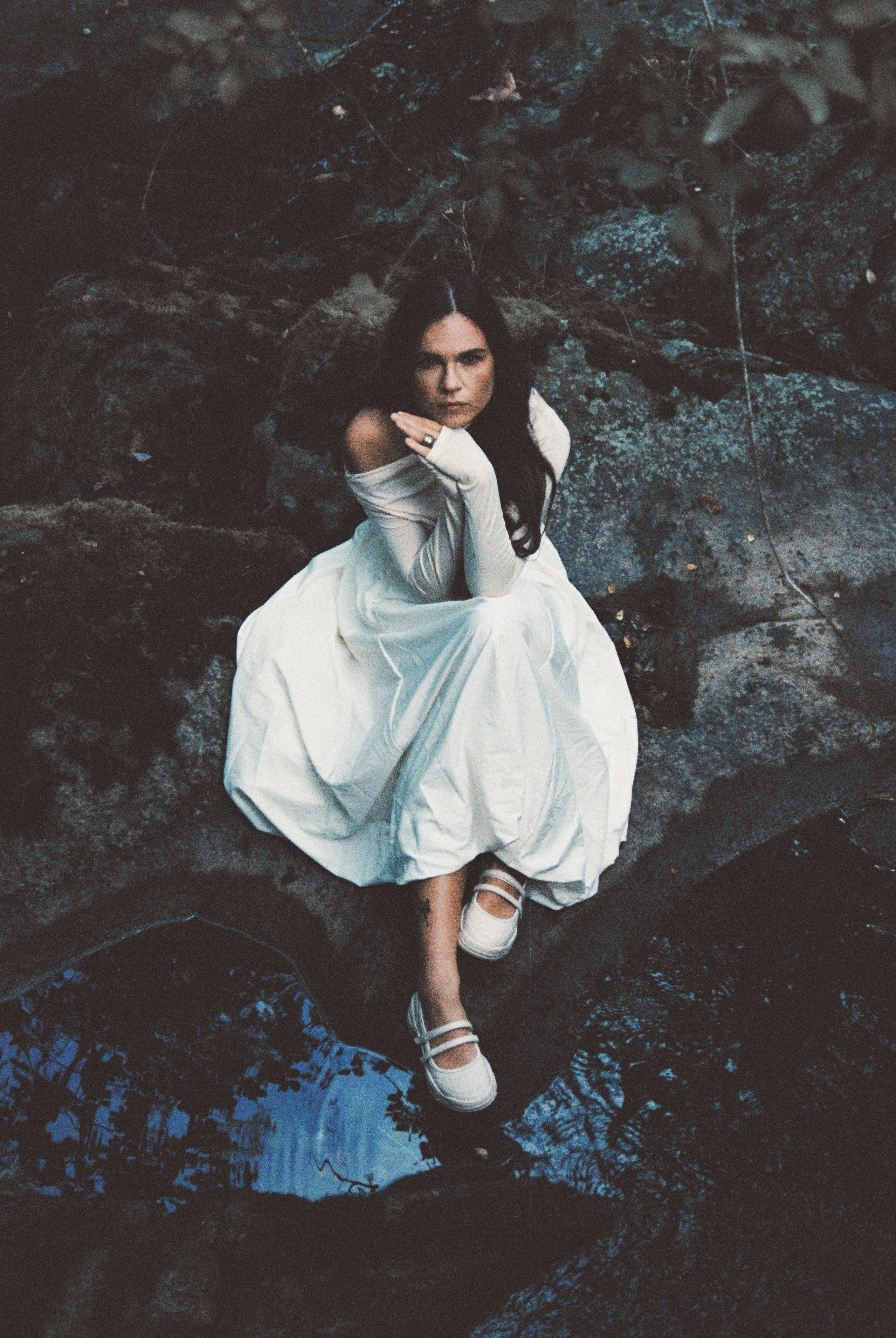
Sara Zozaya’s music does not try to impose itself; it arrives slowly, like an atmosphere settling into a room before anyone asks what is playing. From the Basque Country, the artist has built a delicate and deeply intuitive sonic universe where minimalism, introspection and an almost dreamlike sensitivity coexist with a constant search for new forms of expression.
In her songs—sometimes in Basque, sometimes in English or Spanish—words coexist with silence, and emotion filters through subtle textures and open spaces. Her latest work, attä, reinforces that intimate and contemplative dimension of her music: a territory where the smallest details gain weight and where listening can also become a form of pause.
We spoke with Sara about her creative process, the evolution of her artistic identity, her relationship with audiences, the pace of the music industry, and her critical взгляд on phenomena such as music generated by artificial intelligence. The result is an honest conversation about creation, time, and the need to find one’s own place within the noise of the world.
Imagine your music does not introduce itself, but instead appears in a room where something has already begun. What kind of atmosphere do you think it leaves behind before someone asks what is playing?
I think it connects quite a lot with the dream world. I’ve been told that some people fall asleep listening to attä, and that’s something that makes me happy.
You often speak about your songs as almost meditative spaces. Is there a moment in the creative process when a song stops belonging to you and starts imposing its own rules?
It usually happens every time. I tend to approach creation without rigidity and in a very intuitive way. Sometimes I have to remove layers that I know don’t work, even if I want them to.
In your latest works there is a clear attraction to minimalism and darker tones. How do you distinguish when a sonic experiment is an honest search and when it is just a passing detour?
I usually work with a lot of time. And if something endures over time, then it’s not just an experiment. If it fades away along the way, then it’s already gone.
Do you remember any recording where a technical error, an imperfection or an accident ended up defining the emotional heart of the track?
Totally. And a small drama for me is that I have a lot of “demo-itis”. I can’t detach myself from the demo (which is usually full of imperfections), and in the studio I often try to get back to that place—and it’s impossible.
Spain is a territory musically charged with memory and contrasts. Do you feel that this cultural context filters into your music even when it isn’t explicit? Is there any “Spanish” sound you still haven’t dared to explore?
I think there is a lot of culture from other territories of the country that I still need to discover and learn about. What I do know is that, from my context and my surroundings in the Basque Country, I express what I carry inside. And I can say that since I was little I have been nourished by artists from very different styles, but with a strong symbolic weight.
Looking back from your first releases until now, what part of you had to disappear for the current artistic Sara to exist?
The one I am no longer disappears. Just like in the previous question, time does its work—also with me—and that’s something that helps me grow in every sense.
You have sung in Basque, English and Spanish. If your music could speak only one language that was none of these, what would it be and why?
I feel closer and closer to instrumental music. I think words have incredible power, but it’s different from the essence of music itself. Words can hurt depending on the meaning each person gives them, but it’s very difficult for music to cause harm.
Has there ever been an unexpected reaction from a listener—a concert moment, a private message, a casual conversation—that completely changed your perception of a song?
Yes, it happens a lot. What I think I’m saying can be something completely different for the person who listens. And I actually love that. In part because I feel I can share myself more honestly when there is such a large subjectivity on the other side.
In an industry obsessed with speed and constant visibility, you seem to work at a different tempo. Do you think creating music slowly can be a form of resistance?
I believe there is a way for each artist, and there will never be a “correct” roadmap. That’s something we are sold. The real question is finding the right place for yourself so that your value makes sense. Some artists will have a large audience, others of us will remain smaller—and that’s fine if we can exist and keep transmitting.
If each of your songs were a door, which one took you to the most unexpected inner place, and what did you discover there about yourself?
I like the question, and at the same time it feels difficult :) Sometimes songs flow out of me from beginning to end. It happens so rarely that when it does, it feels magical. (“Misty”, for example.)
Many times we only see the stage, but not what happens before or after. Is there a backstage or concert photo that has never been published but that, for you, better captures what playing live really means?
Of course. I think the worst part of doing this is that instead of just playing, we have to do a thousand other things so that later we can spend 40 minutes doing what is actually our thing. It’s tiring, but at the same time those 40 minutes are worth it—or something like that—because here we still are.
If your creative personality had to be defined with three words that apparently don’t fit together, which would they be and how do those contradictions coexist in your everyday life?
Scattered, serious, present.
In recent years music created with artificial intelligence has gone from being a curiosity to a real presence. Does it generate concern, curiosity or indifference for you, and where do you place the boundary between tool and creative threat?
I’m not interested. I don’t feel attracted either by the news or by those creations. I’ve seen how it’s used as a tool and that’s fine, but I’ve also seen how this infinity of possibilities makes everything sound the same and creates a sense of hopelessness in the face of the emptiness of what we hear.
To close, thank you for sharing your universe with us. If you could leave our readers with a wish that is not a nice phrase or direct advice, but rather a feeling—something similar to what it feels like to listen to your music—what would it be?
Being in the clouds, each in their own way, and without going too far because the fall can be big :) Thank you!
Interview: Andrei Lukovnikov
Photo: Iker Gozategi


