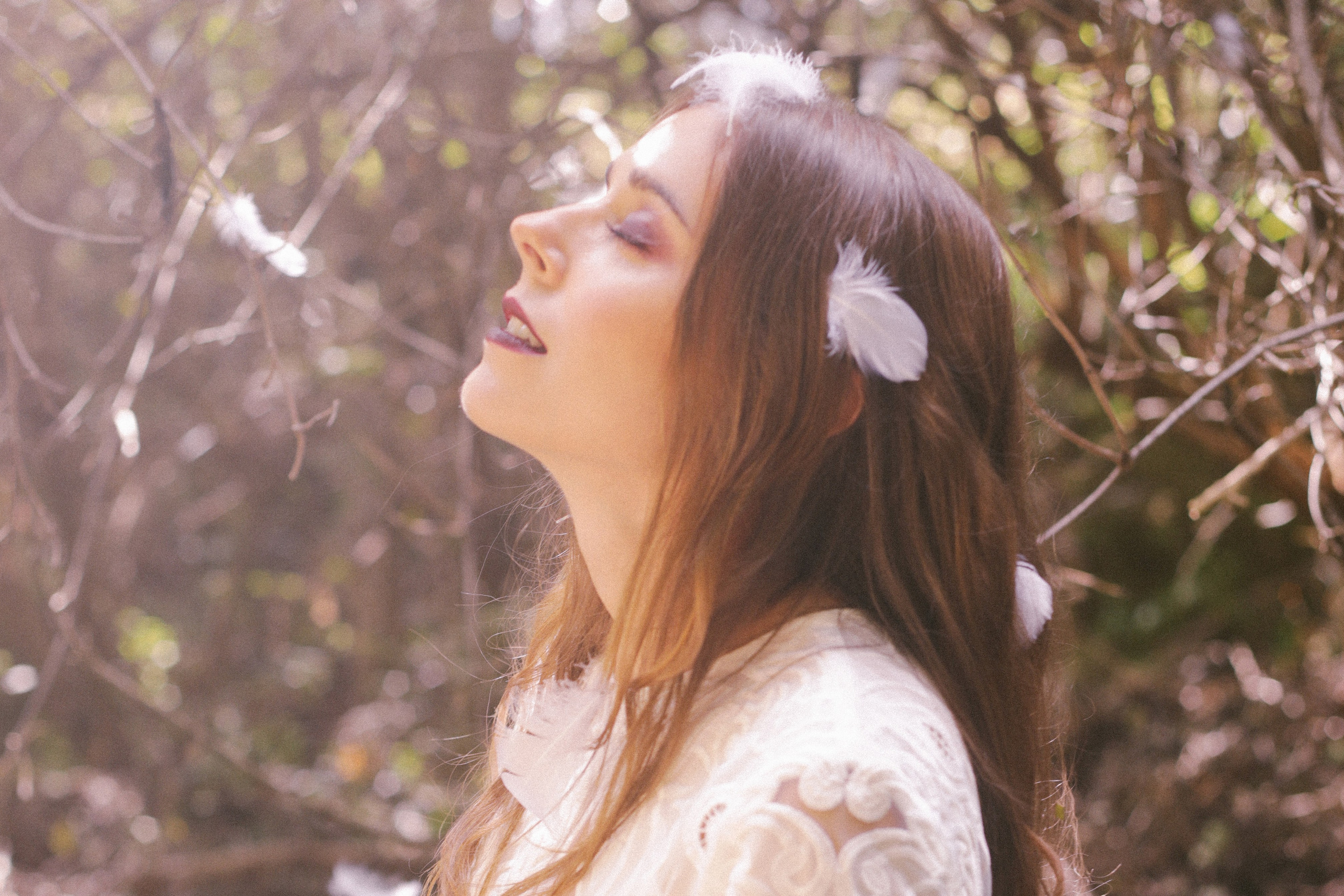
Pro.Senet: “We don’t write for the industry. We write so people can find themselves in our songs”

The music of the duo Pro.Senet is not an attempt to follow algorithms or trends, but a quiet and persistent conversation about feelings that people today allow themselves to express out loud less and less. Kristina (ALMA) and Bogdan Seneta are a couple not only on stage, but also in life, and this inner unity has become the foundation of their project.
They write music at home, without thinking about audience expectations, genre boundaries, or the demands of the industry. Their songs contain pauses between notes, lived experience, restraint, and honesty. They do not try to please everyone, but they do want to be heard by those who “still feel butterflies in their stomach.”
We spoke with Pro.Senet about the language of their music, life in Spain, the pain of a lack of support, their first songs, the silence between sounds, and why preserving a cry of the soul matters more to them than filling a venue.
If you imagine your music not as a set of sounds, but as a language, what key emotional code is embedded in it — the part you try to preserve most often, even when you experiment with genres and form?
Kris: love, feelings, sincerity.
Bogdan: Bogdan added that every line of our songs contains meaning, experiences, and lived emotion. Our lyrics are not written for commercial purposes, but so that people can find their own story in these songs as well.
In the Pro.Senet project, you are a couple not only in life, but also in creativity. Share a story about the most unexpected conflict of ideas that eventually became a key turning point in a song or an album.
Kris: generally, conflicts don’t arise. Neither in creativity nor in life. But sometimes I change words, rhymes, or the way Bogdan delivers his lyrics, and he doesn’t always agree with that.
Bogdan: but like in many couples, I have to agree with my woman, and honestly, I can say that I always end up liking the result.
Many artists talk about “inner landscapes, ” but how exactly do your personal experiences look in sound? If your music could visualize one psychological moment, what image would it be?
Kris and Bogdan:
We don’t really know how to visualize this image, as we’ve never thought about it before, and this question caught us off guard. Most likely, it’s a story about emotions — those that have already been lived through and those that haven’t yet been experienced in reality, as if in sound our experiences are the pauses between notes.
Visually, it’s a moment on the border between light and shadow, when the emotion has already been felt, but the step has not yet been taken.
You currently live in Spain. How have the local rhythm, language, atmosphere, or even the silence influenced your harmony, song structure, or lyrics?
Kris: I’ve lived almost my entire life in Spain, but I can’t say that the place or the language directly influenced my creativity. My main muse is my husband Bogdan, and wherever we are, my lyrics and emotions would be the same if he is by my side.
The only song that is not directly connected to us personally is about our homeland, Ukraine. In the first days of the war, the song “А Я ЧЕКАТИМУ” was born — about people who have lost or are waiting for their loved ones. Everyone can recognize themselves in it.
Bogdan: I’ve been living in Spain for eight years. I started writing back in school, long before moving — back then just for myself. In Spain, I decided to share my music without any commercial expectations, and that’s where I met my other half. We started writing together — a dialogue appeared, a new breath, and the confidence to continue together.
Have you ever consciously tried to turn the audience’s reaction upside down — to take what they expect to hear and flip it 180 degrees?
Kris and Bogdan: We write and record songs at home and don’t think at all about what is expected from us. We don’t have a goal to overturn expectations — we simply do what we feel at that moment.
Sometimes it coincides with what the listener expects, sometimes it doesn’t, but that’s not essential for us.
The most important thing is to preserve a sense of honesty. If the music is born from the right state, it will find its response on its own, even if it doesn’t follow the usual route.
Tell us about a “failed” experiment (a track, project, or idea) that you decided not to release, but that still shaped you.
Kris and Bogdan: We can’t call any of our songs failed. There are many recorded, raw materials, as well as hundreds of unfinished lyrics. But to be honest, all of them can be considered losers in the fight against modern tracks.
Today, thousands of songs are released that don’t carry sincerity, real feelings, or emotions. In the music world, songs “about nothing” have become more in demand, and people, strangely enough, listen to exactly those.
Maybe because faith, love, and humanity have been lost… and it’s easier for everyone to listen to something positive so as not to dive deeper into everyday routine and pain.
As for us, we want to convey the emotions behind the rhyme, not just songs for commercial purposes. We simply need to find our listener — the one who still feels butterflies in their stomach ♥️
Every culture can be heard in music. What exists in your music as an echo of your native environment, language, or natural landscape where you grew up, even if you’ve never said it directly?
Kris and Bogdan: We make music intuitively and don’t think about how it will be perceived, as we write in Russian, Ukrainian, and Spanish. But life experience and growing up remain — in the mood, pauses, melody, delivery, and restraint.
Moving to Spain changed the external environment more than this inner sound, and the different styles, languages, and approaches of our tracks carry a part of us as human beings, anywhere in the world.
Have there been cases when listeners’ reactions fundamentally changed your perception of your own song?
Kris and Bogdan: Unfortunately, our songs are rarely discussed — even close people don’t always support us. This can be painful and demotivating.
But we understood that we write music not for feedback or commercial success, but first and foremost for ourselves and for each other. Through songs, we say things we can’t always say in life, and that helps us preserve closeness.
That’s why we continue to sing — first of all, for ourselves.
If your next musical chapter could “compress” a certain state of time, what musical form would it take?
Kris: For me, it would most likely be a loop, because it already contains not only the structure of the melody, but the foundation of the future track. If I hear a loop I like, the idea of the future chorus is immediately born in my head and then repeats there for days. Under this kind of musical repetition, the hook of the next song takes shape, and only after that do I write the verses.
Bogdan: For me, it’s through melody that it’s easiest to convey inner transformations and emotions that are difficult to express in words. Loops or drum patterns set the rhythm and energy, but a melodic flow allows you to stay in the moment, feel the transitions and the silence between sounds — and that’s where the sense of inner movement is born.
Together: That’s why in our songs, as a rule, the choruses are almost always written by me (Kris answers), and the idea for the verses is almost always Bogdan’s.
Which aspect of the modern music industry makes you rethink creativity most often?
Kris and Bogdan: Recently, technology has greatly altered voices and rhythms, turning live instruments into electronic sounds and processing voices beyond recognition, sometimes losing the meaning of the song.
We continue to write lyrics with guitar or piano, which already have their own story even before future processing. This way, our songs remain alive and real, not just a beautiful sound.
If you could return to your first track and rewrite it today, keeping only the idea, what would you change and what would you leave untouched?
Kris and Bogdan: Our very first joint song was written during one of the first evenings we spent together in our apartment. It’s called “Кино, ” although initially we wanted to call it “Marvel, ” because our first trip to the cinema together was to that movie.
But due to copyright issues, we weren’t allowed to release the track on platforms under that name, so we simply called it “Кино.”
Kris: I’ve said more than once that Bogdan should rerecord this song in a new arrangement, with a different instrumental and with the experience we’ve gained. I’m not only talking about musical experience — since we don’t have any formal musical education — but about the life experience we’ve lived through during this time, which would definitely play a major role in the result of this “cover.”
With a better delivery, because four years ago, when we recorded this song, we barely knew each other, and it was difficult to open up. Now, the same song would sound different.
Bogdan: We will definitely redo it and show you both versions. It will even be interesting to see which version the listener likes more.
Imagine that your project Pro.Senet becomes a cultural artifact in 100 years. What is the one element of your work that you would want the future to hear and understand first?
Kris and Bogdan: If new generations were listening to our songs in a hundred years, we would want them not to hear just the melody, style, or a memorable fragment of lyrics, but first and foremost the cry of the soul, the beating of the heart, and the silence of love.
We would want our songs in the future to help people talk about their feelings. To hear, above all, the words and the meaning behind them.
Perhaps at a certain moment, these songs could help someone apologize if they are wrong, accept an apology if the person is dear, or call their relatives simply because in some line they recognized themselves and their own inner experiences.
These songs are not for clubs or parties. They are for those who need advice or a push to take the first step.
If FOTKAI filmed your ideal concert, what wouldn’t you want to see in the frame — but would still leave in the end?
Kris and Bogdan: Just like with our first song “Кино, ” which seemed ideal to us at the moment of recording and which we would now change with the experience we’ve gained, the same would apply to a concert. It would be our first concert, and it would be ideal no matter what. And already at the second one, we would correct mistakes to improve the result based on the first.