LINZE: “It’s Not About Popularity, It’s About Those Moments When Everything Clicks”
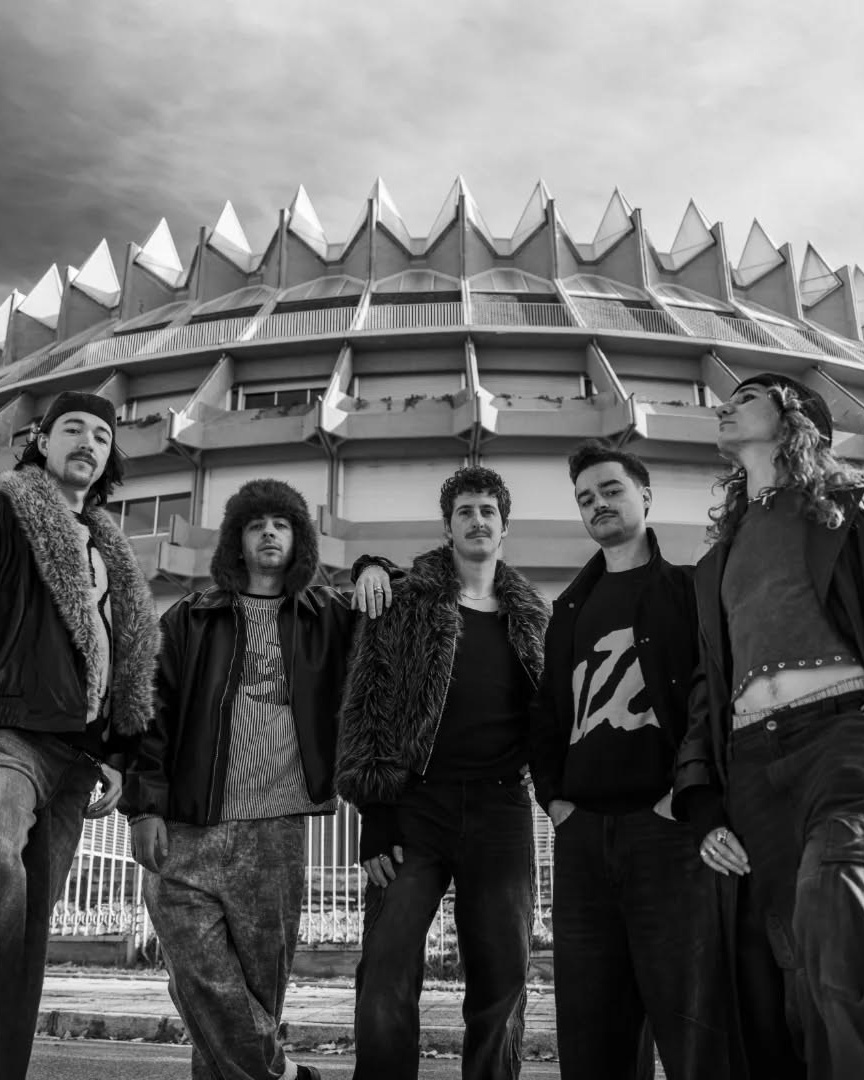
LINZE is one of those bands whose journey cannot be explained solely through numbers, streams, or eye-catching headlines. Their story is built on hundreds of concerts across Spain, a steady and deliberate evolution, and a constant dialogue with the social and generational context that surrounds them.
With Interferencias, the band took a decisive step toward a more open and experimental sound, moving away from rigid labels to explore new influences, creative processes, and ways of understanding rock music in a changing world. Introspection, social transformation, and a critical observation of the present naturally run through their songs.
In this interview, LINZE speaks candidly about the sense of communion with the audience, personal and artistic growth, the dynamics of studio work, the uncertainty felt by an entire generation, and those everyday moments — offstage — that also define a band.
— Over the years on stage, you’ve played hundreds of concerts all over Spain. Was there a moment during a performance when you clearly felt that LINZE stopped being “just another rock band” and became something bigger for the audience?
Pablo:
There have been certain moments in our career on stage that have been special, not so much because of the “popularity” we might have (which is fairly modest), but because of the level of complicity we’ve managed to reach with the audience; specific moments when the communion with the crowd becomes so strong that, for a few instants, you feel like you’ve entered a different level of consciousness. People are completely in it with you: they give themselves over to the show, sing your songs at the top of their lungs, and lift the concert up together with you. It’s like a kind of psychological intoxication, followed by an emotional hangover, where you feel that everything fits and you clearly sense that things are working.
We could mention the presentation of Interferencias at Galileo Galilei, or some of our visits to Cádiz (Trebujena) or Jaén (Cazorla): at home you’re always well accompanied, but it’s true that in the south you’re welcomed with a special kind of warmth…
— Your album Interferencias sounds more experimental and mature compared to your earlier work. What changed in the most unexpected way in your mind during the creative process?
Víctor:
The truth is that the lockdown of 2020 was a catastrophic event in many ways, but also an opportunity to look more inward. In my case, the urge to shake off the “rock and roll” label and allow other influences to surface was extremely important. Suddenly, it was no longer just about attitude (as it was on the previous album Hazlo Real from 2019), but about observing a world undergoing drastic change from the perspective of art and songwriting. You could say we were pushed into a kind of premature maturity.
— You started out as teenagers and today you release complex concepts and lyrics. If you could talk to those same 15-year-old versions of yourselves during a rehearsal, what would they ask the current LINZE, surprised?
José:
Be patient. Like fashion, music is cyclical, and even if you joined the band playing heavy metal you don’t really love, you’ll end up making a record with punk-leaning songs like the ones you listened to by Blink-182. You’ll even have one of your own songs on that album, which will make you very happy. Enjoy every moment, don’t change anything about what you’re living.
— You’ve played in very different places, including unconventional venues. What sound or atmosphere from Spain would you like to bring into the next song, as if you were writing it specifically for listeners in Barcelona or Seville?
Pablo:
Having the chance to get to know different corners of your own land, and its people, is one of the privileges that comes with being an artist. And if we set out to compose a song specifically aimed at the cultural sensitivities of one region or another, we’d probably come across as arrogant and fail in the attempt, because it’s not easy — especially if you try to do it from the outside.
That said, there is already a song in our discography that is directly rooted in a place, and that song is Derecho Constitucional. It was composed almost entirely during a stay in Cádiz in the summer of 2024, when we went there to work with a local producer and ended up writing a song starting from a small embryo that was barely a chorus. The track includes nods to a flamenco style, the seguiriya, performed by our singer Víctor Perales, who is trained in flamenco guitar. A rare bird that could not have been conceived in any other way, had La Caleta not flooded us with its freshness and beauty.
— Looking at the lyrics of your latest singles, there’s a clear tension between personal struggle and collective energy. When you write a new lyric, do you hear the rhythm, the melody, or the meaning first — and what matters most to you?
Víctor:
What an interesting observation! Many times a musical sketch comes first — picking up the acoustic guitar and humming a melody, or simply stumbling upon a harmony that I feel works and has something special. Sometimes the lyrics emerge very organically almost instantly, but most often I record that musical fragment and revisit it in voice notes during everyday moments, like driving to work. Many times I have a musical idea I absolutely love, but I can’t find the emotional angle to develop the lyrics until weeks later. Especially in these new songs, the intention has been to avoid writing just for the sake of writing, and instead to pour out a lived emotion when it truly calls for it. That’s why there’s so much introspection, but it’s also very easy to extrapolate it to a generational feeling.
— You play rock with a strong sense of identity. If you could exchange your music for a day with an artist from a completely different genre (for example, flamenco or electronic music), what would you experience first in that exchange, and why? And which genre would you like to try?
Víctor:
I studied flamenco guitar — my father is a guitarist — and it’s something I’ve been immersed in since childhood. I find the fusion of flamenco’s essence with the primal nature of rock very interesting, and it’s something we’ve already explored in songs like Derecho Constitucional. That said, we’d also love to explore the electronic sound of 1990s techno — it would be a lot of fun.
— You’ve worked with different producers and in various studios, including Estudio Uno during the recording of Interferencias. What aspects of the studio atmosphere change your approach to recording songs?
Diego:
Every producer has their own way of working, and access to the studio plays a big role. With Estudio Uno, the recording days were fixed according to the instrument being recorded, so we came in with everything prepared from home to capture it. Any leftover time allowed for experimentation, but there was pressure. For the upcoming record, the recordings were done without that limitation, since we had more access to the studio. The sound was shaped much more in the studio together with the producers, which made the arrangements more consistent across songs, and in many cases different from the ideas in the initial demos.
— What part of Spanish culture or society are you trying to capture in your songs that a listener outside of Spain could still perceive and feel?
Víctor:
We’re kids from the outskirts who, since adolescence, looked toward the capital with the urge to discover and to be seen. I think any Spanish-speaking listener with a clear interest in rock, alternative rock, or an unconformist and introspective spirit could connect with our discourse. In the end, our generation (those born in the late ’90s) lives today with enormous social uncertainty while trying to make their way in life, struggling to access basics like housing, and no longer fully understanding what’s right or wrong after the daily bombardment of digital information. Our latest songs are essentially about that.
Diego:
I think we reflect a Spanish youth that doesn’t have clear life goals, because they find that the paths that worked years ago no longer do. The things that are supposed to make us happy don’t satisfy us, and it’s not even easy to find a place to live. These are things any young person can feel elsewhere in the world, but they carry particular weight in Spain’s major cities.
— You’ve been recognized as one of the “10 bands that could lead the new wave of rock in Spain.” How do you handle industry expectations while staying true to yourselves?
José:
We’re still very much an emerging band, and as we’ve always done, we do “whatever we want.” Compared to a few years ago, some things have changed: now we have a label behind us that helps us understand how the industry works and how a band is turned into a product. But that hasn’t made us more commercial — it’s made us take things more seriously. We have a great team behind us that supports every decision we make, and that’s how we create.
— Over the band’s trajectory, there must have been moments that were never mentioned in interviews. Was there an incident on tour or in the studio that initially felt like a catastrophe, but later became a source of inspiration for a song or creative approach?
Diego:
There was a single, Derecho Constitucional, that we recorded in Cádiz in 2024. We had booked the studio and brought several prepared songs, which we showed to Joselu, the producer. Víctor also showed him a riff we used to play as a joke while Pablo was studying law, singing “I don’t want to go back to studying constitutional law.” For some reason, that catchy riff appealed to him more than the fully finished songs we had presented. So we had to build an entire song from scratch around that riff. We worked out the structure, melodies, and other musical elements that same night on La Caleta beach, wrote the lyrics while Jose was recording the drums, and came up with many of the arrangements on the fly. We were throwing out ideas for resources as we recorded. Although we panicked a bit at first, it ended up being a different and very beautiful way of creating a song — and we loved the result.
— You interact actively with fans on social media and at concerts. Has there ever been a case where the audience’s reaction to a song made you hear it differently or even change the arrangement?
Víctor:
Absolutely. On the album Hazlo Real (2019), we proposed several songs as singles, and Nena no puedo parar wasn’t among them. However, a few months after the album was released, we started noticing a disproportionate growth in listens for that track, without having placed any focus on it at all. Even today, without ads, marketing campaigns, or any strategy to highlight it, it still appears organically in our Top 10 most popular songs on Spotify, for example. It was the people who made us realize the song was actually really cool!
— Each of you could be imagined as a character in a film about LINZE. What would be the short soundtrack for each member — not a song, but a sound or effect that best characterizes them?
Carlos:
It’s hard to come up with a sound without defaulting to songs. I think when Víctor appeared, you’d hear trumpets, like the court of Louis XIV. In Diego’s scenes, it would sound like those moments in films when lots of numbers appear on a screen. For José, I picture a loud screech of tires or an open engine. With Pablo, I have no doubts — it would be the sound of luxury, like the coins in Pink Floyd. And for Carlos, something like the Kill Bill alarm when a new enemy appears.
— If FOTKAI were to create a documentary photo project of your band over a single day, which shot do you think would be the most important and absolutely must be included in the series?
Víctor:
That’s hard to answer… I think that since we’ve been best friends since childhood and share that bond beyond work, the most striking shot would probably come from everyday life rather than posing for the camera. We spend a lot of leisure time together as well as working, and we can be really stupid — our humor is very absurd, everything is always a joke or banter. Maybe instead of going to a show, the photographer should just come have some beers with us.
Interview by: Andrey Lukovnikov