Alberttinny: “I want the music to move people through its sincerity”
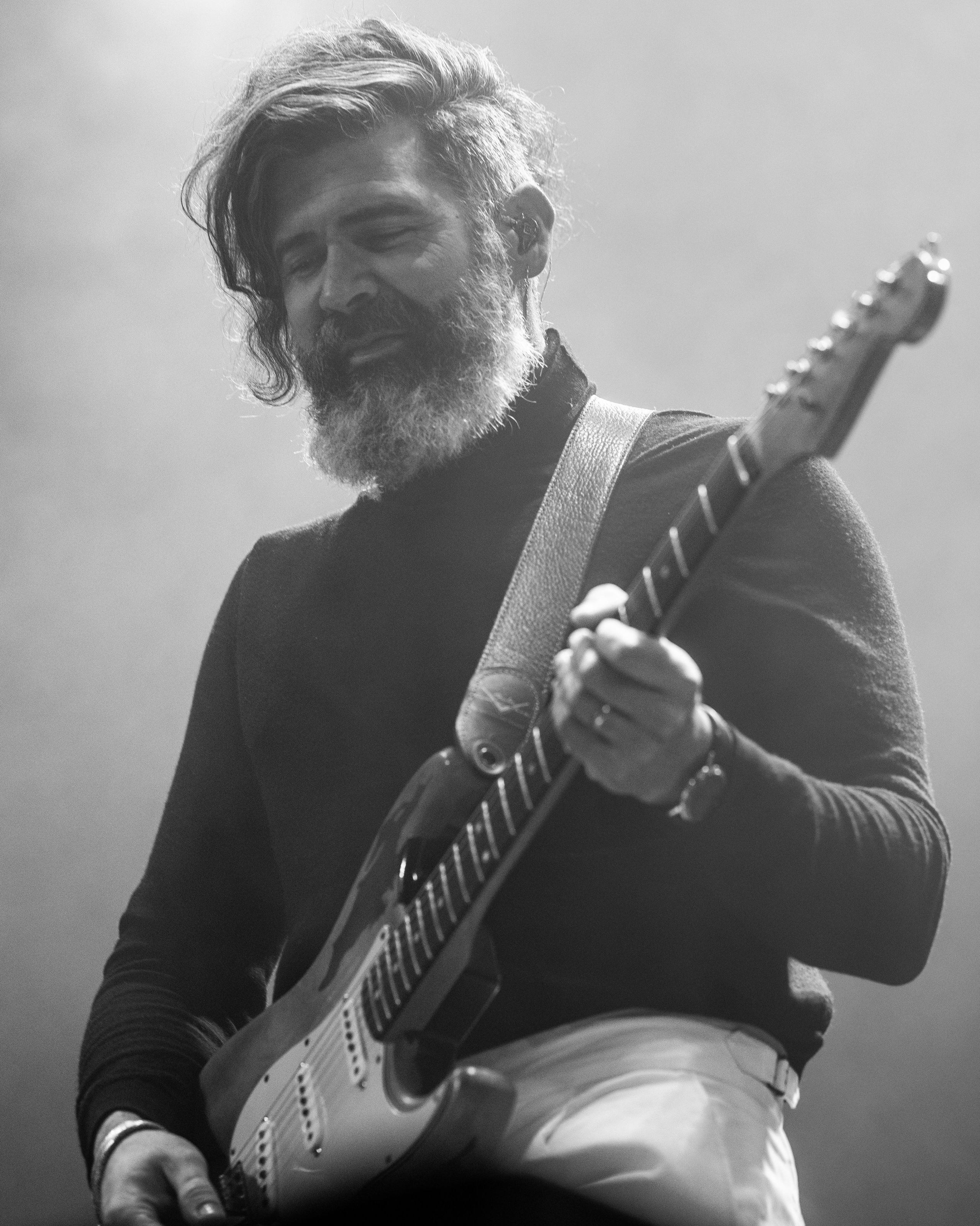
After closing a key chapter as a member of IZAL, Alberto Pérez Rodríguez began a new path under the name Alberttinny — a deeply personal project in which he fully takes on composition, vocals and creative decision-making. Rather than seeking a radical break from the past, his music is built on reflection, honesty and a desire to return to the origin of everything: enjoying the act of making music.
In this process, Alberttinny has had to redefine himself as an author, learn to live with individual responsibility and accept the risks that come with unfiltered exposure. His songs function as a space for emotional expression — sometimes even a way to say things he does not dare to express openly in any other form.
In this conversation, we talk about his way of composing, the personal changes that have shaped his artistic evolution, his relationship with the audience, the boundaries between intimacy and public life, and how he would like his music to be perceived ten years from now.
When you start writing a new song, what usually comes first — an emotion, an image or a musical idea?
I don’t have a fixed way of working. Very often a melody comes to mind and I start writing lyrics about something I want to tell. Other times, I write a text and keep it until I find a melody I like. On other occasions, I only have a riff or a drum pattern that I like, and that becomes the origin of the whole song.
At what point in working on your solo project did you first clearly feel the difference between being in a band and having individual responsibility?
Quite early on, from the moment of recording. There are many decisions that need to be made, and at first it is exhausting. In a band, the final decision depends on an evaluation by all the members, and I think that helps a lot when it comes to deciding.
Are there songs you write knowing they will be difficult, especially for yourself? Why do you choose to enter that state?
Through songs I express myself on an emotional level and share my concerns; sometimes what I tell is something I don’t dare to say openly. I accept that some of them, especially the first times I play them live, are difficult, but fortunately they later become part of the repertoire and I simply enjoy playing them.
If you compare your beginnings with Alberttinny to where you are now, how have you changed the most as an author?
The beginnings were difficult for me because I had to find my path, to define myself as an artist. I did a huge amount of work to discover who I am, what I want to say and what my voice is — the way of expressing myself sincerely in both lyrics and music. Now, comparatively, I’m in a more continuous phase. I calmly wait for a thread to pull on and try to take steps in different directions, opening myself up to trying things without putting so much pressure on myself, returning to the origin of everything, which is enjoying making music.
After leaving IZAL, you had to make decisions on your own. Which one turned out to be the riskiest?
I would say the very decision to create a project in which I compose and sing. These are new roles that I am still learning, and it is a complex decision because everything is still to be done.
Today, as an author, who do you trust more — your current self or the one from a few years ago?
Because of everything I’ve lived through to get here, including my self from years ago, I trust the current one, for many reasons, even extra-musical ones, that have helped me reach this point.
Spanish music is often described as very emotional. Is there anything about that image you consciously prefer to keep your distance from?
There are certain directions I consciously don’t want to take, mostly related to style. It’s true that I avoid explicitly talking about love, partly because there is something in the aesthetic of those love songs that doesn’t attract me.
Is there a place in Spain that especially influences your inner state and your desire to write music?
I don’t have a specific place. I usually compose in the small studio I have at home because it’s where I spend most of my time. I have noticed that driving helps me a lot to compose melodies and develop ideas, and also that during the early hours of the morning, while everyone is asleep, I feel it helps me find the state I need to make songs.
Nowadays, an artist is almost always in the public eye. How do you define the boundary between openness and personal intimacy?
For me, the boundary is family. Although I share certain stories on my social media where my children may appear indirectly, I always make sure their image is protected. In other situations, I tend to be very open. I try to reply on social media to everyone who writes to me and to dedicate some time to the people who dedicate time to listening to my music.
Do you feel expectations from the audience about what your music should be like, or have you learned to ignore them?
When I released “Mi propio incendio”, the first single, there were people who told me what I should do, but after all the work I mentioned before, it was clear to me what my path was. From there, I’ve grown little by little, with people who connect with what I do and don’t try to change me.
Has there been a song that was very important to you but didn’t receive a wide response from the audience?
Sometimes you have expectations about a song and then you see that it doesn’t connect with the audience as you expected. Most of the time, the problem is the expectations you create for yourself, and then you have to deal with the disappointment. If I had to name one where I expected a broader response, I would say “Únicos.”
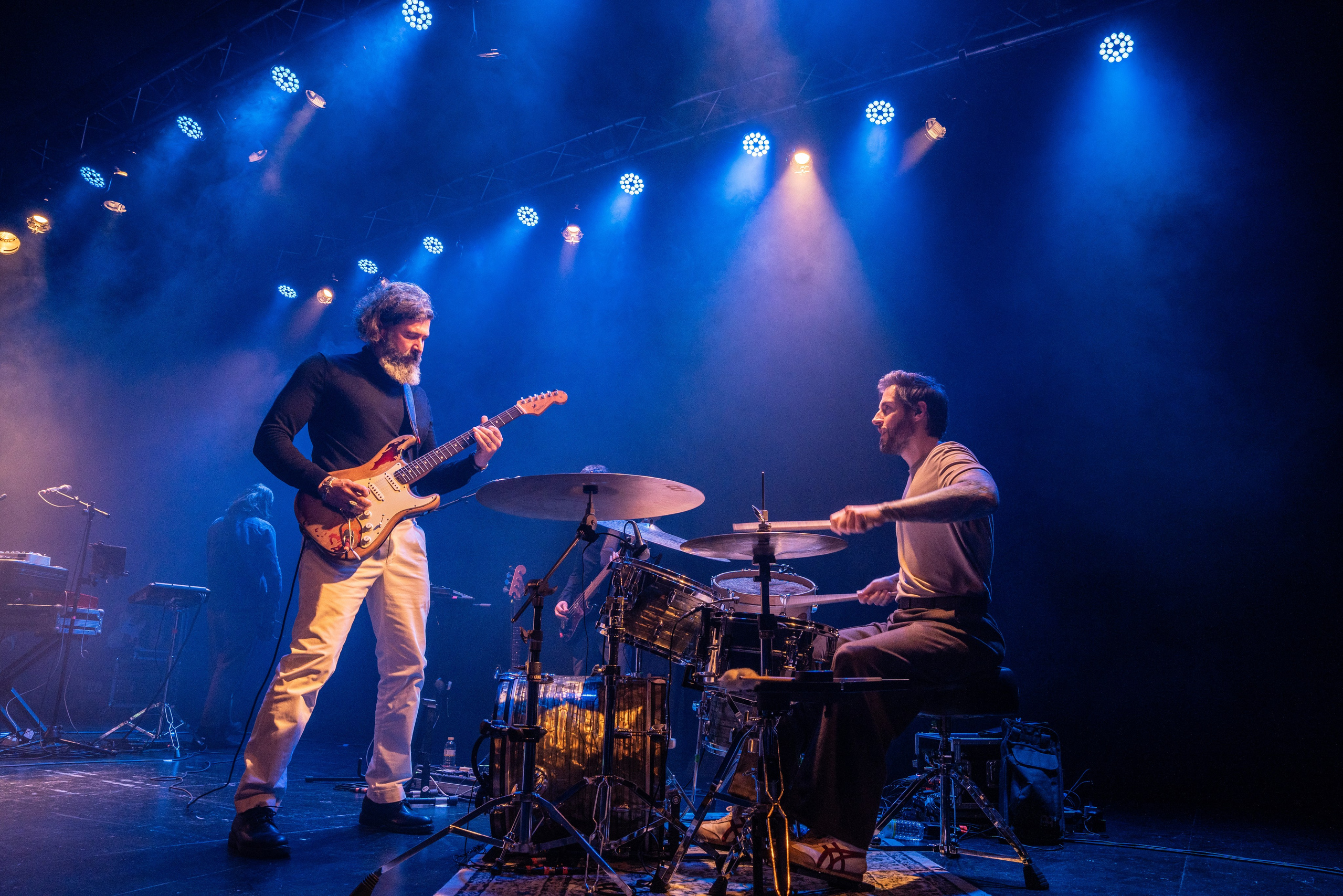
When you see photographs from your concerts, do you recognize your real self or your stage image more?
My real self. I think there isn’t much difference. I haven’t consciously worked on creating a stage character.
If you imagine that in ten years you hear Alberttinny’s music for the first time, what would you like to feel in it?
I would like it to move people through its sincerity. I’d like the music to convey what was lived at the moment of its composition and recording.