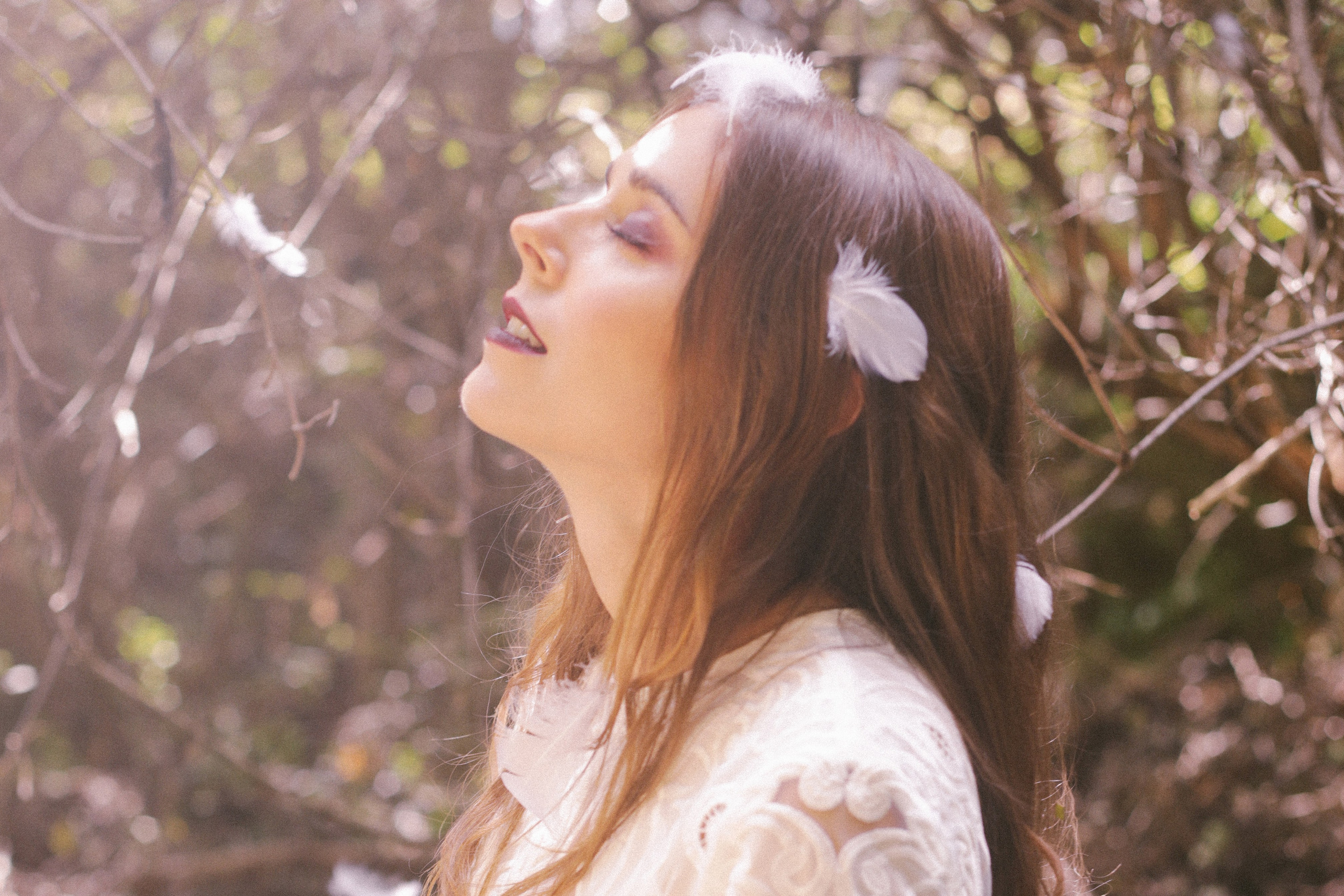
Nat Simons: “Each record is a different stage, they are states of mind”
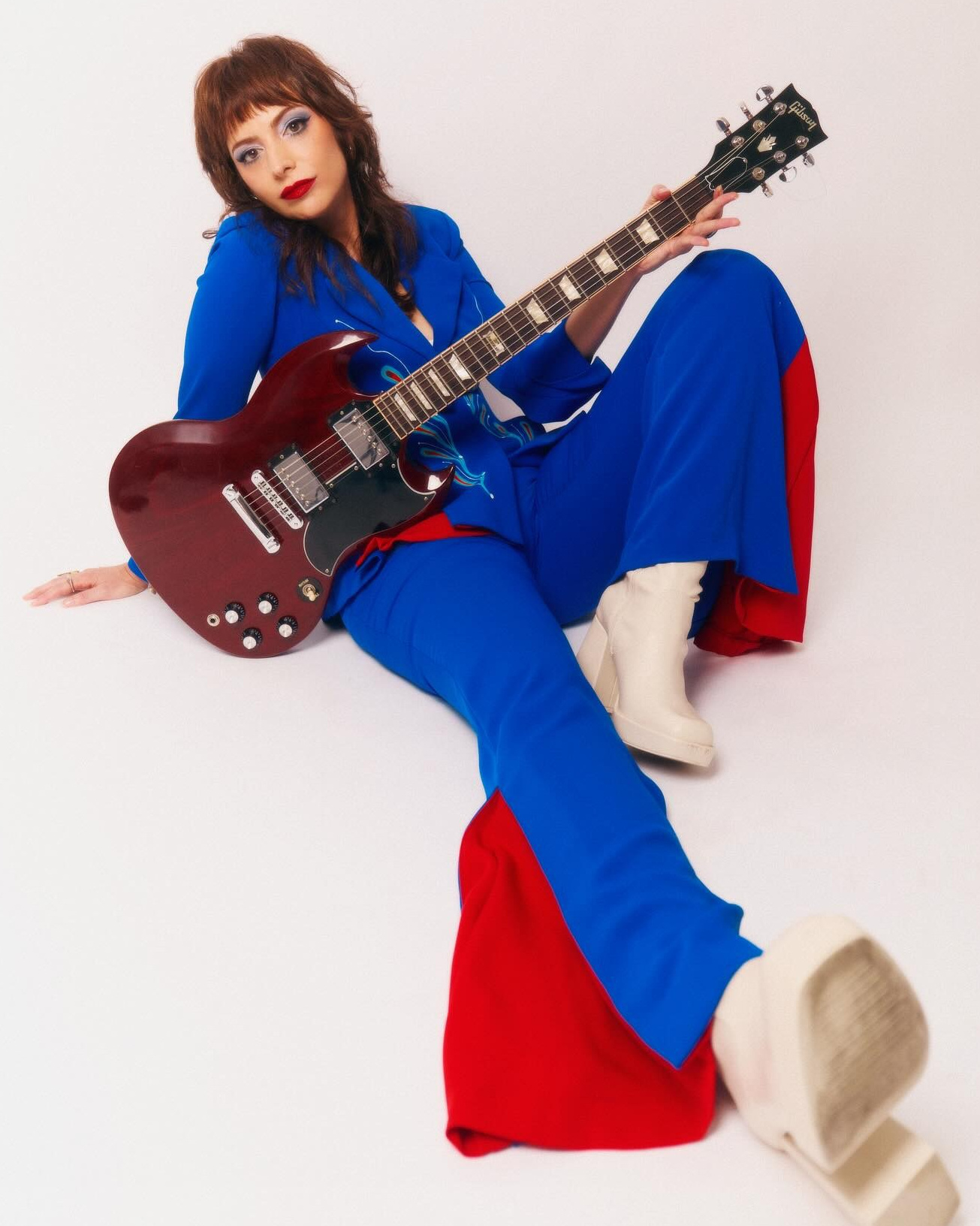
Nat Simons’ career has never followed a straight line. Her discography unfolds as a succession of emotional states, sonic explorations and bold decisions that have led her to change shape and skin at every stage. Far from settling into comfort, the artist has built a path defined by independence, experimentation and deep creative honesty.
On the verge of releasing Pregúntale a Sarah Connor (February 2026), her most ambitious and personal work to date, Nat reflects on the real cost of making music today, the pressure of the industry, the value of what cannot be repeated and the connection with the audience that gives meaning to everything. A conversation without shortcuts about identity, discipline, memory and artistic resistance.
Your discography feels more like a series of different states than a linear story. When did you realize that you didn’t want to develop “in a straight line, ” but preferred to change form and sound from project to project?
Over time I’ve realized that I like stepping out of my comfort zone and experimenting with other sounds; I think it’s part of my personality. Each record is a different stage and I can’t tell it in the same way. As you say, they are states of mind.
Looking back at your albums, which one turned out to be the most honest for you, but at the same time the most difficult to release?
Most likely this latest work that I’m about to release, Pregúntale a Sarah Connor (February 2026). It’s an album where I talk again about very personal stories and at the same time it’s a very ambitious record that has been very difficult to finance independently and then to find the right label for its release (in this case, Calaverita Records). Between one thing and another, it’s going to take us more than a year to release it. Recording an album today the way I do it, completely self-financed, is very costly in every sense. It’s almost a whim because it’s not profitable, but it’s necessary in order to be able to tour. Unless you’re an old glory and already living off past success.
You often work with a “live” sound feel, something especially noticeable in your concert recordings. In the studio, what matters more to you: control over the result or the moment that can’t be repeated?
I really like recording live for that very reason, because the magic of some first takes is undeniable. I never do many takes in the studio, even when it’s not a live recording and you’re working track by track. It also burns me out quite a bit, and there comes a point where you lose perspective on what’s right and what’s wrong.
Spain is very diverse, both musically and culturally. Is there any place or region within the country where you hear yourself differently as an artist compared to the rest of Spain?
Honestly, it’s a bit of a difficult question to answer. I see myself the same way everywhere, but what I do notice is that in some places there is a more rock-oriented audience than in others. The difference between Euskadi and Córdoba, for example, is huge. Even though the rock audience is smaller in some parts of Andalusia, the people who do go to concerts are wonderful people whom I adore, and that’s why I will never stop going there as long as possible, if the numbers work.
In your songs there is often a strong narrator’s character. To what extent is that voice you as you are today, and to what extent is it a consciously created artistic character?
I have all kinds of songs. Some come from personal experience or personal opinion, others from the perspective of a character and a story created by me, or from a real story that has inspired me. Sometimes I like stepping outside myself; I enjoy getting into other characters’ skin. It gives me a lot of perspective, seeing life from other angles. It’s fun and enriching. Sometimes it’s boring being yourself all day.
If you had to describe your current creative stage not with genres or words, but with a feeling or a state, what would it be?
Metaphorical, poetic and dreamlike.
The music industry is increasingly oriented toward speed and algorithms. At what point do you draw the line and say, “I’m not going to adapt here”?
At the moment when it generates anxiety and unease, which has already happened to me. At the end of the day, I don’t have anyone holding a gun to my head to make me do things quickly, no multinational label or record company setting red lines for me. And an algorithm is certainly not going to do that. That kills any truth and healthy creativity.
Is there a song in your catalogue that, after its release, came to mean more to you than it did when you wrote it, because of how listeners received it?
There are several. One was Pequeña Guerrera Estelar, which already meant a lot to me when I wrote it because it talked about Paula, a girl who passed away at just 22 years old and was an example of strength and joy for life. She gave all of us around her a great lesson. When I started singing that song live, people would come up to me and tell me it reminded them of family members who had passed away. Many times when I’m singing it, there’s someone in the audience with tears in their eyes. That means the song is getting through and people are making it their own. I think it’s the most beautiful thing that has ever happened to me, because it’s so real.
Many artists say that over time what changes isn’t inspiration, but discipline. For you today, what matters more: impulse or regularity?
I think it’s about getting to work, but your state of mind and what your life is like at that moment also have a big influence. You need to have a space of peace in order to write and compose comfortably. If your life is chaos and your mind is somewhere else, it’s hard for the muses to arrive.
Over the years of touring there must have been moments that never made it into recordings or social media. Is there a live concert story that still affects how you step onto the stage today?
Probably all of them, especially if we’re talking about the beginning of my career. I was a very shy girl who trembled when singing at my first concerts, but by playing and playing in all kinds of spaces I gradually lost that embarrassment. I remember opening for Loquillo and having people in the audience turn their backs on me. Since I’m very stubborn and those things make me really angry, in the end I would always do something eye-catching to make them turn around and pay attention — and I succeeded. I gained tremendous stage experience to win people over.
You work with different languages in your music. For you, what is the main difference between them: emotional precision, distance, or freedom of expression?
For me right now, Spanish (Castilian) has more emotional precision because I master it much more. I started in English because I lived in London and because all or almost all the music I listened to was in English. The style I was doing (folk rock, roots music) is natural in English. Later I switched to Spanish because I stopped speaking English when I moved back to Spain. It all happened very naturally.
If we imagine that in 10–15 years someone listens to your albums back to back, what non-obvious line or theme would you like that person to discover?
I’d like them to listen to a song like Indian Trees or Golden Feather, which are from my early days and are very peculiar, very folk and mystical, just to give an example. They’re very different from everything else, they seem to have a character of their own. None of those songs are in my repertoire anymore and I don’t plan to bring them back, but they’re very special.
At FOTKAI we often publish photos where people recognize themselves at concerts or festivals. If you could choose one photo from your concert that best reflects the atmosphere of the encounter with your fans, which would it be and what story is behind that image?
One of the most beautiful concerts I remember was the presentation of Felinas in Madrid. There was a magical and very special connection with the audience. You can tell if you listen to the live recordings of 7 Vidas en la Sala and 7 Vidas y una más. I was so emotional and overwhelmed that I remember it almost like a dream.