

HAMLET: “Creative freedom is doing what we feel, without filters and without haste”
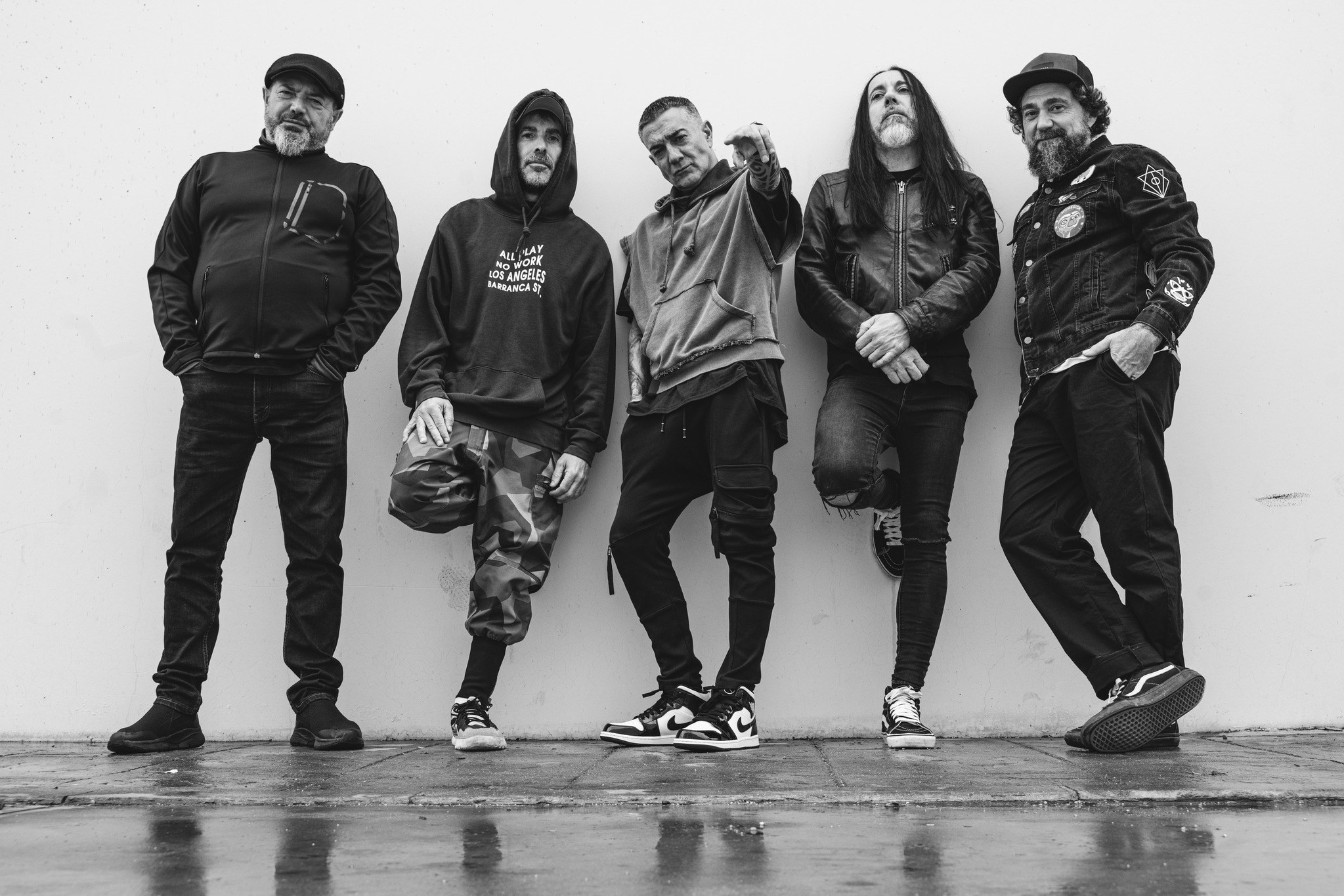
For more than three decades, HAMLET have been a cornerstone of the Spanish metal scene, a band that has continually reinvented itself without ever losing the raw honesty that defines them. With the release of Inmortal after seven years without a studio album, the group reaffirms its identity while embracing a perspective shaped by experience, instinct and an unwavering commitment to creative freedom.
In this interview, HAMLET speak with absolute clarity: about roots and evolution, about the weight of time and the importance of staying true to oneself, about friendships that remain behind the scenes, and about the emotional cycles that have shaped both their music and their lives. Their answers reveal a band that creates without filters, loyal to its own pulse, and driven by the same fire that fueled them in their earliest days.
After seven years without releasing an album, you released Inmortal. How did your internal dynamic change during that time — not only creatively, but also in terms of relationships, motivation and the way you perceived music? Was there ever a moment when you doubted returning to studio work? How did you overcome that “threshold”?
We never lost our passion for our music during those seven years, but we did need to find our roots in the new songs and not always be looking beyond, until we understood what we wanted and needed for the new songs — we didn’t have that necessary inspiration.
Looking back, thinking about those who listened to you in the 90s and the fact that a new generation of fans has emerged: if you could address the listeners of that “first generation” with a letter or a message, what would you tell them about your path, about the process of maturing, about what has changed and what remains essential both in you and in them?
We believe that we’ve had a very personal stamp from the very beginning, and what we want is for new people to see that, and for the older ones who have grown up with us to also see it in the sense that they will continue liking the band. The essential thing is to be authentic and to be ourselves, regardless of what happens in each era or musical trend we’ve lived through.
Throughout your history there are albums that have become landmarks, as well as stages in which your sound evolved. Have you ever had musical ideas — even entire songs — that you considered “too experimental” to include on an album, but that you see differently today? Why did you discard them then, and what do you think of them now?
Everything we’ve wanted to do is on each album and we’ve never held back on anything. In fact, if something characterizes Hamlet, it’s that our music and lyrics move away from a single current or idea. Being so non-conformist may even have been harmful, because we knew which songs reached more people and we could have done the same thing on many albums, but that would have been our ruin as artists.
If we look at HAMLET today, what would you say is the heart of your sound: the music, the lyrics, the energy, life experience, or the collective spirit? What distinguishes HAMLET now from what the band was in 1994 or the 2000s?
The music, the lyrics, the energy, the live shows — a bit of everything you mention. Honestly, we believe we’re the same band as in the beginning with the same feelings.
Thinking back to your early years: are there people — former members, friends, sound technicians, specific situations — who are not part of the “official” history, but who were key to building HAMLET’s spirit for you? Who are those who remained “behind the scenes”?
The important people are the ones who are here now and who stay with the same drive. Most who have passed through the band left because of their own decisions. Some who are in our hearts are not with us day-to-day and no longer work with us, but they will always be there and they are our friends.
If you were to describe the group’s journey not through albums and dates, but through emotional and personal experiences, which moments would you highlight as decisive, painful, or on the other hand, deeply inspiring? How did they influence your way of being as musicians and as people?
All moments are important and they are each cycle in which an album comes out. Each one has different experiences, and all have ended up being positive — if there had truly been negative moments, the band would not exist.
How important is it for you to keep your songs in Spanish as part of your cultural identity? Did you ever consider recording in another language to reach foreign markets? Why did you decide to stay faithful to your own language and your roots?
Our language is an absolute identity mark; if we sang in another language, we wouldn’t be ourselves. At some point we were “offered” to try it in English and we didn’t see it — we dismissed it immediately.
When you were recording Sanatorio de Muñecos — a record many consider the true birth of HAMLET — was the band aware of creating something new and perhaps risky? Did you feel afraid of not being understood? Do you remember the first reactions from critics and the public?
Before recording that album, we toured many stages already playing those songs. Nowadays, in many bands the process is totally the opposite: they record songs and have never played them live. So for us, because of those reasons — seeking our identity through concerts — we already knew we were following a path we really liked and that we were starting to win over an audience.
If today you had total freedom, without fan expectations or commercial limitations, would you dare to do something completely different, outside any genre framework — jazz, electronic music, folk, avant-garde? Who in the band would be the first to lead such an experiment and why?
We already do what we want to do without any kind of filter. Creative freedom is what we believe we’ve shown from the very beginning in every song we’ve made.
We don’t need other projects yet to give free rein to other songs.
What does “creative freedom” mean for HAMLET right now? Are there things you would never accept — a style, lyrics, a type of production, specific commitments — or are you willing to break any limit in the name of artistic honesty?
We believe we’ve already answered this a bit earlier. We feel we have total creative freedom, but we like to maintain certain personality parameters. What we would never do, regardless of the style, is for Hamlet to not sound like Hamlet at all.
You’ve been a band for almost four decades: many albums, changes, ups and downs. If you could go back to the beginning — to yourselves in the 90s — and give just one piece of advice, both as musicians and personally, what would it be? What would you want that “you” to know?
The advice is not to be in a hurry to achieve success — in fact, not to even think about having it — and to enjoy playing your songs, recording them, doing what you believe in so that you are happy. Everything beyond that is fleeting and overwhelming.
Your music often contains energy, aggression and passion, but also depth and emotion. Are there songs that you interpret differently today than you did at the moment of recording them, now with different life experience and emotions? Tell us about these reinterpretations and what they mean to you now.
In every concert we even continue reinterpreting the songs, and with each tour they evolve to the moment we are living. We’re not robotic at all in that sense, and we love searching for the feeling of each moment in every song, being as natural as possible and playing with passion.
Our FOTKAI project specializes in concert photography that is honest, direct and “alive.” What do you think is most important for a photographer when capturing HAMLET: the energy of the live show, the emotions before going on stage, or the audience’s reaction?
The energy of the live show, fundamentally.
Photography: Irene Bernad
Interview by: Andrey Lukovnikov


