

Hero of the Week:
Nacho Guerreros: Between Truth, Craft, and the Masks of Theatre
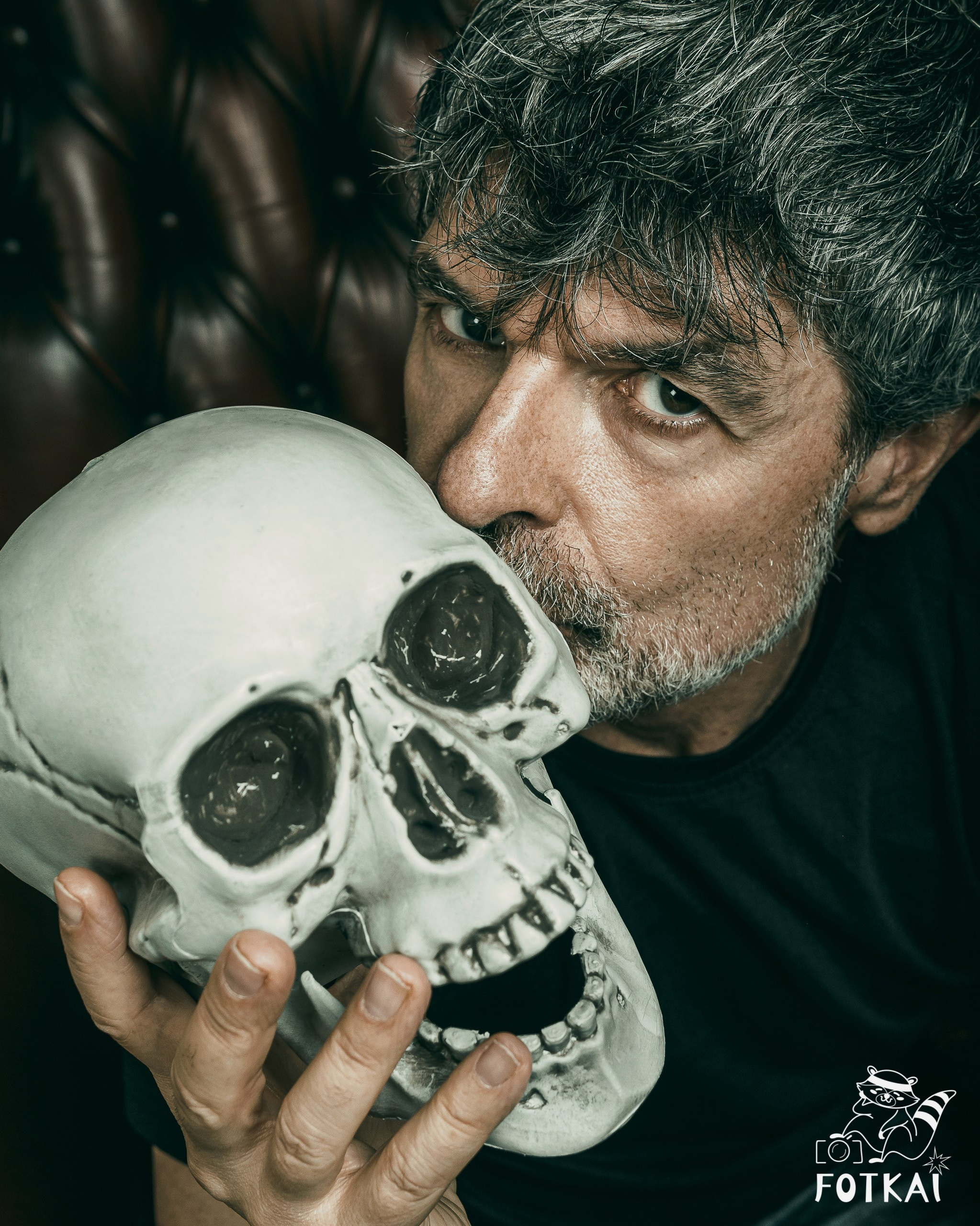
Nacho Guerreros is one of those performers whose presence spans generations: for many he is Coque, for others a reference point in contemporary theatre, and for many more, a producer who has chosen to take risks when the profession tends to encourage the opposite. His career, marked by a blend of determination, vulnerability, and clarity, offers a rare perspective in a field where the personal and the professional inevitably intersect.
In this interview, Guerreros speaks with an almost disarming honesty. He reflects on the myths that surround him, on the harshness of the profession, on the silences that say more than words, and on the price — and the rewards — of building a career on his own terms without sacrificing integrity. He also recalls what endures: upbringing, life in a small town, and the clear gaze of those early beginnings.
Let’s start without beating around the bush: that moment in 2002 when your family won El Gordo and your life took a turn. Was it an opportunity or a test? How did it change your sense of responsibility toward yourself, your family, and your city?
I’ve already demystified this in several interviews. The only thing I asked my parents for was a loan to buy the rights to BENT by Martin Sherman, and it became a success that allowed me to enter the market. I owe them a lot, but it doesn’t mean I decided to become an actor because of it — I already was one.
How would you describe the young Nacho who left Calahorra to try his luck in Madrid? What habit or belief from that young man still lives within you today?
I was 21 years old, and back then I saw myself as very mature and very responsible. I was a mixture of innocence and determination; the latter still persists in me. I’m stubborn, and I know how to wait for the right moment.
Many artists say there is a scene or a work that “broke” them or “made” them. What was that point of no return for you in your theatre or television career?
Without a doubt, the play BENT, directed by my teacher Gina Piccirilli.
Your character Coque has become a cultural phenomenon. How often do you feel the audience’s expectations, and when do you consciously decide to go against them to surprise people?
I try to build a career parallel to Coque, especially in theatre, where I always like to take on challenges.
Imagine someone asks you to portray a biographical scene of your life, but in a horror tone. Which moment would you choose, and why do you think it would scare the audience?
I have to travel far back in time. It was when I discovered that there are truly evil people in this profession. It was like stopping believing in the Three Kings. It was disappointing to realize that nothing in this profession is what it seems, and that the disguise of solidarity some people wear is a false one.
You’re an actor but also a producer. Tell me about a project you would never accept under any circumstances — and why.
For now, rather than rejecting a project, I reject people. There are some people I will never work with under any circumstances.
What is more difficult: finding a character’s voice or their silence? Do you remember a role in which silence spoke louder than words?
Silences say a lot about characters: the looks, the reactions… A good silence describes a situation very well.
Tell us about the most foreign or uncomfortable role you’ve played — or been offered. What did you learn about yourself in that experience?
The darkest character I played was in a short film titled Sin ti, and I remember another sinister one in the short Cariño. As characters they’re a treat, but I wouldn’t want them around me at all. Still, I always think I’m doing fiction and that reality is something else; I have nothing to do with the characters I portray.
In several interviews you talk about mental health. Was there a moment when you thought, “If I don’t take care of myself, everything — family, work, art — will fall apart”? What helped you reconnect?
Like many people, I also went to professionals at the time. I’ve always had a positive attitude in life, and that decision helped me even more to have an optimistic perspective on life.
You’ve taken fitness and physical well-being seriously. Has that changed the way you choose or approach your characters?
I don’t think doing sports directly interferes with my characters, but an actor must be in shape and have harmony in their movement and body expression. The Russian theatre school does this very well, for example.
Name three seemingly small things your provincial upbringing gave you that you still apply to your career in Madrid.
I had a united and happy family; I was raised with love without expecting anything in return. Loyalty, simplicity, and prudence.
Have you experienced any moral dilemmas with journalists or producers — moments where you have to choose between truth and professional politeness? How do you usually resolve them?
Yes. I have. In fact, I was betrayed by two people close to me professionally, but I believe in karma.
What “false myth” about you would you like to dispel once and for all, and why do you think it persists?
That I became an actor thanks to the lottery. It’s completely false.
If you could rewrite the ending of one of your famous scenes — in theatre or television — which would it be, and what would you change for the viewer?
I think I still have a long way to go before I can answer that question. In twenty years I’ll tell you.
What worries you most about working as a producer? Is there a particular responsibility that keeps you up at night?
The lack of commitment from colleagues, and the fact that it’s increasingly difficult to find actors or actresses who want to do theatre. It’s curious that they then complain about unemployment and ageism — some of them, you call to offer a tour and they tell you no, that they don’t do tours.
When you choose someone to work with your production company Rokamboleskas, what are you really looking for? Do you have any unwritten criteria that guide your intuition?
I now also have another production company called Mister Chaise Longue, and what attracts me in people I work with is the same thing I offer: making things easy.
Tell us about a message or letter from a fan that made you look at your own work differently.
It’s hard to choose one, but many years ago I met a boy named Álvaro. This boy is no longer in this world, and shortly before he passed, he gave me a watch… When something goes wrong, I look at that watch and it brings me great comfort.
You’ve traveled to countries where people know you from dubbing or from local versions of your series. What was the most unexpected or emotional reaction from foreign audiences?
In Bulgaria I spent almost six hours taking photos with fans. I brought back dozens of gifts from there. I’ll never forget it.
Recall a scene or shoot in which you felt “professional anger” — that impulse to shout at the director or a colleague. How do you manage conflict on set?
Yes. I handle lateness and lack of focus very badly.
How do you balance Coque’s fame with your desire to be recognized as a serious theatre and film actor?
Coque was a great springboard to make me known to the general public, and instead of being afraid of typecasting, I took the opportunity to return to the stage by founding my own production company. Fortunately, I’ve managed to build a solid theatre career without the audience noticing that I’m the actor who plays Coque.
If you were offered something artistically powerful, but under a condition you could never reveal — would you accept? Why or why not?
I’m a performer, and if I sign a confidentiality agreement, I’ll have to deal with the consequences. Anyway, I think actors shouldn’t expose themselves too much and should guard many private and professional things closely. I’m learning to say only what is necessary.
Name three projects —from different formats: theatre, film, and television— that you haven’t done yet and that would be a true challenge for you.
I would like to do a major musical or work in theatre in French, and I would love to act in a Mexican telenovela and in a film about what happened in Madrid during the 1980s and la movida.
We publish our photo galleries openly and allow images to be downloaded. How important is this kind of openness to you?
The moment your profiles are public and you share your material — whatever it may be — you allow its circulation freely. That’s why it’s so important to preserve areas with unexplored walls; private life, in my opinion, should not be shared.


