Concert Photography in the Age of Reels: Why Good Images Are Becoming More Valuable
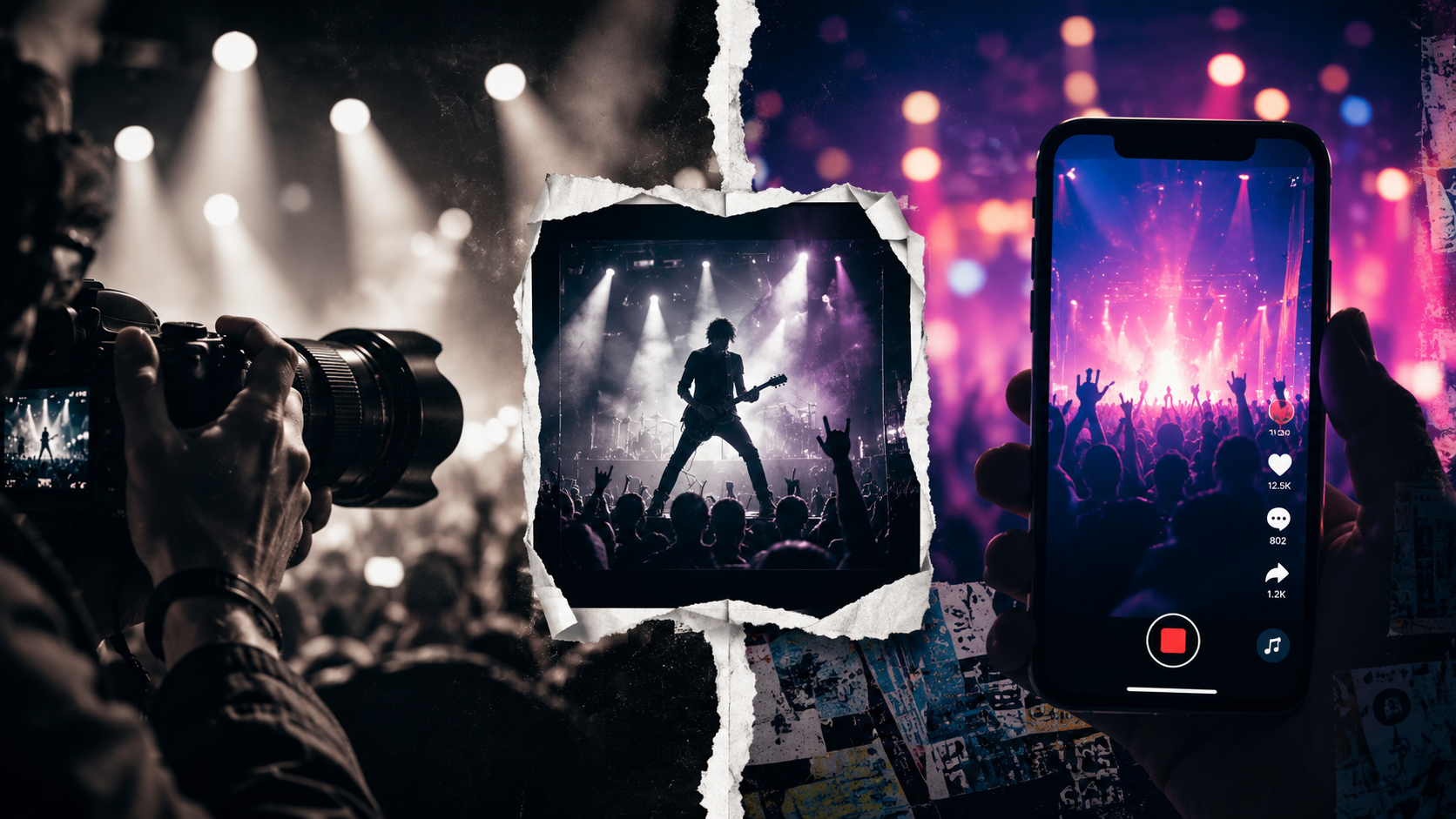
Short-form video has definitively changed the way the music industry presents concerts. Instagram Reels, TikTok and YouTube Shorts can convey lighting, movement, audience reactions and the energy of the stage within just a few seconds. According to HubSpot data, short-form video remains one of the most effective marketing content formats, while video overall is used by 89% of surveyed companies.
Against this backdrop, it is easy to assume that concert photography is losing importance. Why would you need a single image if a smartphone can record the entire concert? But this comparison is not entirely accurate. Video and photography serve different purposes: one conveys the development of an event, while the other captures a moment and turns it into a visual document.
And precisely in an era of an endless stream of short videos, this function of photography becomes particularly apparent.
Photography Does Not Compete with Video: It Does a Different Job
Video conveys things that photography physically cannot: sound, movement, the duration of a moment, changes in lighting and audience reactions. Photography, on the other hand, has the opposite advantage: it can immediately concentrate attention on a single visual event.
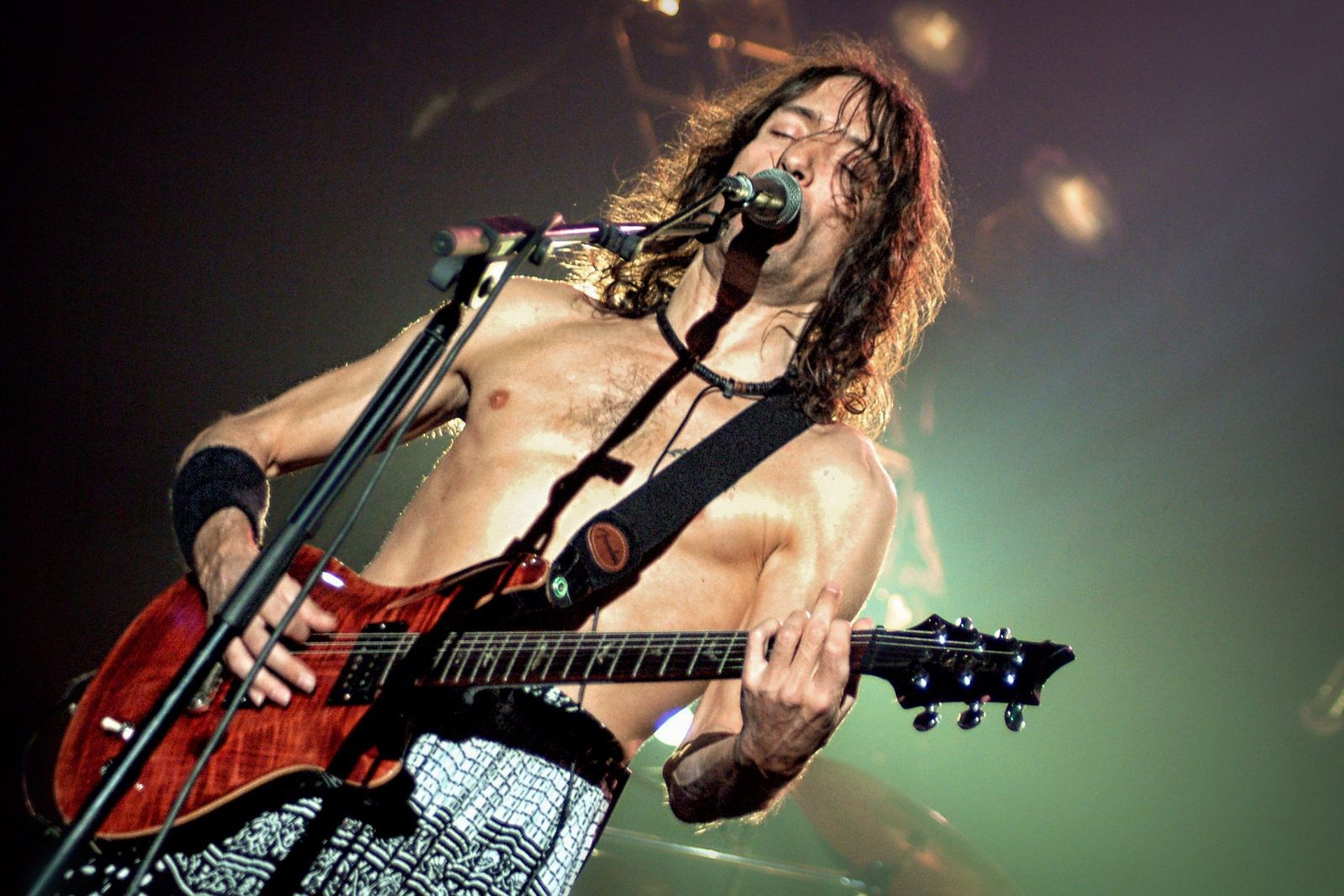
A good concert photograph can show the artist, the character of the lighting, the scale of the stage and the audience’s reaction all at once. Moreover, the viewer does not need to wait for the climax of a video: the photographer has already chosen it.
That is why the question “Which is better: photography or video?” is simply not the right one today. For promoting a concert, a Reel may be more effective. For documenting the event, building an artist’s visual identity and reusing the material later, photography serves a different purpose.
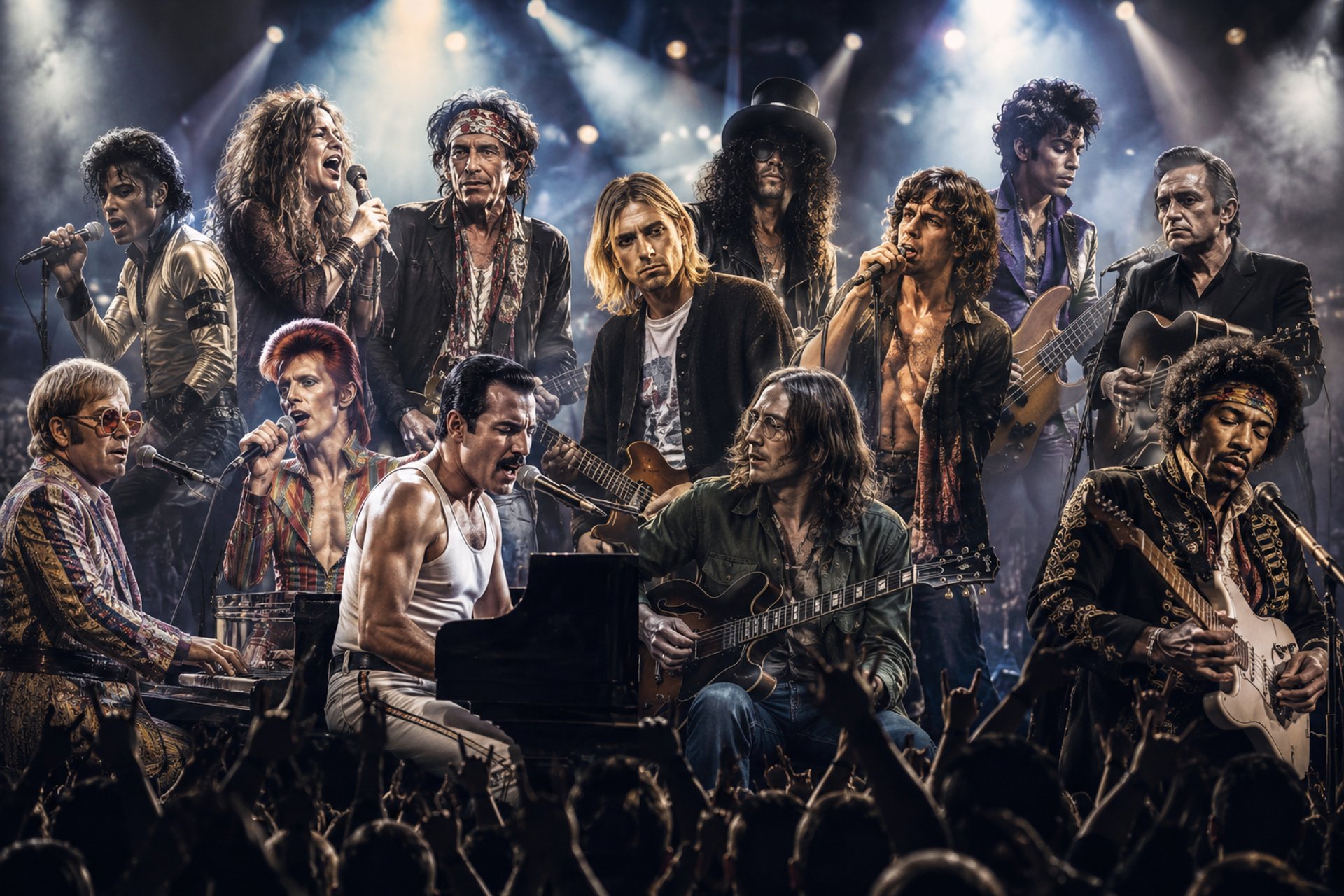
This is particularly evident in music history. The images of David Bowie, The Beatles, Jimi Hendrix, Nirvana and other artists are part of our collective memory not only because of their music, but also because of specific photographs. Japanese photographer Masayoshi Sukita, who photographed Bowie for decades, received the Lifetime Achievement Award at the Abbey Road Music Photography Awards in 2026 — another example of how music photography has long become an independent part of popular culture history.
Concert Photography Is an Archive, Not Just Content
The main difference between a good concert photograph and a casual frame taken from a video is that the photographer does not work only with the moment, but also with the context.
They choose the position, composition, focal length, lighting and a specific fraction of a second. But what remains outside the frame is equally important. A professional photo report does not show only the musician, but also the audience, the space, stage details, equipment, lighting and the atmosphere of the venue.
That is why, years later, a concert photograph can tell us much more than it seemed to on the day it was published. It documents not only the artist, but also what a particular scene looked like during a specific period: the club, the festival venue, the audience, clothing, stage equipment and visual culture.
Local concert photography becomes especially valuable. Major stars usually have enormous archives, while a performance by a young band in a small club may leave behind virtually no professional visual documentation. Ten years later, those images may become the only high-quality record of what a particular scene looked like at the beginning of a musician’s career.
In this sense, a concert photographer is not working only for today’s publication. They are creating an archive of musical culture.
In the Age of AI, the Value of a Real Photograph Is Growing
There is another reason to pay closer attention to documentary photography. Generative artificial intelligence has learned to create convincing images of events that never happened. As a result, visual authenticity is gradually becoming a value in its own right.
A photograph of a real concert has an origin: we know who took it, where and when the event happened, and the original file and publication history can help establish its context. This does not mean that every photograph is automatically absolute proof of what happened — images can also be edited or taken out of context. But the documentary nature of a real image is fundamentally different from an image created solely as an illustration.
For a music publication, this is particularly important. A good photo report does not only answer the question “What did it look like?” but also “What actually happened?”
Photography Has Another Advantage: A Longer Lifespan
A Reel is primarily created for rapid distribution. It can generate a huge number of views within a few days, but then disappear from the audience’s attention. That is the normal logic of social media.
Photography works differently. A single high-quality image can be used in an article, press release, poster, social media posts, an artist’s press kit, festival materials or a commemorative publication years later.
The same applies to a photo report. It can continue to work after the initial wave of interest in a concert has passed, especially if the page is well indexed by search engines. A user may discover it not on the day of the concert, but a year later through a search related to the artist, venue, festival or city.
And this is where a direct connection between concert photography and SEO emerges.
Original Photography Is an SEO Asset for a Music Publication
There is an obvious problem in music news: the same press release about a concert can be reproduced almost simultaneously by dozens of websites. The text can be rewritten and the headline changed, but original photographs of that specific event cannot be reproduced in the same way.
That is why an original photo report gives a publication something that another version of a press release does not: unique content connected to a specific event, artist, city and venue.
With a well-structured page, this kind of material can target several groups of search queries: the artist and concert name, city, venue, festival, event date, artist photographs and related local searches.
But it is important not to overestimate the role of photography on its own. Google will not rank a page highly simply because it contains beautiful images. What works is the whole package: original text, title, structure, captions, ALT text, internal linking, technical page quality and the site’s overall authority.
For a publication, therefore, the value of original photography is greatest when it forms part of the combination “event + report + text + visual archive.”
Concert Photography Is Especially Important for the Local Scene
For major international artists, visual documentation is almost guaranteed: professional photographers, agencies, festivals, media outlets and a huge audience all contribute to building the archive.
The local scene is different.
A concert at a small club, a performance by an emerging band, a local festival or a musician’s first tour may end with only a handful of photographs — or even no professional images at all.
For a music publication working in Spain, this represents a huge editorial opportunity. Photographing concerts in Alicante, Murcia, Torrevieja and other cities is not simply about producing content for social media. It means creating a visual history of a specific music scene.
Today, a photograph may simply be a concert report. In a few years, it may become a document of an era.
That Is Why You Shouldn’t Choose Between Photography and Reels
The mistake begins when formats are treated as competitors.
A Reel is good at conveying movement and quickly capturing attention. Photography freezes a moment and preserves it. A carousel can tell a story visually. An article provides context. An archive makes all of this material available years later.
A modern music publication has no reason to choose only one of them.
The right approach is to use formats together: video attracts attention, photography documents the event, text explains its significance, and the archive preserves the result.
That is why saying that concert photography “is becoming more important than video” would be incorrect. It is becoming more valuable in a different role.
The more the digital environment fills with short videos, the more images we encounter that are designed to capture a few seconds of attention. Against this background, a good photograph works in the opposite way: it stops the eye, concentrates the event and remains available long after the feed has moved on.
Perhaps that is why the best concert photographs outlive their Reels.
Not because they received more views.
But because years later they can still answer one question: what did music look like at that moment?