Agila: How the Legendary Extremoduro Album Became an Eternal Monument to Spanish Rock
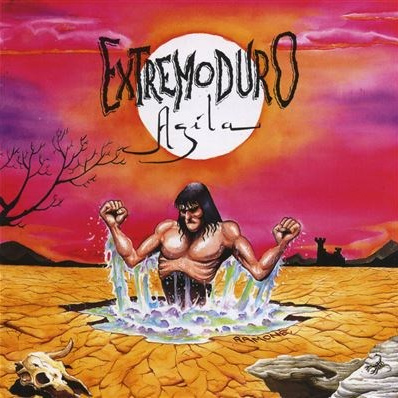
In February 1996, an album burst onto the Spanish rock scene that changed the perception of what authentic rock in the Spanish language could be. That album — Agila — is the sixth studio work by Extremoduro, a band that had already spent nearly ten years carving out its path in the music world, but it was this record that became a true cultural breakthrough and cemented the group’s legendary status.
Agila was released on February 23, 1996, under the DRO label and was recorded at Estudios BOX in late 1995. Production was handled by Iñaki “Uoho” Antón, guitarist, multi-instrumentalist, and one of the key architects of the band’s mature sound. This was not just another album — it became a turning point, when Extremoduro definitively stepped beyond the underground and asserted themselves as a force capable of shaping musical trends.
The title Agila comes from the castúo dialect and can be roughly translated as “come alive” or “snap out of it” — a metaphor that perfectly reflects the character of the music: energy, honesty, and emotional density embodied in every song.
The music of Agila is powerful rock infused with poetic expression, where guitars, bass, and drums intertwine with the deep and sometimes provocative lyrics of Roberto “Robe” Iniesta, the band’s leader and poet. The album includes legendary tracks such as “So payaso”, “Buscando una luna”, “Sucede”, “Prometeo”, and “El día de la bestia”, many of which have become classics of Spanish rock and remain beloved by listeners of all generations.
The commercial success of Agila was evident from the start: the album sold more than 50,000 copies in Spain, which was a significant achievement for alternative rock in the mid-1990s. Yet even more important was its cultural impact — Agila propelled Extremoduro from niche rock circles into the broader musical landscape and helped the band gain fans across different social spheres.

Critics and audiences noted that with this album the band moved toward a more mature and cohesive sound. The guitar work is powerful yet controlled, the bass lines confident, and the lyrics filled with poetry, metaphor, and emotional sincerity rarely found in rock music. Some reviewers openly describe Agila as one of the best Spanish rock albums of the 1990s — and beyond.
Beyond its musical merits, Agila also occupies a special place in media history: after its release, the band faced a new reality — for the first time they attracted attention from major radio stations and television, yet the name Extremoduro remained outside conventional musical labels. This duality — success combined with authenticity — was noted by critics and peers alike: the band did not compromise its art for commercial gain, yet it managed to reach millions of hearts.
Robe Iniesta’s lyrics have always drawn particular attention: rich in allusion, sensual expressiveness, and characteristic directness. In his verses he addressed love, pain, inner struggle, and existential questions, without avoiding difficult themes and leaving listeners face to face with their own emotions. This emotional depth became a defining feature of Agila and explains why the album continues to resonate with audiences decades later.
Over the past three decades, numerous critics and music journalists have recognized Agila not only as a milestone in Extremoduro’s career, but also as one of the most influential Spanish rock albums of recent decades. In prestigious rankings, it regularly appears among the best works of the Spanish music scene.
Following the release of Agila, the band continued to evolve, but this album remains the key moment that many fans describe as the point when Extremoduro “grew wings” — and for which they were embraced by the public. The music of Agila did not become a mere historical artifact: it continues to live in the hearts of listeners, inspiring new generations of musicians, critics, and lovers of classic rock.
Today, Agila is more than an album. It is a cultural marker of an era, proof of the power of sincere music that cannot be forgotten. This work demonstrated that rock can be real, powerful, and deeply human, even when it remains uncomfortable, contradictory, or complex. That is precisely why Agila earned its place in history and continues to be not only beloved but widely discussed among music fans around the world.